
Home › Kids’ Dentistry › Anxious Children
Kids’ dentistry · For worried children and parents
Is Your Child Scared of the Dentist? How We Help, and How You Can Too
Fear of the dentist is common in children and usually eases with preparation, calm words and a gentle, step-by-step approach. At Yonsei Baro near Isu Station, children are seen by Dr. Ho-seon Lee, a board-certified pediatric dentist, and laughing gas may help children who need extra support. Ask us at booking how your child’s visit will be paced.
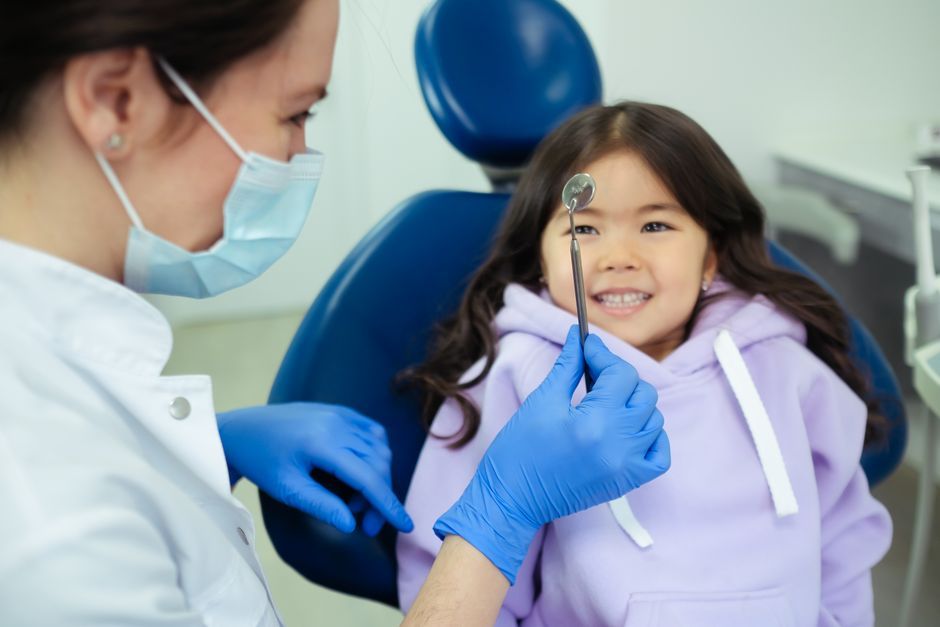
Dental anxiety in children at a glance
| Question | At Yonsei Baro |
|---|---|
| How common is it? | Very common, especially in toddlers and after a painful experience |
| Common approach | Pediatric dentists commonly use tell-show-do: explain, show, then do. Ask us at booking how your child’s visit will be paced |
| Extra support | Laughing gas (nitrous oxide), if the dentist feels it is suitable |
| Parents | Welcome to stay close; we’ll guide you on how to help |
| Language | Tell us when you book that you’d like English support |
Why are some children afraid of the dentist?
Fear usually has a simple root. The clinic is unfamiliar, the sounds and smells are new, and lying back while someone looks in your mouth can feel exposed. Some remember a painful tooth; others pick up worry from adults or siblings. For expat children, a new language and country can add to the uncertainty.
None of this means your child is being difficult. Anxiety is a normal response to something unknown, and it tends to shrink as the unknown becomes familiar.
What is tell-show-do?
Tell-show-do is a well-established technique in pediatric dentistry. Before each step, the dentist tells your child what will happen in simple words, shows them (for example, letting them feel the water spray on a finger or see the mirror), and only then does it. Children know what to expect, so there are fewer surprises.
Alongside this, pediatric dentists often use plenty of praise, short breaks, and a raised hand as a “stop” signal so children feel some control. For a first visit, the aim may simply be a ride in the chair and a quick count of the teeth; see your child’s first dental visit .
How can I prepare my child at home?
- Keep it positive and low-key. Mention the visit a day or two ahead, as you would a haircut.
- Play dentist. Take turns counting each other’s teeth with a toothbrush, or with a favourite toy.
- Read a picture book about visiting the dentist, in English or Korean.
- Book a good time of day, avoiding nap times and hungry times.
- Stay calm yourself. Children read our faces. If you feel nervous about dentists, that’s okay; just try not to share the details.
- Plan something nice afterwards, such as a trip to the park, rather than a sweet treat.
Words to use, and words to avoid
Small changes in language make a difference. Leave the explaining to us; we use child-friendly words chosen for each age.
- Instead of “It won’t hurt,” try “The dentist will count your teeth and keep them healthy.” The word hurt plants the idea.
- Avoid needle , shot , drill and pull . Let the dentist describe instruments in their own way.
- Skip “Be brave” or “Don’t be scared.” Try “You can hold my hand” or “You can raise your hand if you need a break.”
- Never use the dentist as a threat (“If you don’t brush, the dentist will…”).
What happens on the day?
We allow time for your child to settle and look around. Dr. Ho-seon Lee will meet you both. Pediatric dentists commonly use tell-show-do: explaining each step in simple words, showing it, and only then doing it. Ask us at booking how your child’s visit will be paced. Younger children can often sit on a parent’s lap for a quick look. If your child becomes very upset, we may pause and try again another day.
Let us know when you book that you’d like English support — Dr. Sally Chaekyung Lee and our team can help explain your child’s care in English.
When might laughing gas help?
For some children, especially those who need a filling or other treatment and remain very anxious, laughing gas (nitrous oxide) can help. Your child breathes it through a small nose mask, stays awake and able to talk, and usually feels relaxed and a little floaty. Its effects wear off within minutes of switching to plain oxygen.
Laughing gas is not suitable for every child, and it does not replace gentle care and good communication. The dentist will discuss whether it is appropriate after an examination.
Keeping visits easy in the future
Regular check-ups and cleanings help anxious children a great deal, because short, routine visits build familiarity, and problems are found while they are small. Good daily habits from our cavity prevention guide mean fewer fillings, and fewer reasons to worry.
Anxious child FAQs
Can I stay with my child during the appointment?
Yes, parents are welcome to stay close by. For many young children, having a parent nearby or holding their hand is reassuring. Sometimes an older child does better with a parent sitting quietly out of their direct line of sight, so they focus on the dentist. We will suggest what suits your child on the day.
What if my child cries or refuses to open their mouth?
That’s okay, and it happens often. We will slow down, try again with a different approach, or take a break. If it is not an urgent problem, we may end the visit on a positive note and try again another day. Forcing a frightened child through treatment can make the next visit harder, so building trust comes first.
Is laughing gas safe for children?
Nitrous oxide has been used in pediatric dentistry for many years and is considered safe for most healthy children when given by trained staff with appropriate monitoring. Your child stays awake and breathes normally. The dentist will check your child’s health history and explain any preparation, such as eating a light meal beforehand, before deciding if it is suitable.
My child had a bad experience at another dentist. Can you help?
Yes. Tell us what happened when you book, so we can plan a calm first visit focused on getting to know each other rather than on treatment, if possible. Many children who had a difficult visit become more comfortable over a few short, positive appointments where they feel listened to and in control.
Medically reviewed by Dr. Ho-seon Lee
Board-certified pediatric dentist (Korea Ministry of Health and Welfare) · Director of Pediatric Dentistry · Last updated October 2026
This page is general information, not a diagnosis. Every child is different; your child's dentist will recommend care after an examination. In an emergency involving breathing, heavy bleeding, a head injury or facial swelling spreading toward the eye or neck, call 119.
Let’s make the dentist feel familiar
Tell us about your child’s worries when you book, and we will plan a calm visit. Contact us for pediatric dentistry appointment times. Isu Station Exit 2, Seoul.