
Home › Kids' Dentistry › Fillings for Kids
Kids' dentistry · Treatment
Tooth-Coloured Fillings for Children in Seoul
Cavities in baby teeth usually need treatment. Untreated decay can cause pain, infection and early tooth loss, and can affect the permanent teeth growing underneath. At Yonsei Baro near Isu Station, Seoul, board-certified pediatric dentist Dr. Ho-seon Lee repairs children's cavities with tooth-coloured fillings. Ask us at booking how your child's visit will be paced.
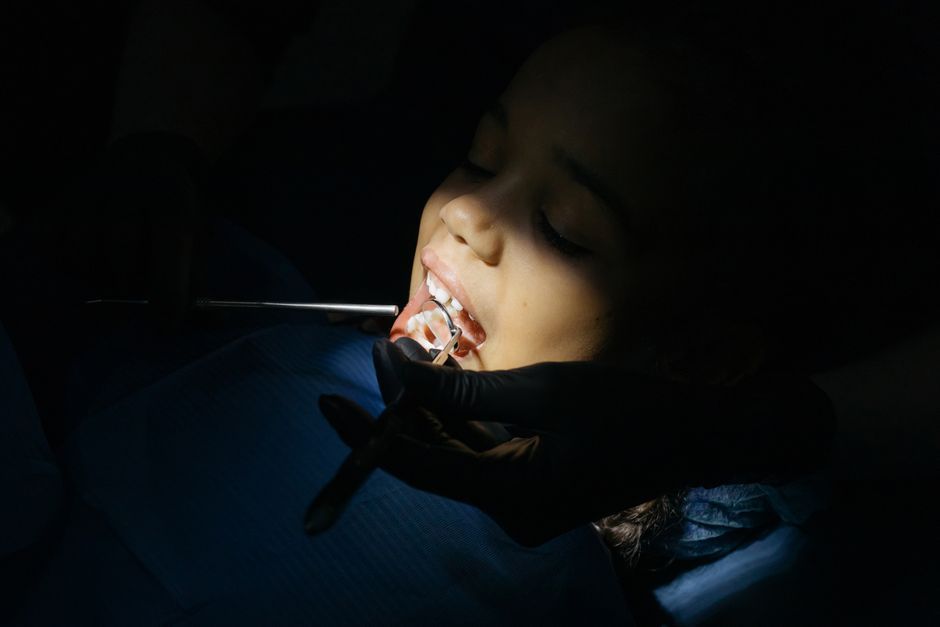
Fillings for kids at a glance
| Question | At Yonsei Baro |
|---|---|
| When needed | When decay has made a hole (cavity) in a baby or permanent tooth |
| Material | Usually tooth-coloured composite resin; the dentist explains the options for each tooth |
| Numbing | Local anaesthetic is used when needed, applied gently after a numbing gel |
| Extra comfort | Laughing gas (nitrous oxide) may help some anxious children, if suitable |
| NHIS | Tooth-coloured fillings on permanent teeth may be covered for younger enrolled children, depending on age and conditions |
Why fix a cavity in a baby tooth that will fall out?
It's a fair question. Baby teeth have important jobs for many years: back baby molars usually stay until around ages 10 to 12, so a cavity found at age four may have six or more years to cause trouble.
- Pain and infection: decay spreads faster in baby teeth because the enamel is thinner. Left alone, it can reach the nerve and cause toothache, swelling or an abscess.
- Space for adult teeth: baby teeth hold space for the permanent teeth. Losing one early can let neighbouring teeth drift and crowd the adult teeth.
- The teeth underneath: infection around a baby tooth can affect the permanent tooth developing beneath it.
Treating small cavities early is usually quicker and simpler for your child than waiting until a tooth hurts.
What are children's fillings made of?
Usually we use tooth-coloured composite resin, a material that bonds to the tooth and is shaped to match it. It looks natural, needs less tooth to be removed than some older materials, and suits both baby and permanent teeth.
Other materials may sometimes suit a particular tooth, for example where it's hard to keep the area dry. Dr. Ho-seon Lee will explain the options for your child's tooth. If a baby tooth is too damaged for a filling to last, a crown for the baby tooth may be the better choice.
What happens during a filling?
Pediatric dentists commonly use tell-show-do, explaining each step in simple, friendly words before doing it and watching for signals that a child needs a break. Ask us at booking how your child's visit will be paced.
- Numbing: a flavoured gel numbs the gum first, then a local anaesthetic is given slowly. Very small or shallow cavities sometimes don't need it.
- Removing decay: the soft, decayed part of the tooth is gently removed.
- Filling: the tooth is cleaned, the composite is placed in layers and hardened with a blue light.
- Shaping: the filling is smoothed and the bite is checked so it feels comfortable.
If several teeth need treatment, we usually plan more than one shorter visit rather than one long one.
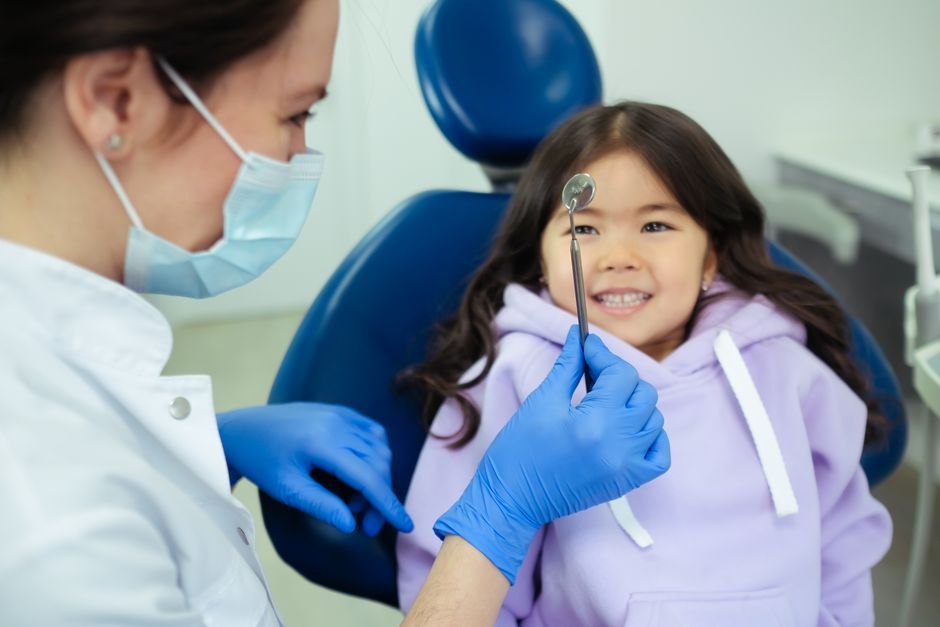
Helping your child feel comfortable
Some children are relaxed about fillings; others feel nervous. Both are normal. A few things help:
- Talk about the visit calmly and simply. Words like “cleaning a sugar bug out of the tooth” work better than “drill” or “needle”.
- Let your child bring a comforter, and agree on a hand signal for “stop”.
- For some anxious children, laughing gas (nitrous oxide) can help them feel calmer while staying awake. Dr. Ho-seon Lee will assess whether it's suitable.
Read more in our guide to helping anxious children at the dentist .
After a filling: what to expect
- If local anaesthetic was used, the lip, cheek and tongue may feel numb for one to three hours. Watch that your child doesn't bite or chew them, and offer soft food once the numbness wears off.
- Mild tenderness for a day or two is common and usually settles on its own. Ask us about age-appropriate pain relief.
- Tooth-coloured fillings are fully set before your child leaves, so normal eating can resume once numbness has gone.
- Call us if the bite feels high, a filling seems to have broken, or there is swelling or ongoing pain.
NHIS coverage and booking
For children enrolled in Korea's National Health Insurance, tooth-coloured fillings on permanent teeth may be covered for younger children, depending on age and conditions. We confirm coverage at your visit; see NHIS for foreign residents .
Let us know when you book that you'd like English support — Dr. Sally Chaekyung Lee and our team can help explain your child's care in English. Contact us for pediatric dentistry appointment times. To prevent new cavities, see our cavity prevention guide .
Fillings for kids FAQs
Do cavities in baby teeth really need fillings?
Usually, yes. Baby molars often stay until around ages 10 to 12, and decay spreads quickly in their thin enamel. Untreated cavities can cause pain, infection and early tooth loss, which may affect spacing for permanent teeth. Very early decay can sometimes be managed with fluoride and closer monitoring, and Dr. Ho-seon Lee will explain the options.
Will my child need an injection for a filling?
Often, but not always. Very small or shallow cavities may not need numbing. When local anaesthetic is used, a numbing gel is applied first and the injection is given slowly to keep it as comfortable as possible. Afterwards, the area stays numb for one to three hours, so watch that your child does not bite their lip or cheek.
Are tooth-coloured fillings safe for children?
Yes. Composite resin fillings are widely used for children and adults. They bond directly to the tooth, so less healthy tooth structure needs to be removed, and they match the natural tooth colour. If your child has allergies or you have concerns about any dental material, please tell us before treatment so we can discuss alternatives.
How long does a child's filling last?
A well-placed filling in a baby tooth often lasts until the tooth falls out naturally, as long as the area is kept clean. Fillings in permanent teeth can last many years. How long a filling lasts depends on its size, the child's brushing and diet, and habits such as grinding. We check fillings at each check-up.
Can my child have laughing gas for a filling?
Some children benefit from laughing gas (nitrous oxide), which helps them feel relaxed while staying awake and able to respond. It is breathed through a small nose mask and wears off quickly afterwards. Dr. Ho-seon Lee will check whether it is suitable for your child, as it is not right for every child.
Medically reviewed by Dr. Ho-seon Lee
Board-certified pediatric dentist (Korea Ministry of Health and Welfare) · Director of Pediatric Dentistry · Last updated October 2026
This page is general information, not a diagnosis. Every child is different; your child's dentist will recommend care after an examination. In an emergency involving breathing, heavy bleeding, a head injury or facial swelling spreading toward the eye or neck, call 119.
Worried about a cavity?
Send us a message or book a visit, and Dr. Ho-seon Lee will check your child's teeth. Let us know you'd like English support. Isu Station Exit 2, Seoul · Contact us for pediatric dentistry appointment times.