
Home › Orthodontics › Invisalign First
Clear aligners · Children about 6–10
Invisalign First in Seoul: Early Clear Aligner Treatment for Children
Invisalign First is a clear aligner system for early (Phase 1) orthodontic treatment in children aged about 6 to 10, while baby and adult teeth are mixed. At Yonsei Baro near Isu Station, Dr. Sally Chaekyung Lee checks whether your child truly needs early treatment and whether aligners suit them, explaining everything in English.
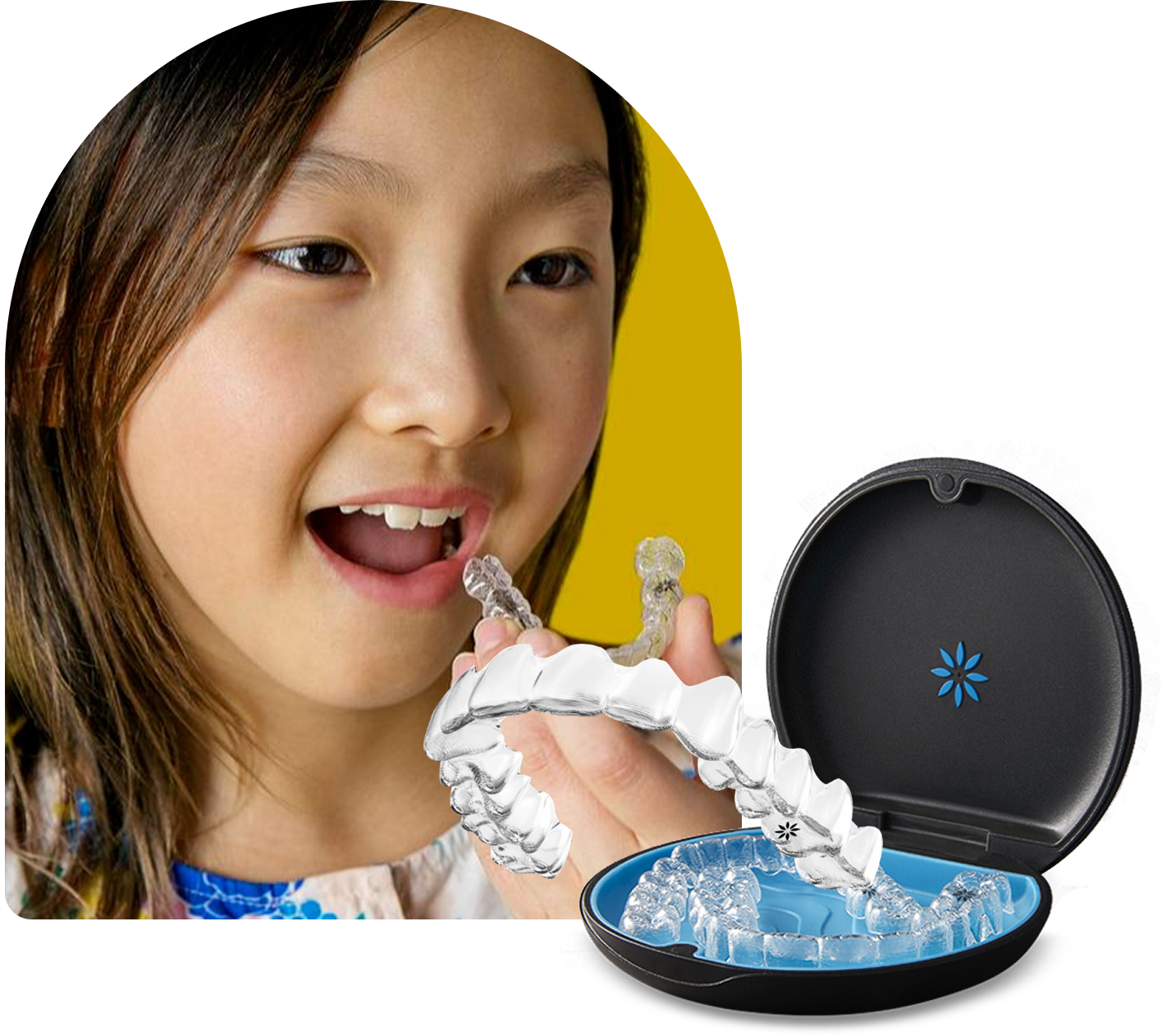
Invisalign First at a glance
| Question | At Yonsei Baro |
|---|---|
| Who it is for | Children of about 6–10 with a mix of baby and adult teeth who need early treatment |
| What it can address | Selected early problems such as narrow arches, crowding, spacing and some crossbites, confirmed after examination |
| Daily wear | Usually 20–22 hours a day; removed only for meals, drinks other than water, and brushing |
| Check-ups | About every 6–10 weeks |
| Parents' role | Daily reminders, help with cleaning and keeping track of aligners |
| Treated by | Dr. Sally Chaekyung Lee, board-certified orthodontist and 2026 Invisalign® Purple Diamond Provider |
| Cost | Written estimate after examination, before you decide |
What is Invisalign First?
Invisalign First is a version of Invisalign designed for growing children. Between roughly 6 and 10, baby teeth fall out, adult teeth come in and the jaws are still developing. Invisalign First aligners are planned with that in mind, leaving room for erupting teeth while gently guiding the ones already in place.
This is Phase 1 treatment. Its aim is a healthier starting point rather than a finished adult smile: room for adult teeth and a bite that lets the jaws develop normally. Read more about early orthodontic treatment .
Which early problems can Invisalign First help with?
After an examination, Dr. Lee may suggest Invisalign First for problems such as:
- Narrow upper or lower arches that leave too little room for adult teeth
- Crowding of the front teeth as adult incisors come in
- Spacing problems, including gaps left after early loss of baby teeth
- Some crossbites , where upper teeth bite inside the lower teeth
- Front teeth that are tipped or rotated in ways that affect the bite
Aligners are not the right tool for every child. Significant skeletal problems may respond more predictably to growth guidance appliances , and habits like tongue thrusting may need a habit or functional appliance . Sometimes the right answer is simply to monitor growth and wait.
How does Invisalign First compare with fixed appliances?
Both can work well for the right child. Dr. Lee explains which she would recommend and why.
| Consideration | Invisalign First | Fixed expander or partial braces |
|---|---|---|
| Removable | Yes, for meals and brushing | No, fixed in place by the orthodontist |
| Depends on daily wear | Yes, results rely on 20–22 hours a day | Works continuously without the child’s cooperation |
| Cleaning | Teeth brushed and flossed as normal | Needs extra care around bands, brackets and wires |
| Often suits | Children who can manage a removable appliance with parental support | Some skeletal problems and children who may struggle with wear time |
What is the parent’s role during Invisalign First?
With removable aligners, a parent is part of the treatment team. Children of this age rarely track wear time on their own, so a few routines make a large difference:
- Morning and bedtime checks. Aligners in after breakfast and through the night.
- A case for every meal. Many lost aligners are wrapped in a napkin at lunch and thrown away.
- Brush before aligners go back in, and give water only while they are in; juice and milk pool under the trays and raise the risk of decay.
- Message us early. If an aligner cracks, is lost or stops fitting, send a photo by WhatsApp or KakaoTalk and we will advise you.
Our cavity prevention guide covers simple steps that protect young teeth during treatment.
How does treatment work at Yonsei Baro?
1. Examination and growth assessment
About 60 minutes: X-rays or a 3D CT scan, a digital scan, photographs and a growth-plate analysis. Dr. Lee then explains whether to treat now or wait.
2. A plan built around growth
If aligners suit your child, Dr. Lee plans the movements in ClinCheck® software, allowing for teeth still to erupt, and gives you a timeline and written estimate.
3. Aligners, check-ups and what comes next
Check-ups are about every 6–10 weeks. At the end of Phase 1, results are held with retainers or monitoring while the remaining adult teeth come in, and Dr. Lee reviews whether Phase 2 is needed.
Who will treat your child?
Every child is examined and treated by Dr. Sally Chaekyung Lee, a board-certified orthodontist, former director of pediatric and adolescent orthodontics at CDC Children’s Dental Clinic, and a mother herself.
Dr. Lee is a 2026 Invisalign® Purple Diamond Provider. Align Technology assigns these tiers by the number of Invisalign cases a doctor treats, so the status reflects experience with the system; it does not promise a particular result for any child.
Invisalign First FAQs
What is the right age to start Invisalign First?
Most children who use it are about 6 to 10, once the first adult molars and some adult front teeth are in. Age alone does not decide it. The American Association of Orthodontists suggests a first check by about age 7, and that visit shows whether early treatment would help now or whether waiting is wiser.
How can I help my child wear aligners for enough hours?
Build wear into routines rather than relying on memory: aligners in straight after breakfast, a case packed for school lunch, and aligners in all night. A simple chart on the fridge helps. If wear time keeps slipping, tell Dr. Lee early, because a fixed appliance may then be the more reliable option.
Will my child still need braces or aligners when older?
Possibly. Phase 1 creates a healthier starting point but does not finish every detail while adult teeth are still coming in. Some children need just monitoring and retainers afterwards; others benefit from a shorter Phase 2 in their teens. Dr. Lee reassesses at the end of Phase 1.
What if my child loses an aligner at school?
Send us a message on WhatsApp or KakaoTalk, ideally with a photo of the teeth, and say which aligner number was lost. We will tell you which set to wear in the meantime and arrange a replacement or a visit if needed.
Is Invisalign First an alternative to a palatal expander?
Sometimes. Aligners can widen narrow arches in some children, while a fixed expander works continuously and is often chosen for larger or skeletal width problems. The choice depends on the cause, your child’s age and cooperation. Dr. Lee explains the options after the examination.
Medically reviewed by Dr. Sally Chaekyung Lee, DDS, PhD
Board-certified orthodontist (Korea Ministry of Health and Welfare) · Adjunct Professor of Orthodontics, Yonsei University · Last updated October 2026
This page is general information, not a diagnosis. Treatment results and duration vary from person to person. Orthodontic treatment can cause temporary discomfort and, in some cases, root shortening, gum recession or tooth decay if oral hygiene is poor; teeth can relapse if retainers are not worn as instructed.
Not sure if your child needs early treatment?
Book an orthodontic check. Dr. Lee will examine your child, explain whether to treat now or wait, and answer your questions in English. Isu Station Exit 2 · Open until 9 PM Mon & Thu · Saturdays 9 AM–2 PM.