
Home › Orthodontics › Braces
Fixed braces · Children, teens & adults
Braces in Seoul: Metal, Ceramic and Lingual Options
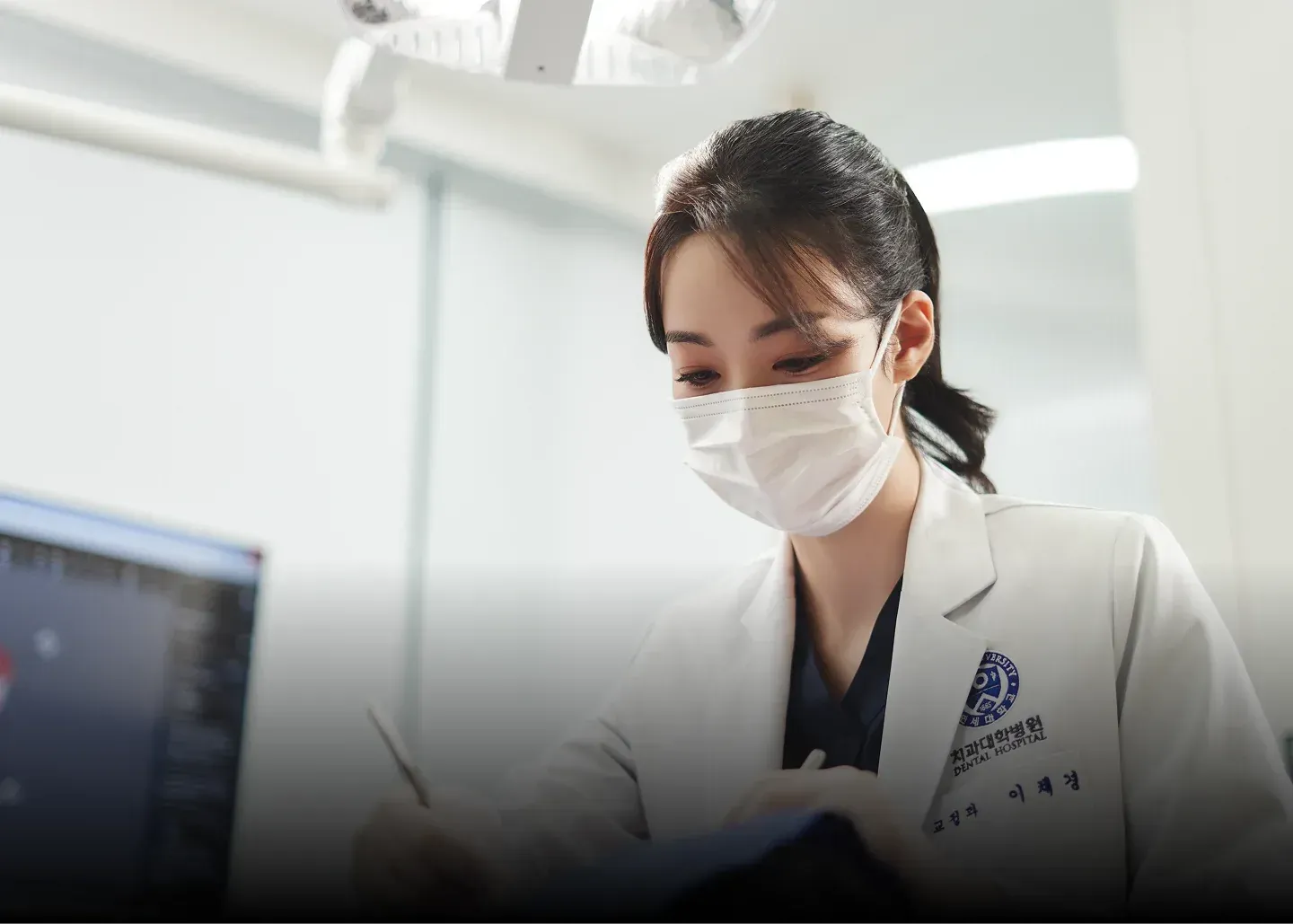
Braces are fixed brackets and wires that move teeth with steady, controlled pressure. At Yonsei Baro Orthodontics & Pediatric Dentistry, beside Isu Station in Seoul, Dr. Sally Chaekyung Lee offers metal, ceramic (tooth-coloured) and lingual (behind-the-teeth) braces. She plans and adjusts every case herself, in English, with check-ups about every 4–6 weeks.
Braces at a glance
| Question | At Yonsei Baro |
|---|---|
| Types offered | Metal, ceramic (tooth-coloured) and lingual (behind the teeth) |
| Suitable for | Children, teens and adults, including many complex bite problems |
| Check-ups | About every 4–6 weeks while braces are on |
| Treated by | Dr. Sally Chaekyung Lee, board-certified orthodontist, from start to finish |
| Language | Consultation and every explanation in English |
| Cost | Written estimate after a full examination |
| After braces | Retainers for every case, with continued retainer check-ups |
How do braces work?
Small brackets are bonded to the teeth and joined by an archwire shaped to the planned arch. As the wire tries to return to that shape, it applies light, continuous pressure, and the bone around each root slowly remodels so the tooth can move. Braces work day and night without you having to remember anything.
Which type of braces is right for me?
All three types work on the same principles. They differ in what the brackets are made of and where they sit: stainless steel on the front of the teeth, tooth-coloured ceramic on the front, or brackets bonded behind the teeth where they are hidden. Dr. Lee recommends a type after your examination, based on your bite, the movements needed and what matters to you day to day.
Explore braces and related topics
Metal Braces
Stainless-steel brackets for precise control of complex tooth movements, for children, teens and adults.
Braces vs Clear Aligners
A side-by-side guide to visibility, control, hygiene, eating and visit frequency.
Who are braces suitable for?
Braces treat a wide range of problems, from crowded teeth and gaps to deep bites , crossbites and open bites, and are often preferred when teeth need large, precise movements. There is no upper age limit if the gums and bone are healthy; see orthodontics for adults . For children, Dr. Lee first checks whether treatment is needed now or whether monitoring growth is wiser.
How often are braces adjusted?
About every 4–6 weeks, when wires are changed and progress is checked against your plan. Evening hours until 9 PM on Mondays and Thursdays, and Saturday mornings, help students and working adults keep appointments. The full journey, from the 60-minute examination to retainers, is set out in our treatment process .
Caring for your braces
Plaque collects around brackets, so careful daily cleaning matters; see brushing and flossing with braces and what to eat with braces . If a bracket comes loose or a wire pokes, send us a photo by WhatsApp or KakaoTalk and we will advise you and arrange a visit.
Braces FAQs
How long do braces usually take?
It depends on how far the teeth need to move and how much the bite needs to change. Simpler cases can finish sooner, while complex bites take longer; our two published teenage braces cases took 18 and 19 months. Dr. Lee gives you an estimated timeline after your examination.
Do braces hurt?
Having braces fitted is not usually painful, but teeth often feel tender for a few days afterwards and after some adjustments, and brackets can rub the cheeks at first. Orthodontic wax, soft food and NovaCare, a device we use to help reduce discomfort, can make the first weeks easier.
Can I play sports or a musical instrument with braces?
Yes. Wear a mouthguard for contact sports, and ask us which type fits comfortably over braces. Wind and brass players usually need a short adjustment period while the lips get used to the brackets. Mention it at your consultation so Dr. Lee can factor it into the choice of appliance.
What happens to my braces if I move abroad?
Tell us your expected departure date at the first visit so Dr. Lee can plan around it. If you leave before treatment ends, we prepare English records, 3D scans, X-rays and progress notes so an orthodontist abroad can continue. See moving during treatment.
Medically reviewed by Dr. Sally Chaekyung Lee, DDS, PhD
Board-certified orthodontist (Korea Ministry of Health and Welfare) · Adjunct Professor of Orthodontics, Yonsei University · Last updated October 2026
This page is general information, not a diagnosis. Treatment results and duration vary from person to person. Orthodontic treatment can cause temporary discomfort and, in some cases, root shortening, gum recession or tooth decay if oral hygiene is poor; teeth can relapse if retainers are not worn as instructed.
Find out which braces suit you
Send us your concern and preferred dates. Dr. Lee will examine you herself and explain your options in English. Isu Station Exit 2 · Open until 9 PM Mon & Thu · Saturdays 9 AM–2 PM.