
Home › Orthodontics › Braces vs Clear Aligners
Decision guide · Teens & adults
Braces or Clear Aligners? A Balanced Guide to Choosing
Both fixed braces and clear aligners such as Invisalign can straighten teeth well. Braces give constant, precise control with nothing to remember; aligners are removable and discreet but must be worn 20–22 hours a day. At Yonsei Baro in Seoul, Dr. Sally Chaekyung Lee recommends an option only after examining your bite.
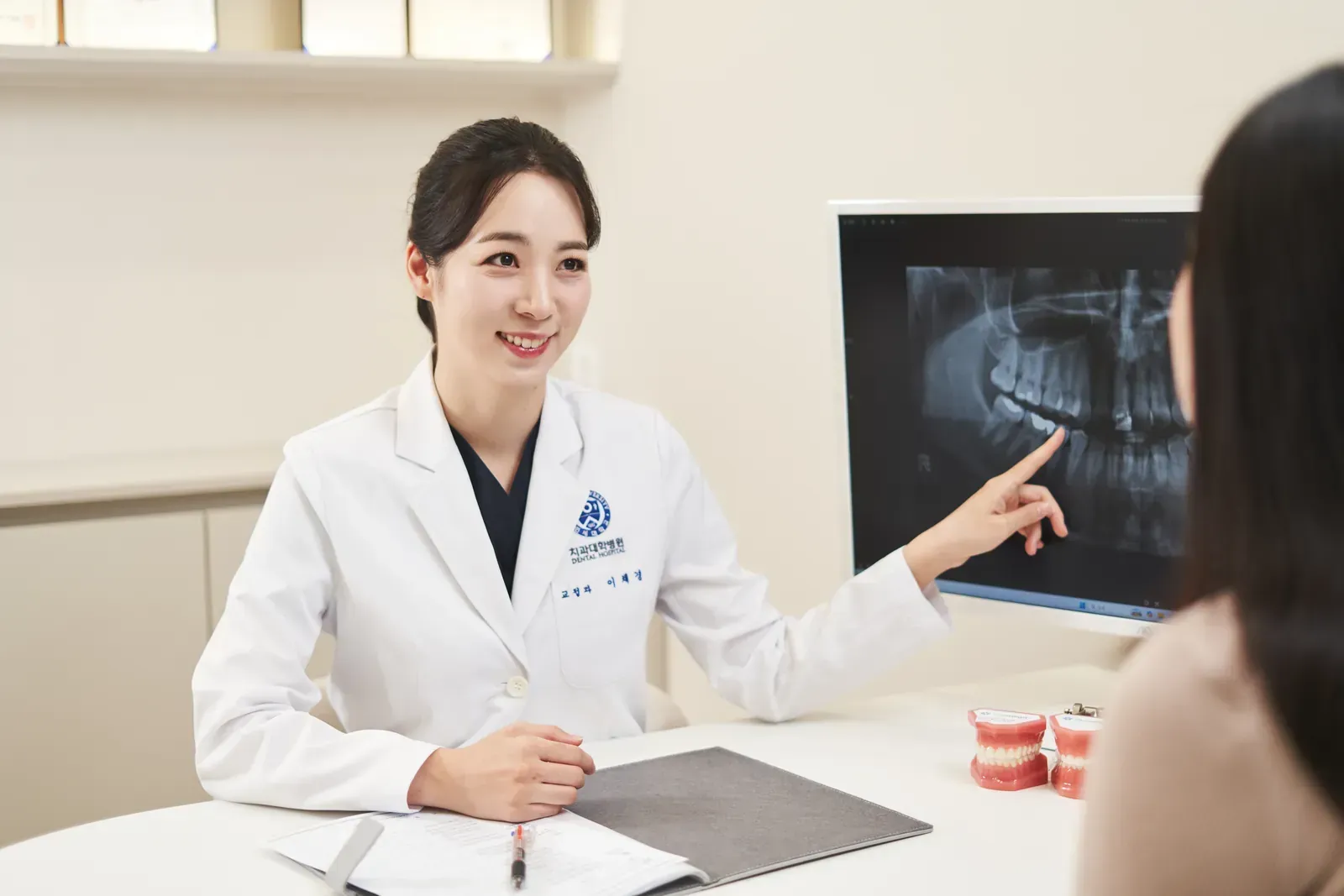
Braces vs clear aligners: side by side
| Factor | Fixed braces | Clear aligners |
|---|---|---|
| Visibility | Metal brackets show; ceramic brackets blend in; lingual brackets sit behind the teeth | Clear trays are hard to notice; small tooth-coloured attachments may be bonded to some teeth |
| Control of complex movements | Continuous, precise control of rotation, root angle and vertical position; often preferred for large or complex movements | Treat many problems well with careful planning; some complex movements are more predictable with braces or a combined approach |
| Compliance | Work 24 hours a day without you having to remember; elastics may still need to be worn | Work only while worn: 20–22 hours a day, removed for meals and brushing |
| Hygiene | Brackets trap plaque; careful brushing and interdental cleaning needed | Brush and floss as usual; clean aligners and brush before putting them back in |
| Eating | Avoid hard and sticky foods that can loosen brackets | Take aligners out to eat; frequent snacking means more removing and brushing |
| Sports and instruments | Mouthguard for contact sports; wind and brass players need time to adapt | Can come out briefly for a match or performance; the time counts against daily wear |
| Visit frequency | About every 4–6 weeks | About every 6–10 weeks |
| How fees are set | Case complexity, bracket type and expected duration; written estimate after examination | Case complexity, number of aligners and likely refinements; written estimate after examination |
Is one option better than the other?
Not for everyone. Both move teeth with gentle, controlled force; they simply deliver it differently. Braces are fixed and work continuously, while aligners are removable trays that work only while they are in your mouth.
So the real question is "which is better for my bite and my life?" Even when both would work, your job, sports, travel plans or confidence about 20–22 hours of daily wear may tip the balance.
When might braces be the stronger choice?
- Large or complex movements: severe rotations, moving roots a long way, closing extraction spaces, or guiding high or impacted canines into the arch.
- When wear time would be hard to manage: for example, younger patients, or anyone who knows they would leave aligners out.
- When you prefer not to think about it: fixed braces keep working whether or not you remember them.
If appearance matters, braces do not have to mean metal. Ceramic braces blend in with your teeth, and lingual braces sit behind them.
When might clear aligners suit you better?
- Mild to moderate crowding or spacing , or teeth that have shifted after earlier treatment.
- Work or social life: aligners are hard to notice and can come out for an important photograph or presentation.
- Eating and cleaning: no food restrictions, and you can brush and floss normally.
- Busy schedules and travel: check-ups about every 6–10 weeks rather than every 4–6 weeks.
We offer Invisalign and Angel Aligner ; see how the two systems compare . For younger patients, read about clear aligners for teens .
How does Dr. Lee help you choose?
Dr. Sally Chaekyung Lee is a board-certified orthodontist who offers both. She is a 2026 Invisalign Purple Diamond Provider and a member of the Korean Lingual Orthodontic Association, so she can weigh fixed and removable options from experience. Her recommendation follows a clear process:
- Diagnosis first. An examination of about 60 minutes with an intraoral digital scan, photographs, and X-rays or 3D CT, looking at teeth, bite, roots, jaws and face.
- What each appliance can predictably achieve for you. If both would work well, she will say so. If one would be a compromise, she will explain why.
- Your life. Work, school, sports, musical instruments, travel and, if you are in Seoul for a fixed term, your departure date.
- A written estimate. Fees depend on case complexity, the appliance and expected duration; see how orthodontic fees are set .
Occasionally the answer is a combination of the two. Whichever you choose, Dr. Lee treats you herself through to your retainers , and explains everything in English.
Braces vs aligners FAQs
Are clear aligners slower than braces?
Not inherently. Treatment time depends mainly on how much your teeth and bite need to change. With aligners, the biggest factor you control is wear time: if trays are left out, teeth fall behind the plan and extra refinement aligners may be needed. With braces, broken brackets and missed appointments can slow things down. Dr. Lee gives you an estimated timeline for each option.
Can I switch from braces to aligners partway through treatment?
Sometimes. Dr. Lee would first check whether the remaining movements can be done predictably with aligners, then take a new digital scan and plan. It can make sense, for example, when complex movements are finished and only fine alignment remains. Because the plan and appliances change, she would explain any change to your timeline and fees in writing first.
Which is easier for a teenager, braces or aligners?
It depends on the teenager. Aligners suit young people who are organised and motivated, and parents can help by keeping an eye on wear time. Braces suit teens who might forget or lose aligners, or who play sports where trays would often come out. Dr. Lee talks this through honestly with both the teen and the parents.
Is one option more comfortable than the other?
Both cause pressure or tenderness for a few days after an adjustment or a new set of aligners. Braces can rub the cheeks and lips at first, while aligners have smooth edges but need to be taken in and out. Comfort varies from person to person, and both usually become easier within the first few weeks.
Do braces and aligners cost different amounts?
They can, but there is no fixed rule. Fees depend on the complexity of your case, the type of appliance and how long treatment is likely to take, so they cannot be compared fairly without an examination. If more than one option suits you, you receive a written estimate for each. Orthodontic treatment is generally not covered by Korea’s National Health Insurance.
Related pages
Medically reviewed by Dr. Sally Chaekyung Lee, DDS, PhD
Board-certified orthodontist (Korea Ministry of Health and Welfare) · Adjunct Professor of Orthodontics, Yonsei University · Last updated October 2026
This page is general information, not a diagnosis. Treatment results and duration vary from person to person. Orthodontic treatment can cause temporary discomfort and, in some cases, root shortening, gum recession or tooth decay if oral hygiene is poor; teeth can relapse if retainers are not worn as instructed.
Not sure which to choose?
Book an examination and Dr. Lee will explain which options suit your teeth, in English, with a written estimate. Isu Station Exit 2 · Open until 9 PM Mon & Thu · Saturdays 9 AM–2 PM.