
Home › Orthodontics
Orthodontics · Children, teens & adults
Orthodontics in Seoul for Children, Teens and Adults
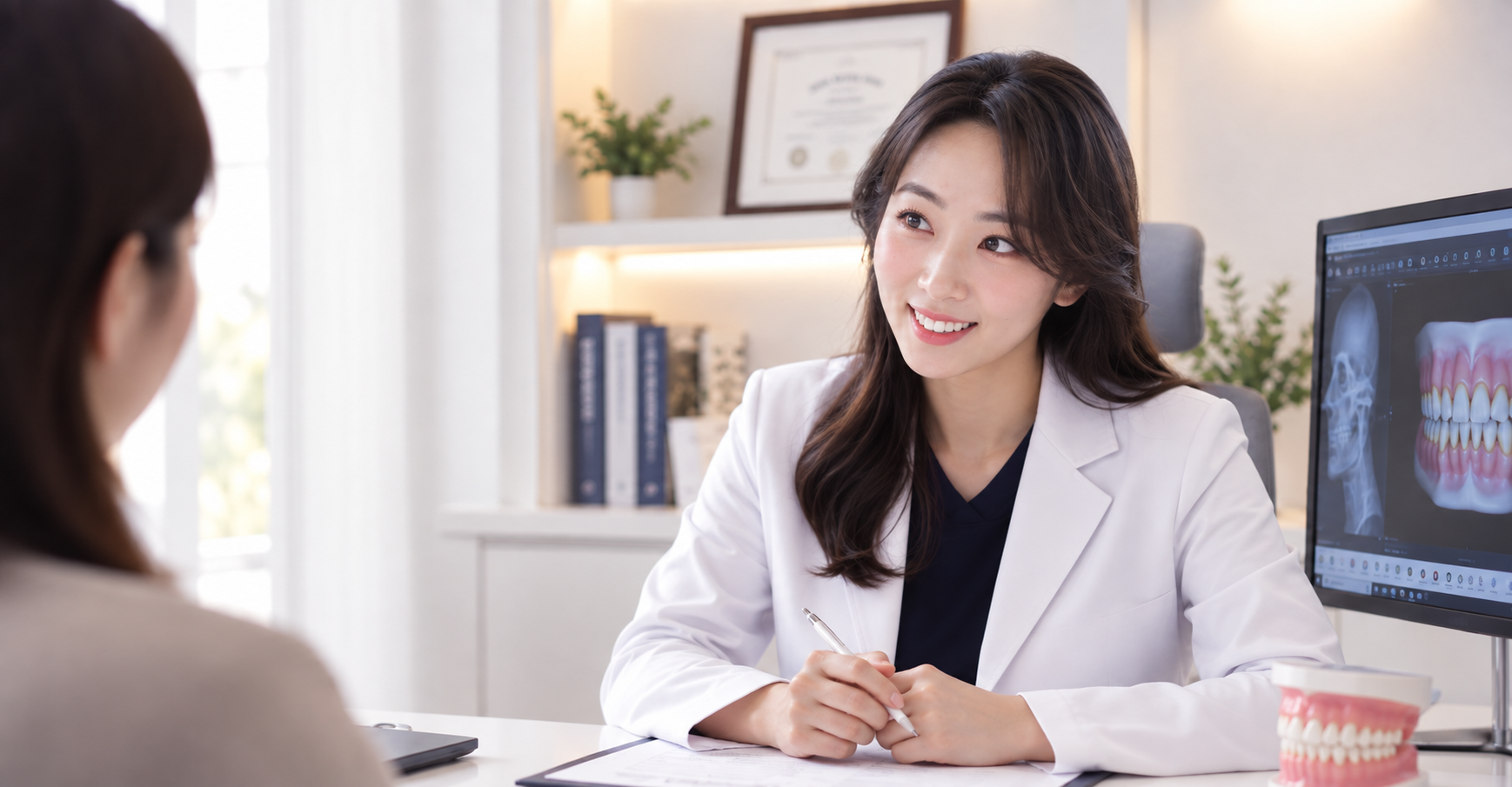
Yonsei Baro Orthodontics & Pediatric Dentistry, beside Isu Station in Seoul, straightens teeth and corrects bites for children, teenagers and adults. Dr. Sally Chaekyung Lee, a board-certified orthodontist, diagnoses and treats every case herself, from the first consultation until the braces or aligners come off, and explains each step in English.
Orthodontics at Yonsei Baro at a glance
| Question | At Yonsei Baro |
|---|---|
| Who we treat | Children in the growth phase, teenagers and adults |
| Who treats you | Dr. Sally Chaekyung Lee, board-certified orthodontist, from first consultation to the end of active treatment |
| Appliances | Invisalign, Invisalign First, Angel Aligner, Angel Aligner KiD; metal, ceramic and lingual braces; growth-phase appliances |
| First examination | About 60 minutes: intraoral digital scan, X-rays or 3D CT, photographs and a full examination |
| Check-ups | Braces about every 4–6 weeks; aligners about every 6–10 weeks |
| After treatment | Retainers for every case, with continued retention check-ups |
| Cost | Written estimate after the examination, before you decide |
| Language | Consultation and every explanation in English |
Who do we treat?
Orthodontic needs change with age. A seven-year-old with a crossbite, a teenager with crowded canines and an adult whose teeth have drifted since braces each need a different approach. Dr. Lee plans around where you are in growth and in life, not around a single appliance.
Children (about 6–12)
While the jaws are still growing, some problems are easier to guide than to correct later, and sometimes the right answer is to monitor. Dr. Lee, a mother herself and former director of pediatric and adolescent orthodontics at CDC Children’s Dental Clinic, explains when to act and when to wait.
Teenagers (about 12–18)
Once most permanent teeth are in, full treatment with braces or clear aligners is common. Monday and Thursday evening hours and Saturday mornings help teenagers avoid missing class.
Adults
Teeth can be moved at any age when the gums and bone around them are healthy. Dr. Lee had orthodontic re-treatment herself in her thirties, so she understands adult concerns about work, appearance and time.
Which appliance is right for you?
Clear aligners and fixed braces can both move teeth precisely. The right choice depends on the movements your teeth need, your bite, how consistently you can wear a removable appliance and your daily routine. Because Dr. Lee offers both, her recommendation follows the diagnosis rather than a preferred product. For a side-by-side view, read braces vs clear aligners .
Clear aligners
Invisalign
Removable clear aligners planned in ClinCheck® software. Dr. Lee is a 2026 Invisalign® Purple Diamond Provider.
Invisalign First
Clear aligners for early (Phase 1) treatment in children whose baby and adult teeth are mixed, typically around ages 6–10.
Clear aligners for teens
How aligners fit around school, sport and music, and how parents can help with daily wear time.
Angel Aligner
A clear aligner system planned in iOrtho™ software and made from MasterControl materials.
Angel Aligner KiD
Angel Aligner’s system for children’s early treatment, and the signs a child may suit removable aligners.
Invisalign vs Angel Aligner
A neutral comparison of planning software, materials and product options from the two systems.
Braces and retainers
Braces
How fixed braces work, who they suit and how to look after them, with visits about every 4–6 weeks.
Ceramic braces
Tooth-coloured brackets that blend in with your smile, plus simple habits that limit staining.
Lingual braces
Brackets bonded behind the teeth, out of sight. Whether they suit your bite is checked case by case.
Braces vs clear aligners
A decision guide to control, visibility, hygiene, sport and day-to-day responsibility.
Retainers
Why every case ends with retainers, fixed or removable, and what to do if one breaks or you move away.
Growth-phase and specialised treatment
Some orthodontic care is about timing or one specific goal rather than a full course of braces. These pages explain each approach, who it is for and when it is not the right choice.
Early treatment (Phase 1)
What an early check can show, how two-phase treatment works, and when waiting is the wiser choice.
Growth guidance
Using a child’s natural growth to improve how the jaws relate, timed with skeletal-maturity analysis.
Habit & functional appliances
How mouth breathing, tongue thrust and thumb sucking affect the bite, and the appliances that can help.
Limited treatment
Aligning a few front teeth, offered only after confirming it will not harm the overall bite.
Orthodontic re-treatment
Why teeth move after earlier braces, and the options for bringing them back into line.
Before implants & crowns
Uprighting tipped teeth and redistributing space so implants, crowns or bridges can be placed well.
Continuing treatment from abroad
Started braces or aligners in another country? What to bring and how Dr. Lee assesses your case.
Braces & aligner problems
First steps for a loose bracket, poking wire or lost aligner, and how to send us a photo.
What bite and alignment problems do we treat?
Orthodontics treats more than crooked teeth. Before recommending anything, Dr. Lee looks at the teeth, bite, roots, jaw bones and the whole face. Problems we commonly see include:
- Crowded or overlapping teeth
- Gaps between teeth
- Deep bite (overbite)
- Protruding front teeth
- Underbite
- Crossbite
- Open bite
- Protruding mouth
- Impacted and high canines
- Jaw asymmetry
- Mouth breathing and its effect on the bite
Browse all conditions we treat , or see how three cases were planned in our before and after gallery , published with each patient’s consent.
What happens at your first orthodontic visit?
The first examination takes about 60 minutes: an intraoral digital scan (no impression putty), X-rays or a 3D CT scan, photographs and a full examination by Dr. Lee. For children, a skeletal-maturity analysis helps time treatment. Dr. Lee then explains the diagnosis, your options, an estimated timeline and a written estimate. Bring your passport or Residence Card and any previous X-rays, records or retainers. See the orthodontic treatment process and the diagnostic technology we use .
How are orthodontic fees set?
Fees depend on the complexity of the problem, the appliance and the expected length of treatment, so we do not quote prices before an examination. Orthodontics is generally not covered by Korea’s National Health Insurance, except treatment linked to specific congenital conditions such as cleft lip and palate. Read how orthodontic fees are set .
Orthodontics for international patients
If you are in Seoul for a fixed term, tell us your expected stay and Dr. Lee will plan around it. If you leave before treatment ends, we prepare English records, 3D scans in standard formats and progress notes, and can contact your next orthodontist directly. See moving during treatment and English receipts for insurance claims .
Orthodontics FAQs
Will the same orthodontist treat me from start to finish?
Yes. Dr. Sally Chaekyung Lee handles your consultation, treatment plan and every adjustment herself, through to the end of active treatment. Patients are not passed between doctors for orthodontics, so the person who designed your plan is the one checking its progress at each visit.
How do I know whether I need braces or clear aligners?
It depends on the tooth movements needed, your bite and how consistently you can wear a removable appliance. After the examination, Dr. Lee explains which options would work for you, the trade-offs of each and which she would recommend, so you can decide with full information.
When should my child have a first orthodontic check?
The American Association of Orthodontists suggests a first check by about age 7. Many children seen at that age only need monitoring; the visit tells you whether to wait or act early. Come sooner if you notice a crossbite, constant mouth breathing or a persistent thumb-sucking habit.
Can I use private or overseas insurance for orthodontics?
Some private and overseas policies include orthodontic benefits, so check yours. We do not bill insurers directly, but on request we provide English receipts, itemized statements, medical certificates and doctor’s letters. Ask your insurer which documents it needs before your first visit.
Are evening or Saturday orthodontic appointments available?
Yes. We are open until 9 PM on Mondays and Thursdays and from 9 AM to 2 PM on Saturdays, which helps students and working adults. Tuesdays and Fridays run from 10 AM to 7 PM. We are closed on Wednesdays, Sundays and public holidays.
Medically reviewed by Dr. Sally Chaekyung Lee, DDS, PhD
Board-certified orthodontist (Korea Ministry of Health and Welfare) · Adjunct Professor of Orthodontics, Yonsei University · Last updated October 2026
This page is general information, not a diagnosis. Treatment results and duration vary from person to person. Orthodontic treatment can cause temporary discomfort and, in some cases, root shortening, gum recession or tooth decay if oral hygiene is poor; teeth can relapse if retainers are not worn as instructed.
Book an orthodontic consultation in English
Send us your concern and preferred dates by WhatsApp, KakaoTalk or phone. Dr. Lee will examine you herself and explain every option. Isu Station Exit 2 · Open until 9 PM Mon & Thu · Saturdays 9 AM–2 PM.