
Home › Guides
Guides · Parents, teens & adults
Orthodontic Guides for Families in Seoul
These guides answer the questions families bring to us most often: when a child should first see an orthodontist, how long treatment takes, what to eat, how to keep braces clean and how to choose an orthodontist in Seoul. Each is written in plain English and reviewed by a board-certified specialist at Yonsei Baro near Isu Station.
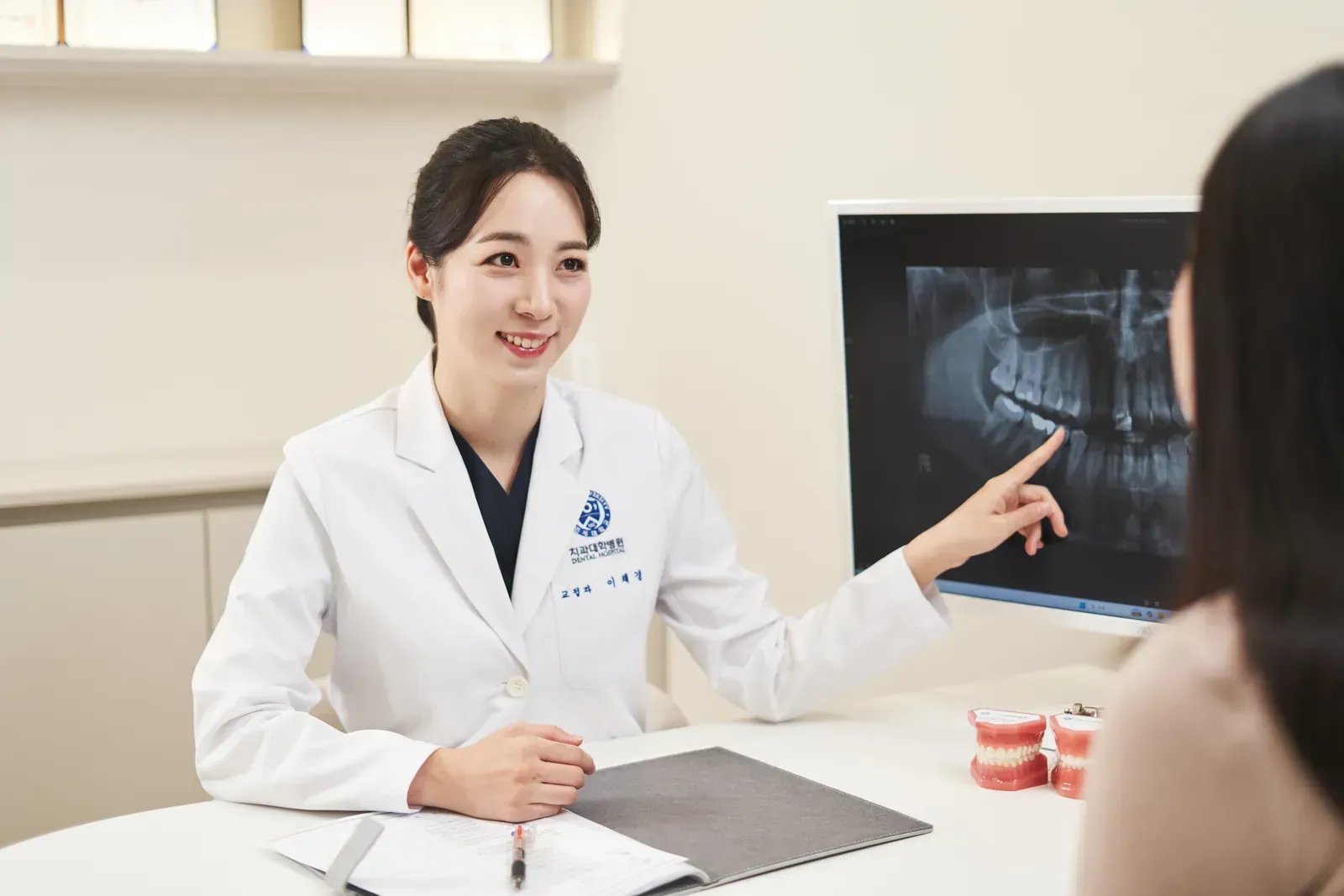
Our orthodontic guides
Start with the guide that matches where you are right now. Each one ends with short answers to related questions and links to the detailed treatment pages.
When should my child see an orthodontist?
Why a first check around age 7 is recommended, the signs worth noticing earlier, and what happens at the visit.
How long does orthodontic treatment take?
The factors that set your timeline, the phases of treatment and why retention continues long after braces come off.
What to eat with braces
Everyday and Korean foods to enjoy, adapt or avoid — from tteok and galbi to kimchi and iced coffee.
Brushing and flossing with braces
A step-by-step routine for brackets and wires, the tools that help, and how to clean clear aligners.
Thumb sucking and pacifiers
When a sucking habit starts to matter for the teeth and bite, and gentle ways to help a child stop.
Choosing an orthodontist in Seoul
What the Korean specialist title 치과교정과 전문의 means, how to check it and the questions worth asking.
Which guide should I read first?
It depends on where you are in the journey. A few common starting points:
- Your child is between about 6 and 9 years old. Begin with when to book a first orthodontic check , then read about early (Phase 1) treatment .
- Braces were fitted recently. Read what to eat with braces and how to clean around brackets together — most problems in the first months come from food and plaque.
- You are in Seoul for a fixed term. See how long treatment takes and how treatment continues if you move .
- You are comparing clinics. Our guide to choosing an orthodontist in Seoul lists the questions to ask at any consultation.
Common bite problems, explained
If you already know what is bothering you, the condition pages describe causes, timing and treatment options in more detail. The full list is on conditions we treat ; these are the ones parents ask about most:
- Crowded teeth — when there is not enough room for the adult teeth
- Deep bite (overbite) — upper front teeth covering too much of the lower teeth
- Protruding front teeth — and why they are more easily injured
- Underbite and crossbite — often worth assessing early
- Impacted or high canines — eye teeth that are not coming in where they should
- Mouth breathing — and how it can affect a growing face and bite
Looking for a quick answer?
Practical questions — booking in English, receipts for insurance, opening hours, parking — are answered in a sentence or two on our frequently asked questions page , each with a link to the page that covers it in depth.
How these guides are written and reviewed
Our guides follow mainstream guidance from bodies such as the American Association of Orthodontists and the American Academy of Pediatric Dentistry. Every guide is reviewed by a board-certified specialist before it is published and checked again at least once a year. Read our editorial policy for the details, and our medical disclaimer for what general information can and cannot do.
Questions about our guides
Can an online guide tell me whether my child needs braces?
No. A guide can help you notice signs and prepare questions, but deciding whether treatment is needed — and when — takes an examination with X-rays and a look at how the teeth, jaws and face are developing. If something in a guide sounds familiar, the next step is a consultation.
Who reviews the orthodontic guides on this website?
One of our two board-certified specialists reviews each guide before it is published: Dr. Sally Chaekyung Lee, adjunct professor of orthodontics at Yonsei University, for orthodontic topics, and Dr. Ho-seon Lee for children’s dentistry. The reviewer’s name and review date appear at the end of every guide.
What if my question is not covered in any guide?
Send it to us. WhatsApp is usually the quickest way to reach us in English, and you can also email or use the contact form. General questions get a general answer; anything specific to your own teeth, or your child’s, needs an examination.
How often are the guides updated?
Each guide is reviewed at least once a year, and sooner if professional guidance changes. The date of the most recent review is shown at the bottom of the page, so you can always see how current the information is before you rely on it.
Medically reviewed by Dr. Sally Chaekyung Lee, DDS, PhD
Board-certified orthodontist (Korea Ministry of Health and Welfare) · Adjunct Professor of Orthodontics, Yonsei University · Last updated October 2026
This page is general information, not a diagnosis. Treatment results and duration vary from person to person. Orthodontic treatment can cause temporary discomfort and, in some cases, root shortening, gum recession or tooth decay if oral hygiene is poor; teeth can relapse if retainers are not worn as instructed.
Have a question a guide can’t answer?
Tell us what you are noticing and when you are free. Dr. Lee will examine you or your child herself and explain the options in English. Isu Station Exit 2 · Open until 9 PM Mon & Thu · Saturdays 9 AM–2 PM.