
Home › Orthodontics › Treatment Process
Orthodontics · Step by step
How Orthodontic Treatment Works, Step by Step
Orthodontic treatment at Yonsei Baro follows five steps: you contact us, have a 60-minute examination with 3D records, receive a plan and written estimate, go through active treatment, then move to retainers. Dr. Sally Chaekyung Lee, a board-certified orthodontist near Isu Station in Seoul, guides every step herself, in English.
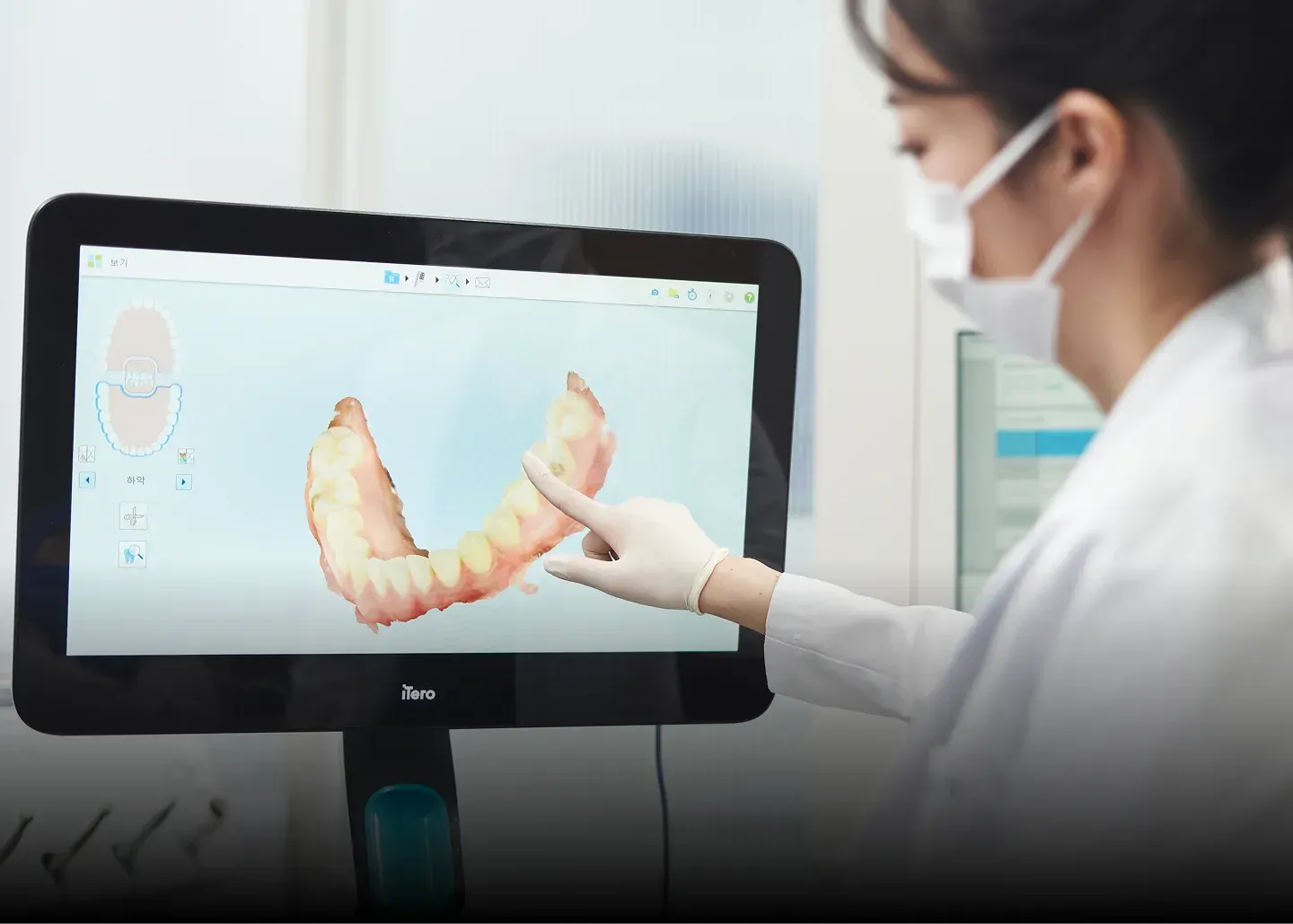
The treatment process at a glance
| Question | At Yonsei Baro |
|---|---|
| 1. Contact | WhatsApp, KakaoTalk, email, phone or Naver Booking |
| 2. Examination | About 60 minutes: scans, X-rays or 3D CT, photos and a full exam |
| 3. Plan & estimate | Diagnosis, options, timeline and a written estimate, explained in English |
| 4. Active treatment | Braces visits about every 4–6 weeks; aligners about every 6–10 weeks |
| 5. Retention | Retainers for every case, with continued retention check-ups |
| Your orthodontist | Dr. Sally Chaekyung Lee from first consultation to debonding |
Step 1: Get in touch
For international patients, WhatsApp is usually the quickest way to reach us in English. You can also use KakaoTalk , email, phone or Naver Booking (Korean interface).
It helps to tell us your main concern, the patient’s age, preferred days and times, and how long you expect to stay in Korea. Photos of your teeth and any previous orthodontic records are welcome. If you would like parking, mention it when you book. See how to book for details.
Step 2: Your first examination (about 60 minutes)
The first orthodontic examination takes about 60 minutes. Depending on what is needed, it includes:
- An intraoral digital scan of your teeth, with no impression putty
- X-rays and, when useful, a 3D CT scan of the teeth, jaws and jaw joints (RAY Quantum 5D)
- Facial and intraoral photographs, and a RAY Face 3D face scan when helpful
- A clinical examination of teeth, bite, gums, jaw joints and facial balance by Dr. Lee
- For children, a skeletal-maturity assessment where growth timing matters
What to bring
- Your passport or Residence Card
- Recent X-rays or previous orthodontic records, if you have them
- Any current retainers or aligners
If you are continuing treatment started in another country, see continuing treatment from abroad . More practical details are on your first visit .
Step 3: Diagnosis, options and a written estimate
Dr. Lee explains what she found, in plain English: the problem, its likely cause, and whether treatment is needed now, later or at all. Where several approaches are possible, such as braces , Invisalign or Angel Aligner , she compares them honestly, including what each can and cannot do for your bite.
You receive an estimated timeline and a written estimate before you decide anything. Our page on the cost of orthodontic treatment explains how fees are set. There is no pressure to start on the day.
Step 4: Active treatment
Braces are bonded, or aligners are fitted with any small attachments they need, and you receive clear care instructions. Visits are usually about every 4–6 weeks for braces and about every 6–10 weeks for aligners. Dr. Lee checks progress herself at each visit and adjusts the plan when teeth do not move as expected.
Our evening hours on Mondays and Thursdays and Saturday mornings make it easier to fit visits around school and work. If a bracket comes loose or an aligner is lost between visits, message us with a photo; see braces and aligner problems . NovaCare, a device designed to reduce discomfort during the adaptation period, may be offered where appropriate.
Step 5: Retention
When teeth reach their planned positions, braces are removed or the last aligners are finished, and retainers are provided. Every case finishes with retainers, because teeth tend to drift back without them. We continue to see you for retention check-ups, and if you move, we provide your retainer records.
One orthodontist, start to finish
At Yonsei Baro, Dr. Sally Chaekyung Lee personally handles consultations and every treatment explanation. You are not passed between doctors during orthodontic treatment. Read more about our approach .
If you leave Korea during treatment
Tell us your expected departure date as early as possible. We can plan around it and, when you go, prepare full English records, digital 3D scans in standard formats, X-rays, photos, diagnosis, plan and progress notes, and appliance details. Dr. Lee can contact your next orthodontist directly. See moving during treatment .
Treatment process FAQs
How long is the first orthodontic appointment?
Plan for about 60 minutes. That covers digital scans, X-rays or 3D CT when needed, photographs and Dr. Lee’s examination. She then explains what she found, the treatment options and the expected timeline, and you receive a written estimate. Bring any questions you have; there is time to go through them.
Do I have to decide on treatment at the first visit?
No. You leave with an explanation of the problem, the options and a written estimate, and you can take whatever time you need. Many families like to discuss options at home or check them against school or relocation plans. Message us whenever you have questions.
Can I start treatment if I am only in Seoul for a year or two?
Often, yes. Some problems can be completed within a typical posting, and others can be started here and continued abroad. Tell us your expected dates at the first visit so Dr. Lee can recommend a realistic plan, and see our page on short stays in Seoul for more.
How often will I need to come in during treatment?
With braces, visits are usually about every 4 to 6 weeks. With clear aligners, they are usually about every 6 to 10 weeks. The exact interval depends on your plan, and we try to schedule around school, work and travel.
Will I see the same orthodontist at every visit?
Yes. Dr. Sally Chaekyung Lee handles your consultation, diagnosis, treatment visits and retention check-ups herself. Patients are not passed between doctors during orthodontic treatment, and every explanation is given in English. Because she knows your case from the start, decisions along the way are made with the full history in mind.
Medically reviewed by Dr. Sally Chaekyung Lee, DDS, PhD
Board-certified orthodontist (Korea Ministry of Health and Welfare) · Adjunct Professor of Orthodontics, Yonsei University · Last updated October 2026
This page is general information, not a diagnosis. Treatment results and duration vary from person to person. Orthodontic treatment can cause temporary discomfort and, in some cases, root shortening, gum recession or tooth decay if oral hygiene is poor; teeth can relapse if retainers are not worn as instructed.
Ready for your first examination?
Send us your concern and preferred dates. Dr. Lee will examine you herself and explain your options in English. Isu Station Exit 2 · Open until 9 PM Mon & Thu · Saturdays 9 AM–2 PM.