
Home › Orthodontics › Kids' Orthodontics
Kids’ orthodontics · Ages 6–12
Children’s Orthodontics in Seoul, Explained for Parents
Many children benefit from an orthodontic check between about 6 and 8, but not every child needs early treatment. At Yonsei Baro, near Isu Station in Seoul, board-certified orthodontist Dr. Sally Chaekyung Lee examines your child’s teeth, jaws and growth, then explains in English whether to watch, guide growth or treat now.
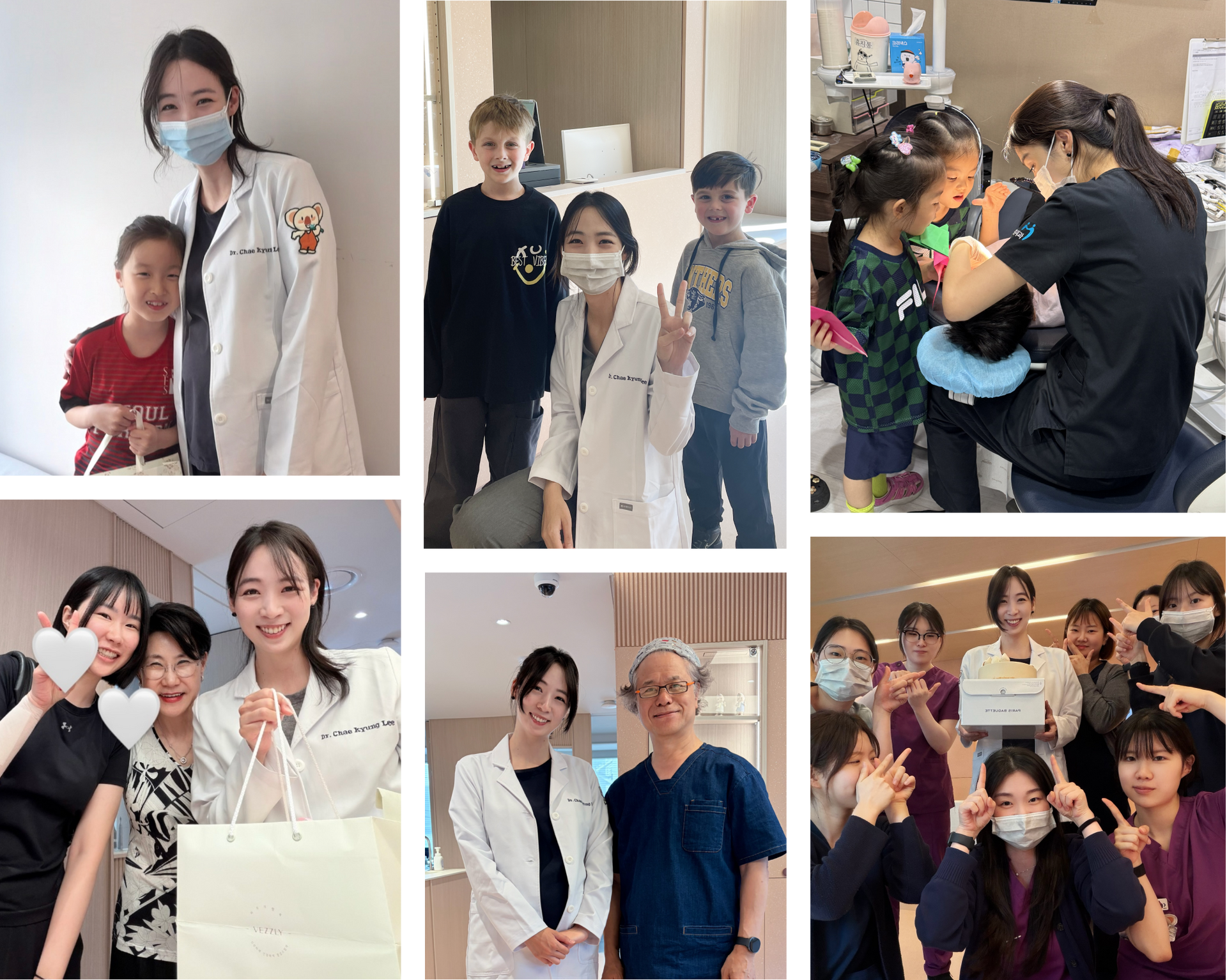
Kids’ orthodontics at a glance
| Question | At Yonsei Baro |
|---|---|
| Typical ages | About 6–12, while baby teeth and adult teeth are both present |
| First step | An orthodontic check-up; many children only need monitoring |
| Approaches | Monitoring, habit & functional appliances, growth guidance, space management |
| Aligners for kids | Invisalign First and Angel Aligner KiD, when they suit the problem |
| Treated by | Dr. Sally Chaekyung Lee, board-certified orthodontist, from first check to retainers |
| Language | Consultation and every explanation in English |
When should my child see an orthodontist?
Bite and jaw problems are easier to judge, and sometimes simpler to manage, while a child is still growing. Book a check if you notice any of these:
- Crowded or twisted front teeth coming in as baby teeth fall out
- Lower front teeth that bite in front of the upper teeth
- Upper front teeth that stick out
- Mouth breathing , thumb sucking, or a tongue that pushes forward when swallowing
- Baby teeth lost much earlier or later than usual
- A jaw that shifts to one side when your child bites together
Our guide when should my child see an orthodontist? has a fuller checklist.
Does every child need early treatment?
No. Many children with mild crowding or spacing simply need watching, and some issues settle as adult teeth erupt and the jaws grow. Early treatment makes sense when waiting would make a problem harder to correct: a crossbite that pushes the jaw sideways, front teeth that stick out far enough to risk injury, or a habit that is changing the bite.
When the right step is to wait, Dr. Lee will say so plainly and suggest when to look again. Our page on early orthodontic treatment (phase 1) covers the pros and cons.
Four ways we can guide a growing smile
Depending on what the examination shows, Dr. Lee may recommend one of these approaches, sometimes in combination.
1. Monitoring
Periodic check-ups to follow how adult teeth come in and how the jaws grow, so any treatment starts at a sensible time. For many children, this is all that is needed.
2. Habit & functional appliances
For mouth breathing, tongue thrust or thumb sucking that is affecting the teeth, appliances help retrain the muscles and protect the bite.
3. Growth guidance
Appliances that use natural growth to improve how the upper and lower jaws fit together, timed with a skeletal-maturity analysis and, when useful, 3D CT.
4. Space management
Space maintainers hold room for adult teeth when a baby tooth is lost early; other appliances can create space when there is too little.
Clear aligners for children
For suitable children with a mix of baby and adult teeth, aligners designed for kids can straighten front teeth, develop a narrow arch and correct some bite problems. We offer Invisalign First and Angel Aligner KiD .
Aligners only work while they are worn, so they suit children who can keep them in for the hours prescribed, with a parent’s help. For some problems a fixed or removable appliance is more predictable, and Dr. Lee will explain why she recommends one over another.
A specialist who looks at it as a parent
Dr. Sally Chaekyung Lee previously served as director of pediatric and adolescent orthodontics at CDC Children’s Dental Clinic (Cheongdam main clinic). She is a member of the Korean Academy of Growth Dentistry.
She is also a mother, and says she approaches children’s care as a mother first and an orthodontist second: explaining each option clearly, and recommending treatment when it will genuinely help rather than simply because it is possible. Your child sees Dr. Lee from the first check to the final retainer visit.
Planning around a move abroad
Many expat families are in Seoul for a fixed term. Share your expected dates at the first visit, and Dr. Lee can plan treatment in phases, for example completing a focused early phase here and leaving comprehensive treatment for later.
If you move mid-treatment, we prepare English records, 3D digital scans in standard formats, X-rays, photos and progress notes. See moving during treatment and our page for expat families .
Kids’ orthodontics FAQs
Is my child too young to see an orthodontist?
Usually not. A check between about 6 and 8, once the first adult front teeth and molars appear, lets Dr. Lee see how the jaws are developing. For most children the visit simply confirms that things are on track and sets a time to look again. If you notice an underbite, a jaw that shifts sideways or a habit affecting the teeth, come in sooner.
Will my child need to have teeth taken out?
Not necessarily. In growing children, crowding can sometimes be managed by guiding growth, holding space or developing a narrow arch. Whether extractions are ever needed depends on the amount of crowding, the bite and the facial profile, so Dr. Lee advises on it only after a full examination with X-rays or 3D CT.
Are clear aligners suitable for young children?
Some children are good candidates for Invisalign First or Angel Aligner KiD, particularly for crowded front teeth or a narrow upper arch. Aligners need to be worn for the hours prescribed, so a child’s routine and a parent’s support matter. Dr. Lee will tell you whether aligners or another appliance suit your child better.
Can my child’s treatment continue if we leave Korea?
Yes. Tell us your plans early so Dr. Lee can time each phase around your move. When you leave, we provide English records, 3D digital scans in standard formats, X-rays, photos and progress notes, and Dr. Lee can speak directly with your new orthodontist when needed.
Can my child have regular dental check-ups at the same clinic?
Yes. Our pediatric dentistry team is led by board-certified pediatric dentist Dr. Ho-seon Lee; contact us for pediatric dentistry appointment times. Let us know when you book that you’d like English support — Dr. Sally Chaekyung Lee and our team can help explain your child’s care in English.
Medically reviewed by Dr. Sally Chaekyung Lee, DDS, PhD
Board-certified orthodontist (Korea Ministry of Health and Welfare) · Adjunct Professor of Orthodontics, Yonsei University · Last updated October 2026
This page is general information, not a diagnosis. Treatment results and duration vary from person to person. Orthodontic treatment can cause temporary discomfort and, in some cases, root shortening, gum recession or tooth decay if oral hygiene is poor; teeth can relapse if retainers are not worn as instructed.
Book your child’s orthodontic check
Tell us your child’s age and what you have noticed. Dr. Lee will examine your child herself and explain the options in English. Isu Station Exit 2 · Open until 9 PM Mon & Thu · Saturdays 9 AM–2 PM.