
Home › Orthodontics › Space Maintainers
Kids’ orthodontics · Early tooth loss
Space Maintainers After Early Baby Tooth Loss
A space maintainer is a small appliance that holds open the gap left by a baby tooth lost too early, so neighbouring teeth do not drift and block the adult tooth. At Yonsei Baro, near Isu Station in Seoul, Dr. Sally Chaekyung Lee assesses whether one is needed and explains the choice in English.
Space maintainers at a glance
| Question | At Yonsei Baro |
|---|---|
| Purpose | Keep room for an adult tooth after a baby tooth is lost early |
| Common reasons | Decay, injury, or a baby tooth that had to be removed |
| Types | Fixed (cemented to a tooth) or removable, depending on the gap and age |
| Not always needed | For example, when the adult tooth is about to come in |
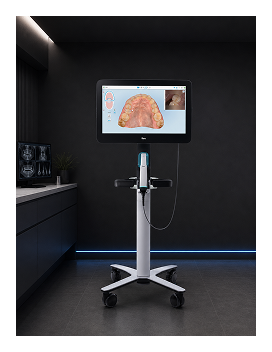
| Records | Intraoral digital scan, X-rays and, when helpful, 3D CT |
| Who is involved | Dr. Sally Chaekyung Lee (orthodontics) with our pediatric dentistry team |
Why do baby teeth matter for spacing?
Baby teeth are placeholders. Each one holds a space for the adult tooth developing underneath, and helps guide it into position. When a baby tooth comes out naturally, the adult tooth is usually close behind.
If a baby back tooth (molar) is lost years early, the teeth on either side can tip or drift into the gap, especially the first adult molars. The space can shrink, and the adult tooth may then come in out of line, stay stuck, or leave the arch crowded . Regaining lost space later usually takes more treatment than holding it now.
When is a space maintainer needed?
Not every early tooth loss needs one. Dr. Lee considers:
- Which tooth was lost: losing a baby molar usually matters more for spacing than losing a baby front tooth
- How long until the adult tooth is expected to erupt, checked on X-rays
- Whether space has already started to close
- Your child’s bite and any existing crowding
If the adult tooth is nearly ready to come through, or there is plenty of space, monitoring may be enough. Dr. Lee will tell you clearly which applies to your child.
Types of space maintainers
Fixed space maintainers
A thin wire loop attached to a band or crown on a neighbouring tooth, or a wire that runs along the inside of the arch when several teeth are missing. They are cemented in place, so they cannot be lost, and are removed once the adult tooth starts to appear.
Removable space maintainers
A plate that clips in and out, sometimes with a replacement tooth. These can suit older children who will wear them reliably, and are sometimes chosen when appearance matters, for example for a missing front tooth.
Creating space when it has been lost
When teeth have already drifted, appliances can sometimes move them back to regain space before the adult tooth erupts. This is part of the space management approach in our children’s orthodontics care.
How the orthodontist and pediatric dentist work together
Early tooth loss often starts with decay or an injury. Our pediatric dentistry team, led by board-certified pediatric dentist Dr. Ho-seon Lee , looks after check-ups, fillings , crowns for baby teeth and dental injuries . Dr. Sally Chaekyung Lee then plans how to protect the space for the adult teeth. Having both specialists in one clinic makes it easier to coordinate care.
Let us know when you book that you’d like English support — Dr. Sally Chaekyung Lee and our team can help explain your child’s care in English. Contact us for pediatric dentistry appointment times.
What to expect
- Examination and records. Dr. Lee checks the gap and bite, and X-rays show where the adult tooth is. Teeth are recorded with an intraoral digital scanner rather than impression putty.
- Fitting. At a later visit, the appliance is fitted and checked. It usually feels strange for a few days.
- Check-ups. We review the appliance and the developing tooth at regular visits.
- Removal. Once the adult tooth starts to come through, the space maintainer is removed or adjusted.
Caring for a space maintainer
- Brush around the band and wire carefully twice a day
- Avoid sticky foods such as toffee, chewy sweets and rice cakes, which can loosen a fixed appliance
- Encourage your child not to push or pull it with the tongue or fingers
- If it feels loose, bent or broken, send us a photo; see braces and appliance problems
Space maintainer FAQs
Does my child need a space maintainer for a lost front baby tooth?
Often not. Losing a baby front tooth early usually causes less drifting than losing a baby back tooth, especially once the baby canines are in place. Dr. Lee checks the spacing and your child’s bite. A removable appliance with a replacement tooth may occasionally be considered for appearance or speech, but it is not always necessary.
How long will my child wear a space maintainer?
Until the adult tooth is ready to come through, which can range from a few months to several years depending on which tooth was lost and how old your child is. X-rays help estimate the timing, and the appliance is reviewed at each check-up so it can be removed or adjusted at the right moment.
Is fitting a space maintainer uncomfortable?
Fitting does not usually need an injection. Your child may feel pressure as a band is placed and notice the appliance with the tongue for a few days. Most children adapt quickly. If the wire presses on the gum or cheek, contact us so Dr. Lee can check and adjust it.
What if the space has already closed?
It is not too late to act. Depending on how much space has been lost and your child’s age, an appliance may be able to move teeth back and regain room before the adult tooth erupts. In other cases, crowding is managed later with braces or aligners. Dr. Lee will explain which approach is realistic.
What happens if a space maintainer comes loose?
Keep the appliance if it comes out, and avoid having your child chew on it if it is half loose. Send a photo via WhatsApp or KakaoTalk so we can advise you and arrange a visit to re-cement or replace it. A loose space maintainer is not usually an emergency, but it should be checked soon.
Medically reviewed by Dr. Sally Chaekyung Lee, DDS, PhD
Board-certified orthodontist (Korea Ministry of Health and Welfare) · Adjunct Professor of Orthodontics, Yonsei University · Last updated October 2026
This page is general information, not a diagnosis. Treatment results and duration vary from person to person. Orthodontic treatment can cause temporary discomfort and, in some cases, root shortening, gum recession or tooth decay if oral hygiene is poor; teeth can relapse if retainers are not worn as instructed.
Has your child lost a baby tooth early?
Book a check and Dr. Lee will see whether the space needs protecting, and explain the options in English. Isu Station Exit 2 · Open until 9 PM Mon & Thu · Saturdays 9 AM–2 PM.