
Home › Orthodontics › Invisalign
Clear aligners · Teens & adults
Invisalign in Seoul, Planned by an Orthodontic Specialist
Invisalign straightens teeth with a series of custom, removable clear aligners worn 20–22 hours a day. At Yonsei Baro, near Isu Station, every case is diagnosed, digitally planned and checked in person by Dr. Sally Chaekyung Lee, a board-certified orthodontist and 2026 Invisalign Purple Diamond Provider, in English.
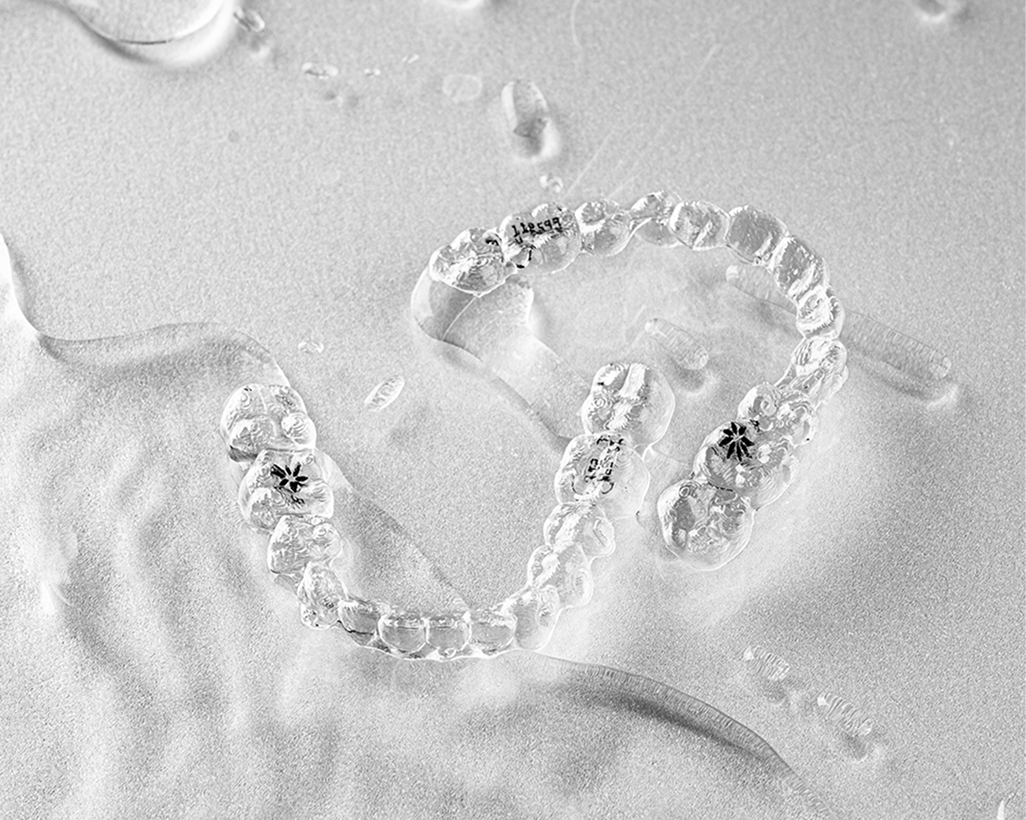
Invisalign at a glance
| Question | At Yonsei Baro |
|---|---|
| Often suits | Teens and adults with crowding, gaps, relapse after earlier braces, and many bite problems |
| Daily wear | 20–22 hours a day; removed only to eat, drink anything but water, and brush |
| Check-ups | About every 6–10 weeks, planned around work, school and travel |
| Treated by | Dr. Sally Chaekyung Lee, board-certified orthodontist, 2026 Invisalign Purple Diamond Provider |
| Language | Consultation and every explanation in English |
| Cost | Written estimate after a full examination and digital scan |
What is Invisalign?
Invisalign is a clear aligner system made by Align Technology. Instead of brackets and wires, you wear a sequence of thin, transparent trays made from SmartTrack® material. Each set is shaped slightly differently, so as you move through the series your teeth are guided step by step toward the planned position. The movements are mapped in advance in ClinCheck®, Invisalign's digital treatment-planning software.
Because aligners come out for meals and brushing, many people find them easier to live with than fixed braces. The trade-off is responsibility: aligners only work while they are in your mouth. Wearing them for fewer hours than prescribed is the most common reason a case falls behind plan.
Why the orthodontist matters more than the brand
The software proposes tooth movements, but it does not diagnose. Whether aligners suit your bite, where small tooth-coloured “attachments” are needed, when elastics help, and when a fixed appliance would do the job better are clinical decisions. Dr. Lee reviews and adjusts every ClinCheck plan herself, drawing on her specialist training at Severance Hospital, her PhD in orthodontics from Yonsei University and her experience teaching Invisalign to university-hospital residents.
Dr. Lee is a 2026 Invisalign® Purple Diamond Provider . Provider tiers reflect the volume of Invisalign cases a doctor has treated, so the status is a measure of experience, not a guarantee of results. What it means for you is that your plan is made by someone who has seen a very wide range of aligner cases.
Who is a good candidate?
Invisalign can treat many problems that once needed braces, including:
- Crowded or overlapping teeth
- Gaps between teeth
- Deep bites and many crossbites
- Teeth that moved after earlier orthodontic treatment
- People with important events ahead who prefer an appliance that is hard to notice
It is not the right tool for every case. Some skeletal problems, severe rotations or large tooth movements are more predictable with fixed braces or a combination approach. Dr. Lee will tell you honestly which option she would recommend, and why, after your examination.
How Invisalign treatment works at Yonsei Baro
1. Examination and digital records (about 60 minutes)
We take X-rays or a 3D CT scan, an intraoral digital scan (no impression putty) and photographs. Dr. Lee examines your teeth, bite, gums and jaw joints and looks at how your teeth relate to your lips and face.
2. Your ClinCheck plan, explained in English
Dr. Lee builds and refines your ClinCheck plan, then walks you through the expected tooth movements, the number of aligners, attachments or elastics you may need, the estimated timeline and a written estimate.
3. Fitting and regular checks
At the fitting visit, attachments are bonded and you receive your first aligners and wear instructions. Check-ups are usually every 6–10 weeks. If teeth do not track as planned, Dr. Lee orders a re-scan and refinement aligners.
4. Retainers
Every case finishes with retainers, because teeth tend to drift back without them. We keep seeing you after treatment for retainer checks.
Moving abroad during Invisalign?
Many of our patients are in Seoul for a fixed term. Tell us your expected departure date at the first visit and Dr. Lee will plan around it. If you leave before treatment ends, we prepare English records, digital scans and progress notes, and help transfer your Invisalign case to a new provider. See moving during treatment.
Invisalign FAQs
How many hours a day do I need to wear Invisalign?
Most plans call for 20–22 hours a day. Take aligners out only to eat, drink anything other than plain water, and brush. Dr. Lee will confirm the exact wear time and how often to change aligners for your plan.
Does Invisalign hurt?
Most people feel pressure or tenderness for a day or two after switching to a new set. It usually settles quickly, and the amount varies from person to person and with how far teeth are moving.
How long does Invisalign take?
It depends on how much movement your teeth need. Some limited cases finish within a year; complex cases take longer. You receive an estimated timeline after your examination and digital scan.
How much does Invisalign cost in Seoul?
The fee depends on the complexity of your case and the number of aligners and refinements likely to be needed, so it cannot be quoted from photos. You receive a written estimate after your examination, before you decide anything. Orthodontic treatment is generally not covered by Korea's National Health Insurance.
Can teenagers have Invisalign?
Yes, if they can commit to the wear time. Parents help a lot here. For younger children whose baby teeth are still changing, see Invisalign First.
Can I keep treatment going if I leave Korea?
Yes. We prepare complete records in English and help transfer your Invisalign case so an orthodontist in your next country can continue it.
Medically reviewed by Dr. Sally Chaekyung Lee, DDS, PhD
Board-certified orthodontist (Korea Ministry of Health and Welfare) · Adjunct Professor of Orthodontics, Yonsei University · Last updated October 2026
This page is general information, not a diagnosis. Treatment results and duration vary from person to person. Orthodontic treatment can cause temporary discomfort and, in some cases, root shortening, gum recession or tooth decay if oral hygiene is poor; teeth can relapse if retainers are not worn as instructed.
Find out if Invisalign suits you
Send us your concern and preferred dates. Dr. Lee will examine you herself and explain your options in English. Isu Station Exit 2 · Open until 9 PM Mon & Thu · Saturdays 9 AM–2 PM.