
Home › Orthodontics › Invisalign vs Angel Aligner
Clear aligners · Comparison
Invisalign vs Angel Aligner: How the Two Systems Compare
Invisalign and Angel Aligner are both clear aligner systems that make custom trays for each patient. The main differences are the planning software (ClinCheck® vs iOrtho™), the aligner materials (SmartTrack® vs MasterControl) and the product options. At Yonsei Baro in Seoul, Dr. Sally Chaekyung Lee recommends one based on your case.
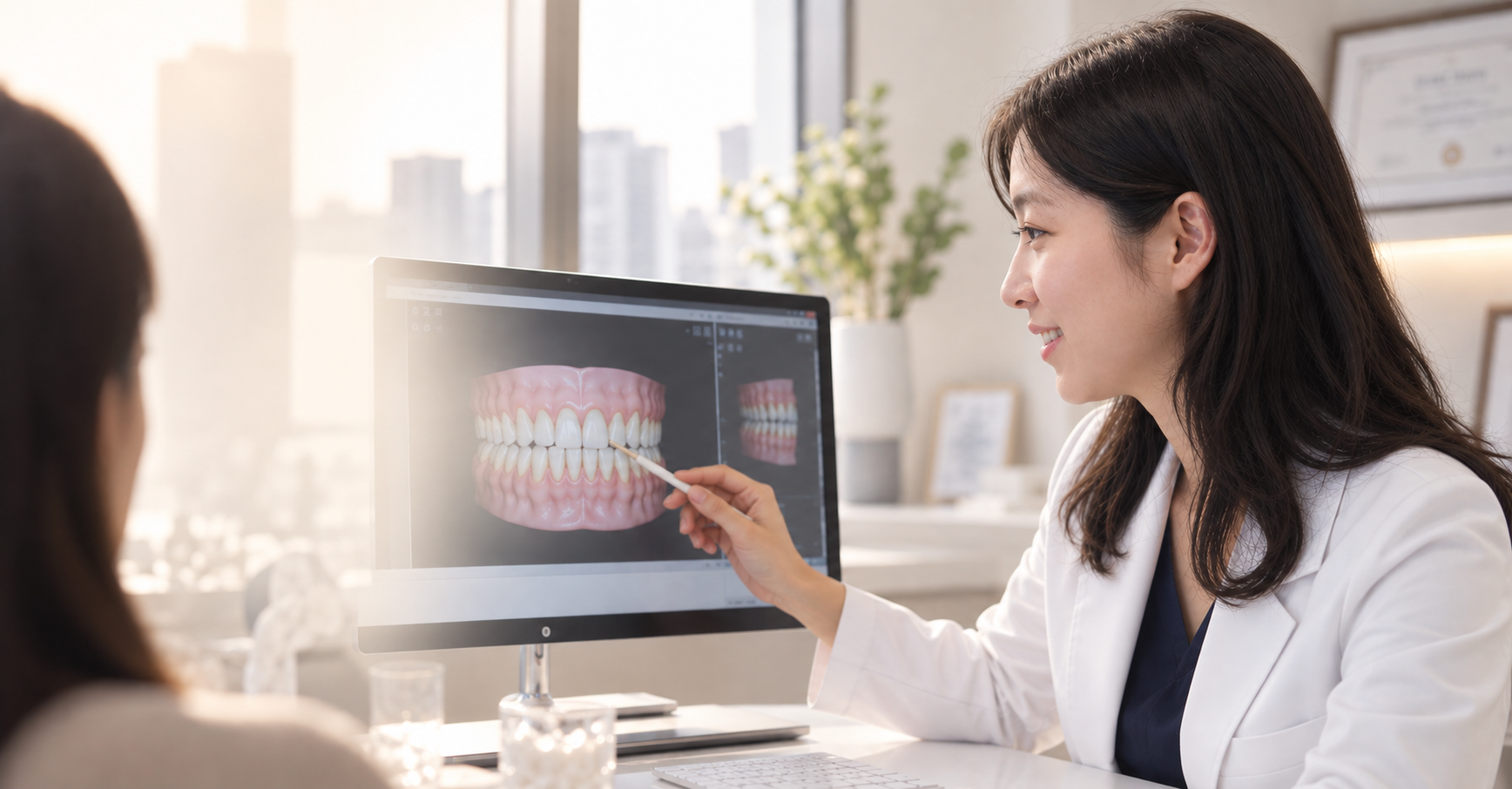
Invisalign and Angel Aligner side by side
This table describes the systems, not their results. Outcomes depend on the diagnosis, the plan and how consistently aligners are worn.
| Feature | Invisalign | Angel Aligner |
|---|---|---|
| Made by | Align Technology | Angelalign Technology |
| Treatment planning software | ClinCheck® | iOrtho™ |
| Aligner material | SmartTrack® | MasterControl and MasterControl S |
| Made for each patient | Yes, from a digital scan | Yes, from a digital scan |
| System for younger children | Invisalign First | Angel Aligner KiD |
| Attachments and elastics | Used when the plan needs them | Used when the plan needs them |
| Daily wear | Usually 20–22 hours | Usually 20–22 hours |
| At Yonsei Baro | Planned and supervised by Dr. Lee | Planned and supervised by Dr. Lee |
What do Invisalign and Angel Aligner have in common?
More than people often expect. Both systems work on the same principle: a series of thin, removable clear trays, each slightly different from the last, moves the teeth in small planned steps. In both, the orthodontist starts from an intraoral digital scan, maps the tooth movements in planning software, and decides where small tooth-coloured attachments or elastics are needed.
Both make aligners for each individual patient, both ask for about 20–22 hours of wear a day, and both end with retainers to keep teeth from drifting back. Neither is a shortcut around diagnosis: the same examination, 3D imaging and clinical judgement apply whichever system you use.
Where do the two systems differ?
Planning software
Invisalign plans are built in ClinCheck®; Angel Aligner plans are built in iOrtho™. Each program lets the orthodontist stage tooth movements and show the patient a 3D preview. The tools differ in interface and options, but in both cases the software proposes and the orthodontist decides.
Aligner materials
Invisalign aligners are made from SmartTrack® material. Angel Aligner uses its MasterControl family of materials, including MasterControl S. Each company designs its own material for its own system. Material is one part of how aligners work; the plan and the patient’s wear time matter at least as much.
Product options for different ages
Each company offers a system for younger children whose baby and adult teeth are mixed: Invisalign First and Angel Aligner KiD . Both also treat teenagers and adults. The specific product options available for a given plan can influence which system fits a particular case.
Which aligner is right for me?
There is no brand that is right for everyone. At your consultation, Dr. Lee looks at factors such as:
- The movements your teeth need and how complex your bite is
- Which product options suit your treatment plan and age
- Practical points, such as whether you are likely to move abroad and which systems are offered there
- Whether aligners suit your case at all, or whether fixed braces would be more predictable
She then explains which system she would recommend for you and why, so the choice is based on your case rather than on a brand name. If you are deciding between aligners and braces, our braces vs clear aligners guide may help.
A note on provider status
Dr. Lee is a 2026 Invisalign® Purple Diamond Provider. Align Technology sets provider tiers by the number of Invisalign cases a doctor has treated, so the tier reflects experience with that system. It is not a ranking of Invisalign against other aligners and does not guarantee results. Dr. Lee also plans and treats Angel Aligner cases, and uses the same diagnostic approach for both.
If you may move during treatment
If you are living in Seoul for a fixed term and might leave before treatment ends, tell us at the first visit, because it is worth checking which system providers in your next country offer. Whichever system you use, we prepare English records, digital 3D scans in standard formats and progress notes, and can contact your next orthodontist directly. See moving during treatment .
Invisalign vs Angel Aligner FAQs
Does the brand decide how quickly or reliably teeth move?
Not in a way that applies to everyone. Treatment time and outcome depend mainly on the complexity of the case, the quality of the plan and how consistently aligners are worn. Both systems can treat a wide range of problems. Dr. Lee recommends a system for your specific case and explains her reasoning.
Can I switch from Invisalign to Angel Aligner, or the other way, mid-treatment?
It can sometimes be done, but it means a new scan and a new plan in the other system, so it is not a simple swap. If you are considering a change, for example because of a move abroad, talk to Dr. Lee first so she can explain the practical steps and whether switching makes sense for you.
Is there a difference in cost between the two systems?
Fees depend on the complexity of your case, the appliance and the expected length of treatment, so we do not quote prices before an examination. After your consultation, you receive a written estimate for the option Dr. Lee recommends, and you can ask about any alternative before deciding.
Do both systems use attachments?
Yes. Both Invisalign and Angel Aligner can use small tooth-coloured attachments bonded to some teeth, which give the aligners extra grip for certain movements, and both can be combined with elastics. Whether you need them, and how many, depends on your plan rather than on the brand.
Which system is used for children at Yonsei Baro?
Both companies have a children’s system: Invisalign First and Angel Aligner KiD. For many children, the first question is whether early treatment is needed at all. Dr. Lee examines your child’s teeth, bite and growth, then explains whether to treat now or wait and which appliance would suit them.
Medically reviewed by Dr. Sally Chaekyung Lee, DDS, PhD
Board-certified orthodontist (Korea Ministry of Health and Welfare) · Adjunct Professor of Orthodontics, Yonsei University · Last updated October 2026
This page is general information, not a diagnosis. Treatment results and duration vary from person to person. Orthodontic treatment can cause temporary discomfort and, in some cases, root shortening, gum recession or tooth decay if oral hygiene is poor; teeth can relapse if retainers are not worn as instructed.
Not sure which aligner suits you?
Book a consultation. Dr. Lee will examine you, explain whether aligners suit your bite and which system she would recommend, in English. Isu Station Exit 2 · Open until 9 PM Mon & Thu · Saturdays 9 AM–2 PM.