
Home › Orthodontics › Teen Orthodontics
Teen orthodontics · Ages 12–18
Orthodontics for Teenagers in Seoul
The teenage years are a common time for orthodontic treatment, because most adult teeth are in and some growth remains. At Yonsei Baro, near Isu Station, Dr. Sally Chaekyung Lee helps teens and parents choose between braces and clear aligners, with appointments after school and on Saturdays, all in English.
Teen orthodontics at a glance
| Question | At Yonsei Baro |
|---|---|
| Typical ages | About 12–18, once most adult teeth have come in |
| Options | Metal, ceramic or lingual braces; Invisalign or Angel Aligner clear aligners |
| Visit intervals | Braces about every 4–6 weeks; aligners about every 6–10 weeks |
| After-school times | Mon & Thu until 9 PM; Tue & Fri until 7 PM; Saturdays 9 AM–2 PM |
| Moving abroad? | English records, digital scans and help continuing treatment elsewhere |
| Treated by | Dr. Sally Chaekyung Lee, from first consultation to retainers |
Why are the teen years a good time for orthodontics?
By about 12 or 13, most children have lost their last baby teeth, so the whole adult arch can be aligned at once. Many teens are also still growing, which can help when the bite between the upper and lower jaws needs correcting. Some teens are completing a second phase after early (phase 1) treatment ; others are starting for the first time.
Common reasons teens come to see us include crowded teeth , deep bites, canines that erupt high or outside the arch and protruding front teeth.
Braces or clear aligners?
Both can work well for teens. The right choice depends on the bite problem, and on how a teenager lives day to day.
Braces
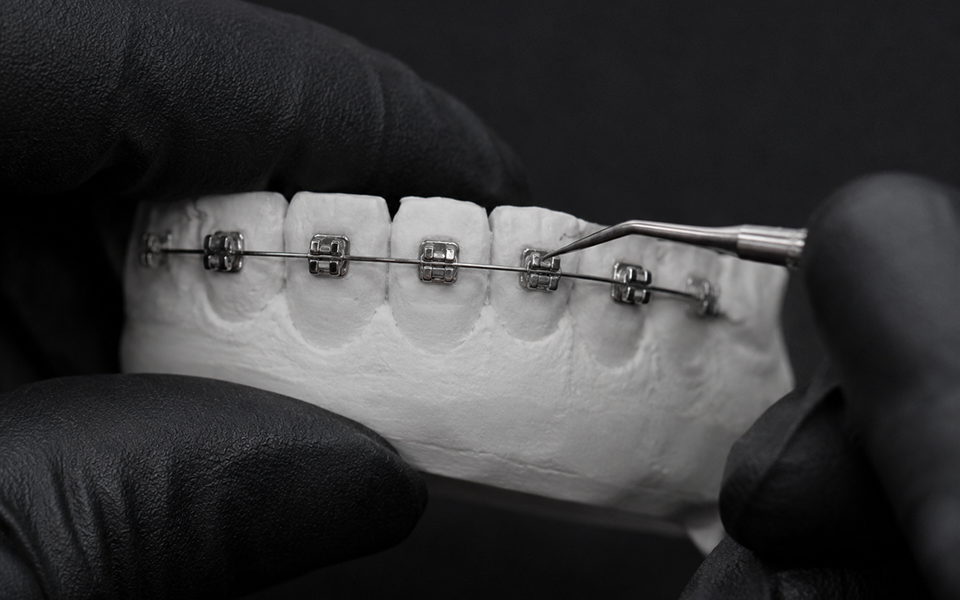
Braces are fixed to the teeth, so they work around the clock without anyone having to remember them. They give precise control for complex tooth movements. Options include metal, tooth-coloured ceramic and lingual braces fixed behind the teeth.
Clear aligners
Aligners such as Invisalign and Angel Aligner are nearly invisible and come out for meals, brushing and some sports. They only work when worn about 20–22 hours a day, so they suit teens who are ready for that responsibility. See clear aligners for teens and our braces vs clear aligners guide.
Dr. Lee explains the options to your teenager directly, as well as to you, so the decision is one they feel part of.
Fitting treatment around school
Braces visits are usually about every 4–6 weeks, and aligner visits about every 6–10 weeks. We are open until 9 PM on Mondays and Thursdays, until 7 PM on Tuesdays and Fridays, and from 9 AM to 2 PM on Saturdays, so many appointments can be booked outside school hours. Tell us about exam periods, sports seasons and school holidays, and we will plan visits around them.
For sports, wear a mouthguard with braces. Musicians who play wind or brass instruments usually need a short period to adjust. Families at international schools may find our page for international school families helpful.
Keeping teeth healthy during treatment
Brushing around brackets takes extra care, and sugary drinks and snacks raise the risk of white spots and decay. We show your teenager how to clean effectively, and our dental care during braces page explains how our pediatric and orthodontic teams work together.
Treatment finishes with retainers , because teeth tend to drift without them. Retainer wear is what keeps the result, especially as teens head off to university.
Moving abroad or leaving for university
Some teenagers move country or leave for university before treatment is finished. Share your timeline at the first visit and Dr. Lee can plan around it. If you leave mid-treatment, we prepare English records, digital 3D scans in standard formats, X-rays, photos, progress notes and appliance details, and Dr. Lee can contact the next orthodontist directly. See moving during treatment .
Teen cases we have published
Our before and after page includes two teenage braces cases, published with patient consent: one with canines erupting outside the arch and a deep bite, and one with high canines treated without extractions. Results vary from person to person, and treatment carries possible risks such as discomfort, root shortening, decay or gum problems with poor hygiene, and relapse if retainers are not worn.
Teen orthodontics FAQs
Is my teenager too old to fix their bite?
No. Teeth can be moved at any age if the gums and bone are healthy. Many teens are still growing, which can help when the jaws need to be guided. If growth has largely finished, bite problems are still treatable, though the approach may differ. Dr. Lee will explain what is realistic after an examination.
Can my teen have treatment without missing school?
Usually, yes. We are open until 9 PM on Mondays and Thursdays and from 9 AM to 2 PM on Saturdays, so many visits fit outside school hours. Braces need a visit about every 4 to 6 weeks and aligners about every 6 to 10 weeks. The first examination takes about 60 minutes.
What if my teenager forgets to wear their aligners?
Aligners only move teeth when they are worn, so missed hours slow progress and can lead to extra aligners. Dr. Lee talks frankly with teens about this before treatment starts. If wear is a worry, braces may be the more reliable choice, and it is fine to decide that together.
Can teens play sports or a musical instrument with braces?
Yes. A mouthguard is recommended for contact sports and anything with a risk of a knock to the face. Wind and brass players often need a short adjustment period, and lingual braces or aligners may feel different from braces on the front of the teeth. Tell Dr. Lee about your teen’s activities so she can take them into account.
Our family may move before treatment ends. Should we wait?
Not necessarily. Depending on your timeline, Dr. Lee may suggest starting now and transferring later, completing a focused part of treatment while you are in Seoul, or waiting. If you move mid-treatment, we provide complete English records and can speak with the next orthodontist directly.
Medically reviewed by Dr. Sally Chaekyung Lee, DDS, PhD
Board-certified orthodontist (Korea Ministry of Health and Welfare) · Adjunct Professor of Orthodontics, Yonsei University · Last updated October 2026
This page is general information, not a diagnosis. Treatment results and duration vary from person to person. Orthodontic treatment can cause temporary discomfort and, in some cases, root shortening, gum recession or tooth decay if oral hygiene is poor; teeth can relapse if retainers are not worn as instructed.
Book a consultation for your teen
Dr. Lee will examine your teenager herself and explain braces and aligner options to both of you in English. Isu Station Exit 2 · Open until 9 PM Mon & Thu · Saturdays 9 AM–2 PM.