
Home › Orthodontics › Braces › Lingual Braces
Fixed braces · Teens & adults
Lingual Braces in Seoul: Braces Hidden Behind Your Teeth
Lingual braces are fixed braces bonded to the inner, tongue-side surfaces of the teeth, so they stay hidden when you smile. At Yonsei Baro near Isu Station, Seoul, Dr. Sally Chaekyung Lee, a board-certified orthodontist and member of the Korean Lingual Orthodontic Association, checks your suitability carefully and explains every step in English.
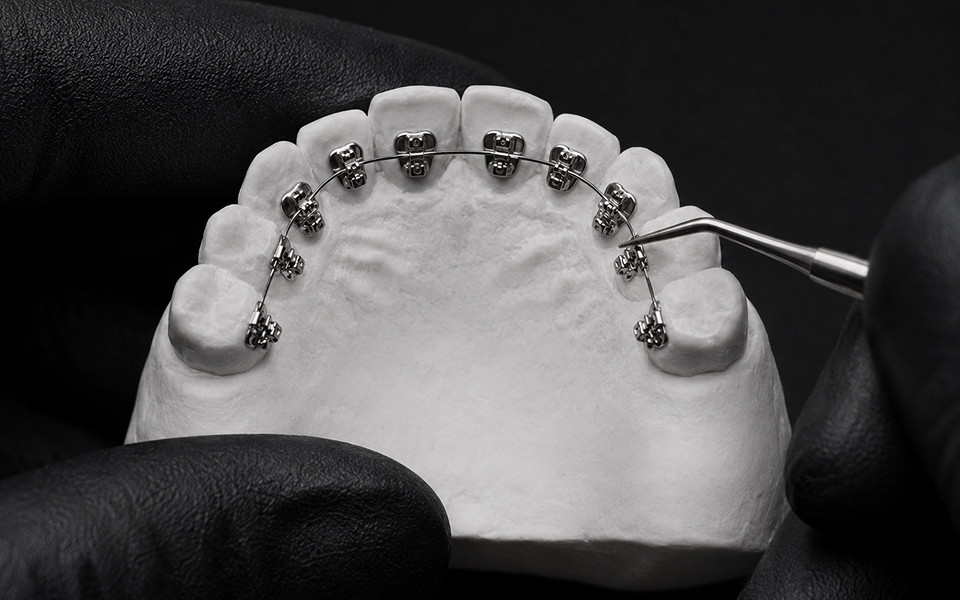
Lingual braces at a glance
| Question | At Yonsei Baro |
|---|---|
| Where the brackets sit | On the inner (tongue-side) surfaces of the teeth |
| Appearance | Hidden from view when you smile and talk in most everyday situations |
| Adjustment period | Tongue and speech usually adapt within days to a few weeks |
| Suitability | Checked at your examination: bite depth, tooth shape, gum health and the movements needed |
| Check-ups | About every 4–6 weeks |
| Treated by | Dr. Sally Chaekyung Lee, board-certified orthodontist; member of the Korean Lingual Orthodontic Association |
| Cost | Written estimate after a full examination |
How do lingual braces work?
Lingual braces use the same principles as other fixed braces: brackets bonded to the teeth and an archwire that guides them into position. The difference is placement. Instead of the front surfaces, the brackets sit on the inner surfaces, facing the tongue.
The inner surfaces of teeth vary far more in shape than the front surfaces, so lingual treatment depends on careful design and precise positioning. In lingual orthodontics, brackets are commonly positioned on a model or digital set-up first, then transferred to the teeth with a custom tray so each one sits where it was planned. Our intraoral digital scanner and 3D CT give Dr. Lee a detailed view of tooth shape, root position and bone before treatment begins.
What is it like to wear lingual braces?
Speech
Your tongue touches the inner surfaces of your teeth when you speak, so expect a slight lisp at first, especially on sounds such as "s", "t" and "sh". For most people this improves within a few days to a few weeks as the tongue adapts. Talking and reading aloud help. If you teach, present or perform, it is sensible to have your braces fitted before a quieter week.
Comfort
The tongue may feel sore while it gets used to the brackets, and teeth can feel tender after fitting and some adjustments. Orthodontic wax and soft food help in the first days. We also have NovaCare, a device used to help reduce discomfort during treatment and the adaptation period.
Eating and cleaning
Cut food into smaller pieces and avoid hard or sticky foods that can loosen brackets. Because you cannot easily see the brackets, cleaning takes practice: a small-headed toothbrush, interdental brushes and a mirror make it easier. Our guides to brushing with braces and eating with braces have practical tips.
Am I suitable for lingual braces?
Many adults and older teenagers can be treated with lingual braces, but not everyone. At your first orthodontic visit , Dr. Lee checks:
- Bite depth. In a very deep bite, the lower front teeth may press on the upper brackets, which can change how treatment is planned.
- Tooth shape and height. Very short teeth leave less room for brackets on the inner surfaces.
- Gum health and cleaning. Gums need to be healthy, and you need to be able to clean around brackets you cannot easily see.
- The movements needed. Some complex cases are planned differently when brackets sit behind the teeth.
If lingual braces are not the right fit, Dr. Lee will explain the alternatives, such as ceramic braces on the front of the teeth or Invisalign clear aligners .
Dr. Lee and lingual orthodontics
Dr. Sally Chaekyung Lee is a member of the Korean Lingual Orthodontic Association and serves on its academic, international and planning committees. She trained in orthodontics at Severance Hospital, holds a PhD in orthodontics from Yonsei University and completed an exchange residency in orthodontics at the University of Southern California. She sees each patient herself, from the first consultation to removing the braces, and explains every step in English. Read more about Dr. Lee’s training and memberships .
Treatment steps
After a 60-minute examination with X-rays or 3D CT, digital scans and photographs, Dr. Lee explains your plan, timeline and written estimate. Your lingual brackets are then prepared and bonded, and adjustments follow about every 4–6 weeks. Evening appointments until 9 PM on Mondays and Thursdays, and Saturday mornings, fit around work. If a bracket comes loose, send us a photo by WhatsApp or KakaoTalk and we will advise you. Treatment ends with retainers to hold your result.
Lingual braces FAQs
Will lingual braces change the way I speak?
At first, probably a little. Many people notice a slight lisp on sounds such as "s" and "t" because the tongue meets the brackets. It usually improves within a few days to a few weeks as the tongue adapts, and speaking and reading aloud speed this up. If your work involves a lot of speaking, plan your fitting date with this in mind.
Can anyone see lingual braces?
In most everyday situations, no: the brackets sit behind the teeth, so they are hidden when you smile or talk. Someone may catch a glimpse if you laugh with your mouth wide open or tilt your head back, and a dentist will of course see them. That makes them a discreet choice for people who want fixed braces without visible brackets.
Do lingual braces take longer than braces on the front of the teeth?
Not necessarily. Treatment time depends mainly on how much your teeth and bite need to change, not simply on where the brackets sit. Some movements are planned differently with lingual braces. Dr. Lee gives you an estimated timeline for your own case after your examination and digital scan, along with a written estimate.
Can I have lingual braces on the top teeth and a different type on the bottom?
Yes, this is sometimes a sensible option. The upper teeth show most when you smile, so some people choose lingual braces on the upper teeth and ceramic or metal braces on the lower teeth. It can also make the adjustment period easier for the tongue. Dr. Lee will tell you whether this suits your bite.
Related pages
Medically reviewed by Dr. Sally Chaekyung Lee, DDS, PhD
Board-certified orthodontist (Korea Ministry of Health and Welfare) · Adjunct Professor of Orthodontics, Yonsei University · Last updated October 2026
This page is general information, not a diagnosis. Treatment results and duration vary from person to person. Orthodontic treatment can cause temporary discomfort and, in some cases, root shortening, gum recession or tooth decay if oral hygiene is poor; teeth can relapse if retainers are not worn as instructed.
Find out if lingual braces suit you
Send us your concern and preferred dates. Dr. Lee will examine you herself and explain your options in English. Isu Station Exit 2 · Open until 9 PM Mon & Thu · Saturdays 9 AM–2 PM.