
Home › Orthodontics › Retainers
Orthodontics · After treatment
Retainers After Braces and Aligners: Keeping Your Smile in Place
Retainers hold teeth in their new positions after braces or aligners, because teeth naturally tend to drift back. At Yonsei Baro near Isu Station, Seoul, every orthodontic case finishes with retainers chosen by Dr. Sally Chaekyung Lee, followed by continued retainer check-ups. If you move abroad, we provide your retainer records in English.
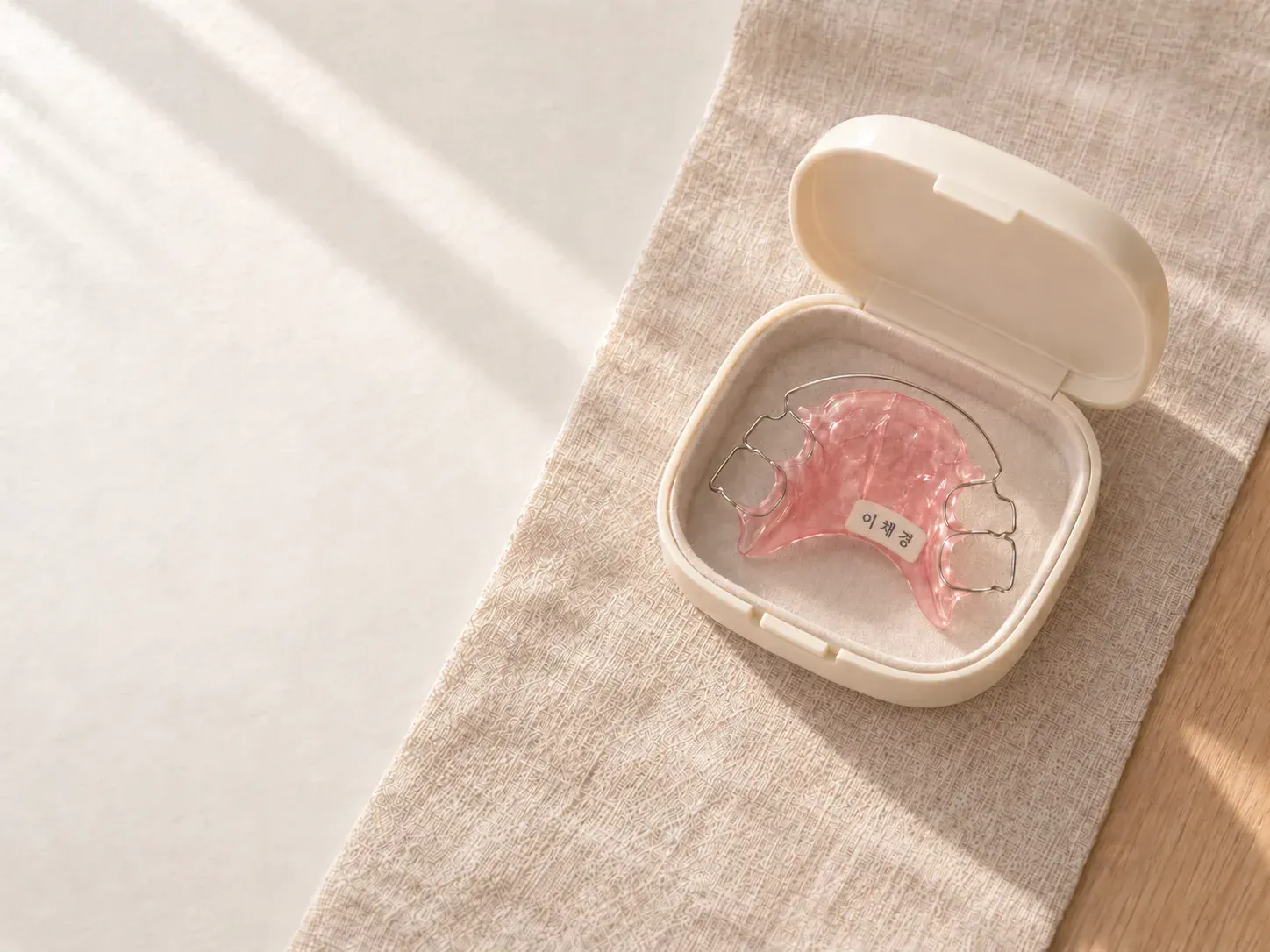
Retainers at a glance
| Question | At Yonsei Baro |
|---|---|
| Who needs them | Everyone who finishes orthodontic treatment at Yonsei Baro |
| Types | Fixed (bonded wire behind the teeth) and removable (clear or wire-and-acrylic), often used together |
| How long | Long term; wear schedule set by Dr. Lee, usually full-time at first, then mainly at night |
| Follow-up | Retainer check-ups continue after your braces or aligners are finished |
| Lost or broken | Contact us promptly by WhatsApp, KakaoTalk or phone |
| Moving abroad | Retainer records and digital scans provided in English |
Why do I need a retainer?
When braces or aligners come off, the fibres and bone around your teeth have not fully settled, and teeth keep changing slowly throughout life. Without a retainer, they tend to drift back toward where they started, a common reason people later need orthodontic re-treatment . A retainer is the final stage of treatment, and the part that protects everything that went before.
Fixed vs removable retainers
Fixed (bonded) retainers
A thin wire is bonded to the inner surfaces of the front teeth. It cannot be seen when you smile and works all the time. It does make flossing harder, so you will need floss threaders or interdental brushes, and the bond can occasionally come loose without you noticing, one reason regular checks matter.
Removable retainers
Clear retainers look like thin aligners; wire-and-acrylic retainers have a wire across the front teeth and a plate behind them. They come out for eating and cleaning, which keeps hygiene simple, but they work only when worn and can be lost or broken.
Using both
Many people have a fixed retainer behind the front teeth and a removable retainer to wear at night. Dr. Lee chooses the combination that suits your bite, the movements made during treatment and your daily life, and explains her reasons.
How long do I need to wear my retainer?
Every plan is individual, but as a general pattern, retainers are worn for most of the day in the early months, when teeth are most likely to move, and then mainly at night. Because teeth keep changing with age, orthodontists generally recommend long-term retention. Dr. Lee will give you a clear schedule and adjust it at your check-ups. If your retainer starts to feel tight after a few nights off, that is a sign teeth have begun to move: wear it again and let us know.
Caring for your retainer
- Brush removable retainers gently with a soft toothbrush and cool water. Hot water can warp them.
- Keep them in their case whenever they are out of your mouth. Many retainers are lost wrapped in a napkin at a restaurant.
- Clean carefully around a fixed retainer every day; our guide to brushing and flossing with braces shows techniques that also work for bonded wires.
- Bring your retainers to every check-up.
Retainer check-ups continue after treatment
Your care does not end when your braces or aligners come off. Dr. Lee continues to see you for retention check-ups to check the fit of removable retainers, the bond of fixed retainers and the stability of your bite, so small changes are caught early.
What should I do if my retainer is lost or broken?
Contact us as soon as possible by WhatsApp, KakaoTalk or phone, and send a photo if the retainer is damaged or a bonded wire has come loose. Teeth can begin to shift within days, so it helps to act quickly. Until you are seen:
- If a removable retainer is cracked but still fits, keep wearing it unless it is sharp or uncomfortable, and let us know.
- If a bonded wire is loose or a section has come away, do not try to fix or pull it yourself. Send us a photo and we will advise you.
- If you have a second retainer, wear it.
We will arrange a visit, take a new digital scan if needed and make a replacement. If your teeth have already moved, Dr. Lee will explain the options. Our page on braces and aligner problems covers other urgent issues.
Moving abroad after treatment
Many of our patients leave Seoul after treatment. When you move, we provide your retainer records in English, including digital 3D scans in standard formats, so a new orthodontist can check your retainers or make replacements. See moving during treatment for details.
Retainer FAQs
Do I have to wear a retainer forever?
Teeth continue to change throughout life, so orthodontists generally recommend long-term retention, usually at night once the early period is over. A fixed retainer may stay in place for many years if it stays healthy and intact. Dr. Lee will give you a personal schedule and review it at your retainer check-ups.
Which is better, a fixed or a removable retainer?
Neither is better for everyone. A fixed retainer works all the time and cannot be lost, but needs careful cleaning and occasional repair. A removable retainer is easy to clean but only works when worn. Many people use both. Dr. Lee recommends a combination based on your bite and the movements made during treatment.
My retainer feels tight. What does that mean?
A retainer that feels tight usually means your teeth have started to move, often after a few nights without it. Wear it again as instructed and the tightness generally eases as the teeth are guided back. If it will not seat fully, hurts, or stays tight for more than a few days, contact us so Dr. Lee can check.
Can I eat or drink with my retainer in?
Take a removable retainer out to eat, and drink only plain water while wearing it. Food and sugary or coloured drinks can be trapped underneath, raising the risk of decay and staining. Brush before putting it back in when you can. A fixed retainer stays in, so avoid biting very hard foods, such as ice or hard sweets, that could loosen the bond.
Medically reviewed by Dr. Sally Chaekyung Lee, DDS, PhD
Board-certified orthodontist (Korea Ministry of Health and Welfare) · Adjunct Professor of Orthodontics, Yonsei University · Last updated October 2026
This page is general information, not a diagnosis. Treatment results and duration vary from person to person. Orthodontic treatment can cause temporary discomfort and, in some cases, root shortening, gum recession or tooth decay if oral hygiene is poor; teeth can relapse if retainers are not worn as instructed.
Need a retainer check or replacement?
Send us a message with your concern and preferred dates. Dr. Lee will check your retainers and explain everything in English. Isu Station Exit 2 · Open until 9 PM Mon & Thu · Saturdays 9 AM–2 PM.