
Home › Orthodontics › Orthodontic Re-treatment
Orthodontics · Teens & adults
Orthodontic Re-treatment: When Teeth Move After Braces
Teeth can shift after braces or aligners, most often because retainers were worn less over time or were lost. Re-treatment can usually realign them. At Yonsei Baro near Isu Station, Seoul, Dr. Sally Chaekyung Lee checks why the teeth moved, assesses roots and bone with X-rays or a 3D CT scan, checks the gums, and explains your options in English.
Re-treatment at a glance
| Question | At Yonsei Baro |
|---|---|
| Common causes | Retainers worn less or lost, natural age-related change, an original problem that was not fully corrected |
| Checked first | Root length (X-rays or 3D CT), gum and bone health, existing dental work, how the bite has changed |
| Options | Clear aligners, fixed braces, or limited treatment if the bite allows |
| Records from before | Helpful but not essential; bring previous X-rays, models or retainers if you have them |
| Treated by | Dr. Sally Chaekyung Lee, board-certified orthodontist, in English |
| After re-treatment | A new retention plan, with retainer checks that continue after treatment |
| Cost | Written estimate after a full examination |
Why do teeth move after orthodontic treatment?
Moving teeth is only half of orthodontics; keeping them there is the other half. After treatment, the fibres around each tooth and the surrounding bone take time to settle, and teeth naturally tend to drift back toward their old positions. Throughout life, teeth also continue to change slowly, whether or not someone has had braces. Common reasons for relapse include:
- Retainers worn less over time, lost or broken and never replaced. This is a very common cause.
- A bonded retainer that came loose on one tooth without being noticed.
- Natural changes with age, including gradual crowding of the lower front teeth.
- Habits and soft-tissue pressure, such as tongue thrusting, lip habits or mouth breathing.
- An underlying problem not fully corrected the first time, or a bite that was never quite stable.
- Gum and bone changes, which can allow teeth to fan out or shift.
- Wisdom teeth are often blamed, but their role in crowding is debated; Dr. Lee looks at the whole picture rather than a single cause.
Dr. Lee knows this from experience
Dr. Sally Chaekyung Lee had orthodontic re-treatment herself in her thirties. She understands the disappointment of seeing teeth move after the effort of earlier treatment, and the practical worries about starting again as an adult. Her approach is calm and practical: understand why it happened, plan carefully, and protect the result this time.
How does Dr. Lee assess relapse?
Re-treatment is planned with extra care, because the teeth and roots have already been through orthodontic movement once. Your examination of about 60 minutes includes:
- X-rays and, when useful, a 3D CT scan to check root length and shape, bone levels and the position of each root in the jaw. Some people have shorter roots after previous treatment, and this shapes how gently and how far teeth should be moved.
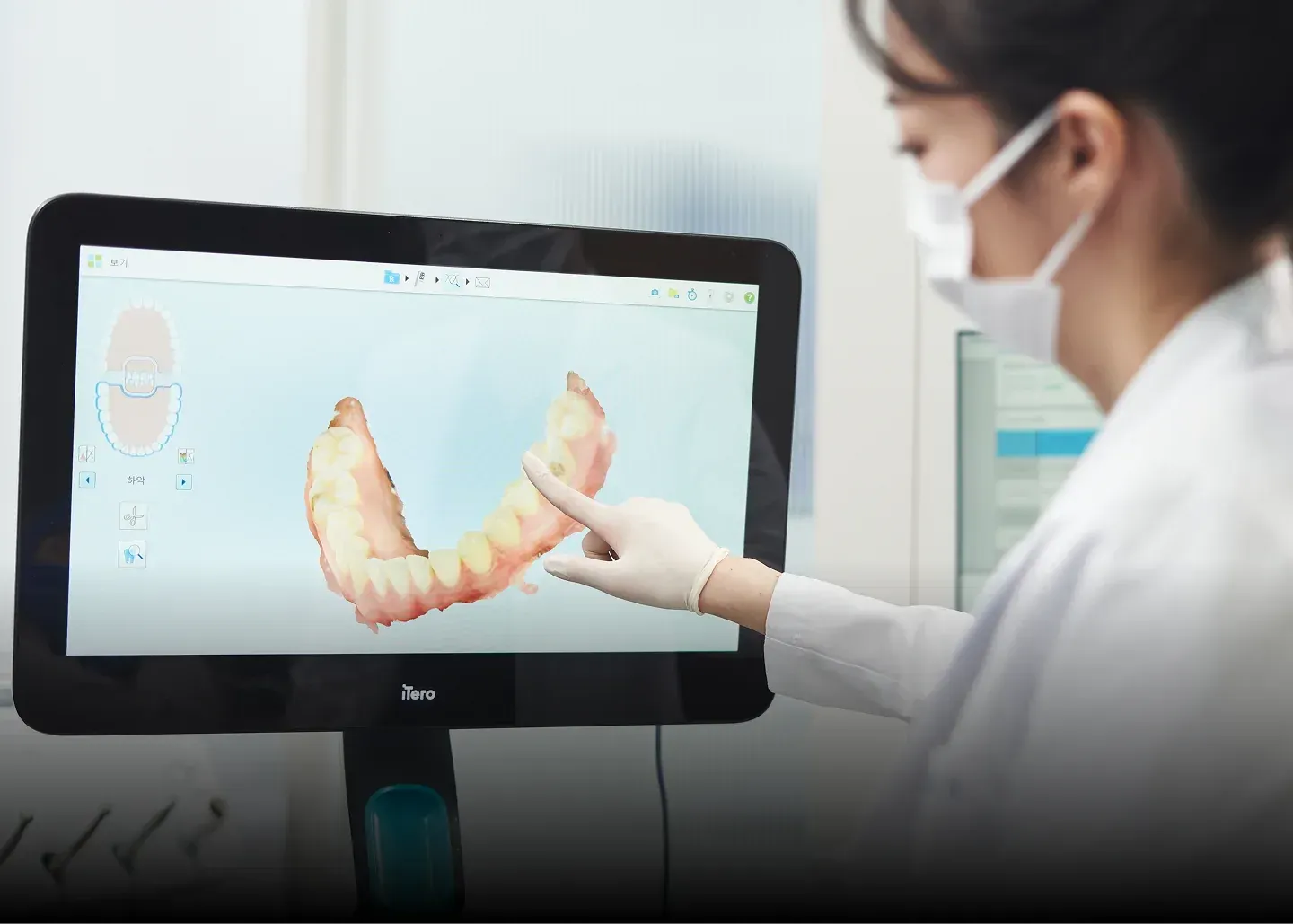
- An intraoral digital scan and photographs to record the current position of your teeth and bite.
- A gum check. Gums must be healthy before teeth are moved again.
- A review of earlier records, if you have them: previous X-rays, models, photographs or your old retainers. These are helpful but not essential.
Dr. Lee then explains what has changed, why it is likely to have happened and what can realistically be achieved.
What are the options for re-treatment?
The approach depends on how much has moved and whether the bite is still sound:
- Minor relapse in the front teeth can often be corrected with a short course of clear aligners or limited treatment , provided the overall bite is still stable.
- More significant changes, or a bite that has shifted, may need fuller treatment with Invisalign or braces .
- Very small changes that you are happy to keep may simply need a new retainer made to the current position, to stop further movement.
If you have crowns, implants or other dental work, see our page on adult orthodontics for what is checked. You can also see a published Invisalign case for crowded front teeth , shared with consent; results vary.
Keeping your teeth straight this time
Every re-treatment finishes with a new retention plan: fixed retainers, removable retainers or both, with clear wear instructions and continued retainer check-ups. Read more about retainers . If you are in Seoul for a fixed period, we provide your retainer records when you move so you can keep them up to date abroad.
Re-treatment FAQs
Why did my teeth move years after my braces came off?
Teeth naturally tend to drift back toward their old positions, and they continue to change slowly throughout life. The most common reason is that retainers were worn less over time, lost or broken. A loose bonded retainer, habits such as tongue thrusting, and gum changes can also play a part. Dr. Lee looks for the cause in your case.
Is it safe to have orthodontic treatment a second time?
For most people, yes, with careful planning. Dr. Lee checks root length and bone levels with X-rays and, when useful, a 3D CT scan, because some people have shorter roots after earlier treatment. She then plans movements that respect those limits. Gums must be healthy before teeth are moved again.
Can I be re-treated with Invisalign if I had braces before?
Often, yes. Many relapse cases involve the front teeth and can be corrected with clear aligners, as long as the bite is still sound. If the bite has shifted or larger movements are needed, braces may be more predictable. Dr. Lee explains which approach suits your teeth and why.
I lost my old retainer. Should I get a new one straight away?
Contact us as soon as possible. If your teeth have barely moved, a new retainer made from a fresh digital scan may be enough to hold them. If they have already shifted, a retainer cannot move them back, so Dr. Lee will check first and explain whether a short course of treatment would help.
Do I need my records from my previous orthodontist?
They are helpful but not essential. If you can, bring previous X-rays, photographs, treatment notes or your old retainers; they show how your teeth were moved and where they finished. If you cannot get them, Dr. Lee will still be able to assess your teeth thoroughly with X-rays or a 3D CT scan, a digital scan and photographs.
Medically reviewed by Dr. Sally Chaekyung Lee, DDS, PhD
Board-certified orthodontist (Korea Ministry of Health and Welfare) · Adjunct Professor of Orthodontics, Yonsei University · Last updated October 2026
This page is general information, not a diagnosis. Treatment results and duration vary from person to person. Orthodontic treatment can cause temporary discomfort and, in some cases, root shortening, gum recession or tooth decay if oral hygiene is poor; teeth can relapse if retainers are not worn as instructed.
Teeth moving again? Let us take a look
Send us a photo of your concern and your preferred dates. Dr. Lee will examine you herself and explain your options in English. Isu Station Exit 2 · Open until 9 PM Mon & Thu · Saturdays 9 AM–2 PM.