
Guide · Living with braces
What Can You Eat with Braces? A Guide for Life in Seoul
With braces you can eat most foods if you cut them small and chew with your back teeth. Avoid hard, sticky and chewy foods that break brackets or bend wires — in Korea that means tteok, sticky sweets, galbi gnawed off the bone, ice and hard nuts. Dr. Sally Chaekyung Lee at Yonsei Baro, near Isu Station, explains the details.
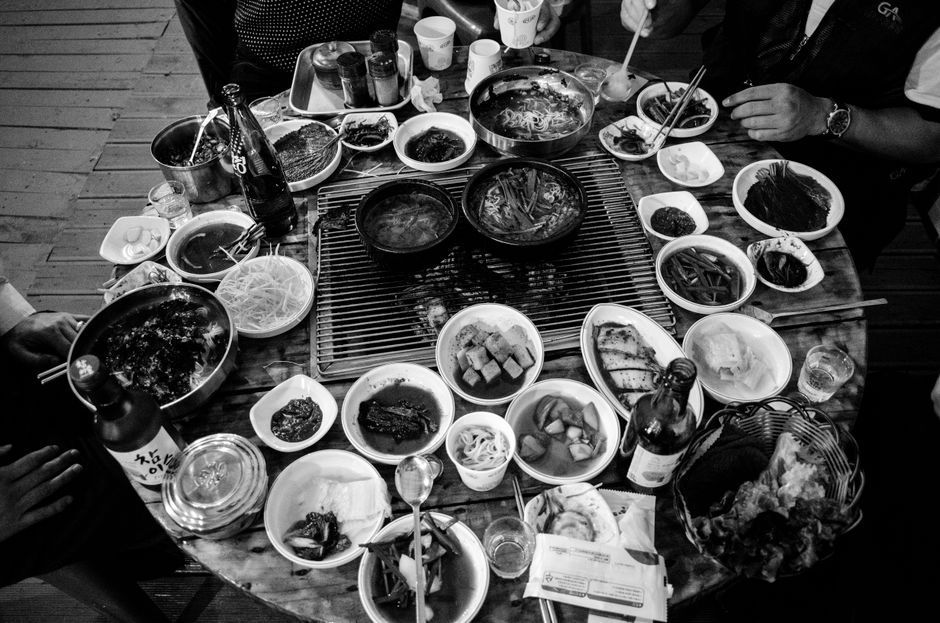
Eating with braces at a glance
| Food | With braces |
|---|---|
| Rice, soups, stews, soft noodles, tofu, eggs | Easy choices, especially after an adjustment |
| Kimbap, fruit, raw vegetables | Cut into small pieces and chew with your back teeth |
| Galbi and other meat on the bone | Cut the meat off the bone first — no gnawing |
| Fried chicken | Choose boneless, and go carefully with very crunchy coatings |
| Tteok, yeot, caramels, chewy candies | Avoid sticky sweets; tteok only in small pieces, or skip it |
| Ice, hard nuts, hard candy | Avoid — a common cause of broken brackets |
| Curry, kimchi, coffee (ceramic braces) | Can stain the elastic ties; rinse or brush afterwards |
| Clear aligners | Take them out for everything except plain water |
Why does food matter with braces?
Brackets are bonded with an adhesive strong enough for normal chewing, but not for crunching ice or prising meat off a bone. A hard bite can knock a bracket loose or bend the wire, and sticky food pulls on both. Each breakage usually means an extra visit, and repeated breakages can slow progress.
Sugary and starchy food that lingers around brackets also feeds the plaque behind cavities and chalky white marks; see brushing and flossing with braces .
Which foods should you avoid with braces?
Hard foods
Ice cubes, hard nuts such as almonds and walnuts, hard candy, unpopped popcorn kernels and very hard crackers. These break brackets more often than anything else.
Sticky and chewy foods
Caramels, chewy fruit candies, gummies, the traditional Korean taffy yeot (엿), dried squid and other very chewy snacks. They wrap around wires and pull on brackets, and they are hard to clean away.
Foods you bite into with your front teeth
Whole apples and Korean pears, corn on the cob, crusty bread and anything you eat off a bone. You do not have to give these up — just cut them into pieces first.
Chewing pens, biting nails and opening packets with your teeth do the same damage.
Eating Korean food with braces
Most Korean meals work well with braces: rice, soups, stews, tofu and soft noodles need little change. A few favourites need a different technique.
Korean barbecue and galbi
Gnawing galbi off the bone is one of the most common ways to break a bracket. Use the restaurant’s kitchen scissors to cut the meat off the bone into small pieces, then eat it with chopsticks.
Fried chicken
Bones and very crunchy coatings both stress brackets. Boneless (순살, sunsal) chicken is the easy choice; otherwise, pull the meat off the bone first.
Tteok and tteokbokki
Rice cakes are dense and chewy and can drag on wires. Cut them small and chew slowly with your back teeth, or skip them for the first weeks. Avoid sticky rice-cake sweets.
Kimbap, fruit and vegetables
Cut each kimbap round in half rather than biting through it. Slice apples and pears, and cut raw carrots and cucumbers into thin sticks.
Kimchi, curry and ceramic braces
Ceramic brackets are tooth-coloured, but their elastic ties can pick up colour from curry, kimchi, gochujang and coffee. Rinse or brush after eating; the ties are replaced at adjustments.
Iced coffee and drinks
Enjoy your iced americano, but do not crunch the ice. Sugary drinks sipped all day bathe teeth in sugar and acid, so keep them to mealtimes and rinse with water afterwards.
What to eat in the first few days
Teeth often feel tender for a few days after fitting and after each adjustment. Soft choices help:
- Rice porridge (juk) and soft rice
- Soft tofu stew (sundubu-jjigae) and other soups
- Steamed egg (gyeran-jjim) and scrambled eggs
- Soft noodles, such as janchi-guksu
- Yogurt, bananas and soft fish
Tenderness usually settles quickly. Yonsei Baro also offers NovaCare, a device to reduce discomfort during the adaptation period; see our technology page.
Eating with clear aligners
With Invisalign or Angel Aligner , the aligners come out to eat, so there are few food rules. Take them out for everything except plain water: hot drinks can warp the plastic, coloured drinks stain it, and sugary drinks trap sugar against your teeth. Brush or rinse well before putting them back, and keep them in their case, not a napkin. Long, grazing meals eat into the 20 to 22 hours a day aligners need.
What if something breaks?
A loose bracket or a poking wire is rarely an emergency. Cover sharp ends with orthodontic wax and send us a photo by WhatsApp or KakaoTalk ; we will advise you and arrange a visit. Our page on braces and aligner problems has first-aid steps.
Food and braces FAQs
Can I eat tteokbokki with braces?
Yes, with care. The sauce and fish cake are fine; the rice cakes are the part to watch, because they are dense and chewy. Cut them into small pieces and chew with your back teeth. If you have ceramic braces, the red sauce can tint the elastic ties, so rinse or brush afterwards.
Can I drink iced americano with braces?
Yes, as long as you do not crunch the ice. Black coffee is kinder to teeth than sweetened coffee drinks. With ceramic braces, coffee can tint the elastic ties over time. With clear aligners, take them out first: only plain water should be drunk while they are in.
Is Korean barbecue safe with braces?
Yes. Grilled meat cut into small pieces is easy to eat. The risk comes from gnawing galbi or other meat off the bone, and from chewing very tough cuts. Use the restaurant scissors to cut meat off the bone and into bite-size pieces, and take your time with lettuce wraps.
Can I chew gum with braces?
It is best avoided with fixed braces, because gum sticks to brackets and wires and can bend them. With clear aligners, gum must never be chewed while the aligners are in. If you want something to freshen your breath, rinsing with water or brushing is a better choice.
Medically reviewed by Dr. Sally Chaekyung Lee, DDS, PhD
Board-certified orthodontist (Korea Ministry of Health and Welfare) · Adjunct Professor of Orthodontics, Yonsei University · Last updated October 2026
This page is general information, not a diagnosis. Treatment results and duration vary from person to person. Orthodontic treatment can cause temporary discomfort and, in some cases, root shortening, gum recession or tooth decay if oral hygiene is poor; teeth can relapse if retainers are not worn as instructed.
Questions about living with braces?
Send us a message in English. Dr. Lee goes through food and care with you at your fitting. Isu Station Exit 2 · Open until 9 PM Mon & Thu · Saturdays 9 AM–2 PM.