
Home › Orthodontics › Braces › Ceramic Braces
Fixed braces · Teens & adults
Ceramic Braces in Seoul: Tooth-Coloured Brackets That Blend In
Ceramic braces work like metal braces but use tooth-coloured brackets that blend in with your teeth, so they are much less noticeable in everyday conversation. At Yonsei Baro, by Isu Station in Seoul, Dr. Sally Chaekyung Lee checks whether ceramic suits your bite, then plans and adjusts your treatment herself, in English.
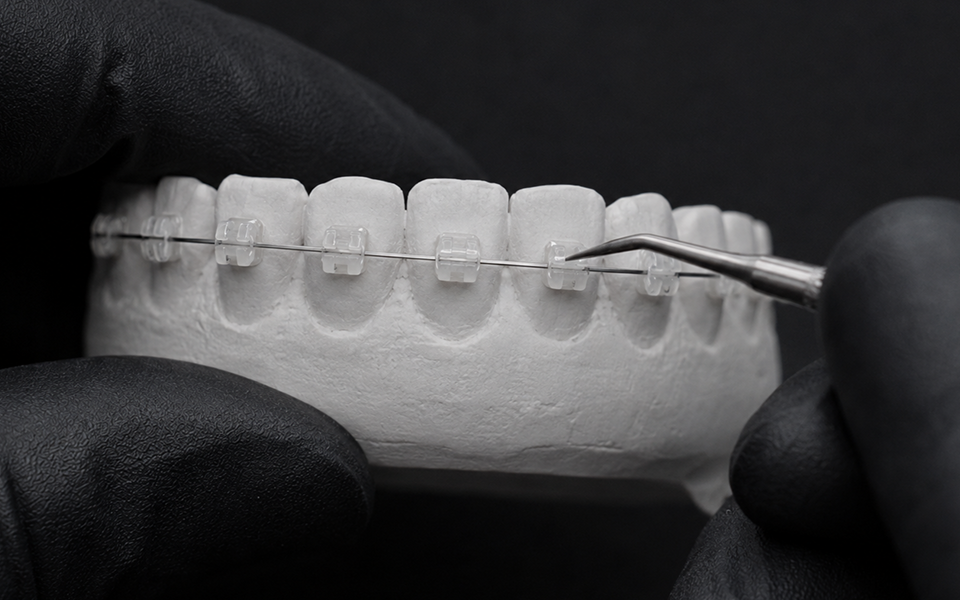
Ceramic braces at a glance
| Question | At Yonsei Baro |
|---|---|
| Brackets | Tooth-coloured ceramic, bonded to the front surface of each tooth |
| Appearance | Blend in with natural tooth colour; much less noticeable than metal |
| How they work | The same bracket-and-wire mechanics as metal braces |
| Points to know | Slightly larger and more brittle than metal; elastic ties can pick up colour between visits |
| Check-ups | About every 4–6 weeks |
| Treated by | Dr. Sally Chaekyung Lee, board-certified orthodontist, in English |
| Cost | Written estimate after a full examination |
What are ceramic braces?
Ceramic braces are fixed braces with brackets made from a strong, tooth-coloured ceramic material. Each bracket is bonded to the front of a tooth, and an archwire running through the brackets guides the teeth into their planned positions. Because the mechanics are the same as metal braces , ceramic braces can treat many of the same problems, from crowding and gaps to many bite corrections.
The difference is how they look. Ceramic brackets take on the shade of the teeth behind them, so in photos, meetings and day-to-day conversation they are far less obvious than steel.
What are the pros and cons of ceramic braces?
Advantages
- Discreet. Often chosen by working adults, university students and teenagers who would rather not show metal.
- Nothing to remember. Like all fixed braces, they work around the clock, with no daily wear time to keep track of.
- Full bracket-and-wire control. Dr. Lee can guide rotations, root angles and bite changes as she would with metal braces.
Trade-offs
- Ceramic brackets are slightly larger than steel ones and can chip if you bite on something hard.
- Ceramic is a hard material. If brackets on the lower teeth would touch the upper teeth in a deep bite, they could wear the enamel, so some patients have ceramic brackets on the upper teeth and metal on the lower teeth.
- Ceramic is bonded firmly, so removal takes extra care. Dr. Lee removes the brackets herself and polishes away the remaining adhesive.
Who are ceramic braces suitable for?
Ceramic braces suit many teenagers and adults who want fixed braces that are less visible. They are a common choice in adult orthodontics , where appearance at work often matters, and for older students who want something discreet without managing removable aligners (see orthodontics for teenagers ).
They may be less suitable for younger children, who tend to be harder on their braces, and for some very deep bites. At your examination Dr. Lee looks at your bite, the movements needed and how the brackets would sit, then tells you honestly whether ceramic is a good fit or whether another option would serve you better.
How do I stop ceramic braces from staining?
Modern ceramic brackets resist staining well. Colour usually comes from the small elastic ties that hold the wire, and from plaque left around the brackets. The ties are replaced at each adjustment, about every 4–6 weeks, so a little care in between keeps your braces looking clean:
- Rinse with water after strongly coloured foods and drinks: coffee, black tea, red wine, cola, curry, and Korean dishes made with gochugaru or gochujang, such as kimchi, tteokbokki and jjigae.
- Brush after meals where you can, and use interdental brushes around each bracket. Our guide to brushing and flossing with braces shows how.
- Avoid smoking, which discolours ties and teeth.
- Avoid hard and sticky foods that can chip brackets. See what to eat with braces .
You do not have to give up Korean food. Rinsing promptly and brushing when you can usually keeps staining to a minimum.
What to expect at Yonsei Baro
Treatment begins with an examination of about 60 minutes: an intraoral digital scan, photographs, X-rays or a 3D CT scan, and a full check of your teeth, bite and face. Dr. Lee then explains your plan, timeline and written estimate in English. Brackets are bonded at a separate visit, followed by adjustments about every 4–6 weeks. Evening appointments until 9 PM on Mondays and Thursdays, and Saturday mornings, fit around work and school. When the braces come off, retainers hold the result.
Ceramic braces FAQs
Are ceramic braces as effective as metal braces?
For most tooth movements, yes. Ceramic and metal braces work in the same way, and Dr. Lee plans both with the same care. In a few situations, such as some very deep bites or cases that need extra strength from the brackets, metal may be the more practical choice for some or all of the teeth. She will explain this at your examination.
Will kimchi and coffee stain my ceramic braces?
The ceramic brackets themselves resist staining well. The clear or light elastic ties that hold the wire can pick up colour from kimchi, coffee, curry or red wine between visits. Rinsing with water after meals and brushing when you can helps a lot, and the ties are replaced at every adjustment, about every 4–6 weeks.
Can I have ceramic braces on my upper teeth and metal braces on my lower teeth?
Yes, this is a common combination. The upper teeth show most when you smile, while lower brackets are partly hidden by the lip. Using metal on the lower teeth can also protect the upper teeth from wear in a deep bite. Dr. Lee will suggest it if it suits your bite and your priorities.
Do ceramic braces feel different from metal braces?
Ceramic brackets are slightly larger, so some people notice them more against the lips at first. Otherwise the experience is similar: tenderness for a few days after fitting and some adjustments, and a short period while the cheeks get used to the brackets. Orthodontic wax helps, and the feeling usually settles within a week or two.
Medically reviewed by Dr. Sally Chaekyung Lee, DDS, PhD
Board-certified orthodontist (Korea Ministry of Health and Welfare) · Adjunct Professor of Orthodontics, Yonsei University · Last updated October 2026
This page is general information, not a diagnosis. Treatment results and duration vary from person to person. Orthodontic treatment can cause temporary discomfort and, in some cases, root shortening, gum recession or tooth decay if oral hygiene is poor; teeth can relapse if retainers are not worn as instructed.
Ask whether ceramic braces suit you
Send us your concern and preferred dates. Dr. Lee will examine you herself and explain your options in English. Isu Station Exit 2 · Open until 9 PM Mon & Thu · Saturdays 9 AM–2 PM.