
Home › Orthodontics › Conditions We Treat › Deep Bite (Overbite)
Conditions · Children, teens & adults
Deep Bite (Overbite): Causes, Risks and Treatment
A deep bite, often called an overbite, is when the upper front teeth cover too much of the lower front teeth as you bite together. In severe cases the lower teeth touch the gum behind the upper teeth. At Yonsei Baro near Isu Station, Dr. Sally Chaekyung Lee corrects deep bites with braces or aligners.
Deep bite at a glance
| Question | In brief |
|---|---|
| What it is | Too much vertical overlap of the front teeth; the upper teeth hide much or all of the lower front teeth |
| Common causes | Inherited jaw shape and growth pattern, over-erupted front teeth, low back-tooth height, a lower jaw set back, worn or missing back teeth in adults |
| Usually noticed | Once the adult front teeth are in, around ages 8–12; adults may notice gum irritation or wear on the front teeth |
| How it’s assessed | Clinical exam, digital scan of how the teeth meet, 3D CT or X-ray for jaw and root positions, growth analysis for children |
| Treatment options | Braces or clear aligners that level the bite; bite ramps; elastics; growth guidance when the lower jaw is set back |
| Typical approach: children | Often treated with full braces or aligners once enough adult teeth are present; growth can help when the lower jaw is set back |
| Typical approach: adults | Braces or aligners, sometimes with small bite ramps; restorative work coordinated with your dentist if teeth are worn |
What is the difference between a deep bite and an overbite?
In everyday speech “overbite” covers almost any bite where the upper teeth look too far forward. Orthodontists use two terms:
- Overbite is the vertical overlap: how far the upper front teeth come down over the lower ones. A small amount is normal; too much is a deep bite.
- Overjet is the horizontal distance: how far the upper front teeth stick out in front of the lower ones. If that is your main concern, see protruding front teeth .
Many people have both, and they are often treated together. This page focuses on the vertical problem.
What causes a deep bite?
Deep bites usually reflect inherited jaw shape and growth. Contributing factors include over-erupted front teeth, relatively short back teeth, a lower jaw that sits further back and, in adults, worn or lost back teeth that let the bite close down.
Does a deep bite need treatment?
Not every deep bite causes problems. Treatment is usually recommended when it does, for example when:
- The lower front teeth bite into the gum behind the upper teeth, causing irritation or gum damage
- Front teeth are wearing down or chipping
- The bite makes it hard to align crowded teeth, or holds the lower jaw back
For children, the question is often timing. Our page on early orthodontic treatment explains when it helps to act during growth, and growth guidance covers cases where the lower jaw is set back.
How is a deep bite corrected?
The aim is to “open” the bite to a healthy overlap. Depending on the cause, Dr. Lee may plan to:
- Level the curve of the lower teeth with braces or aligners
- Move over-erupted front teeth slightly upwards (intrusion), sometimes with help from small temporary anchorage screws
- Place small bite ramps or bite turbos so the back teeth can settle
- Use elastics, or guide growth in children whose lower jaw is set back
Braces or aligners for a deep bite?
Both can work. Invisalign and other aligners treat many deep bites in teens and adults, often with built-in bite ramps. Severe deep bites, or those with canines out of line, are often more predictable with fixed braces.
How Dr. Lee assesses a deep bite
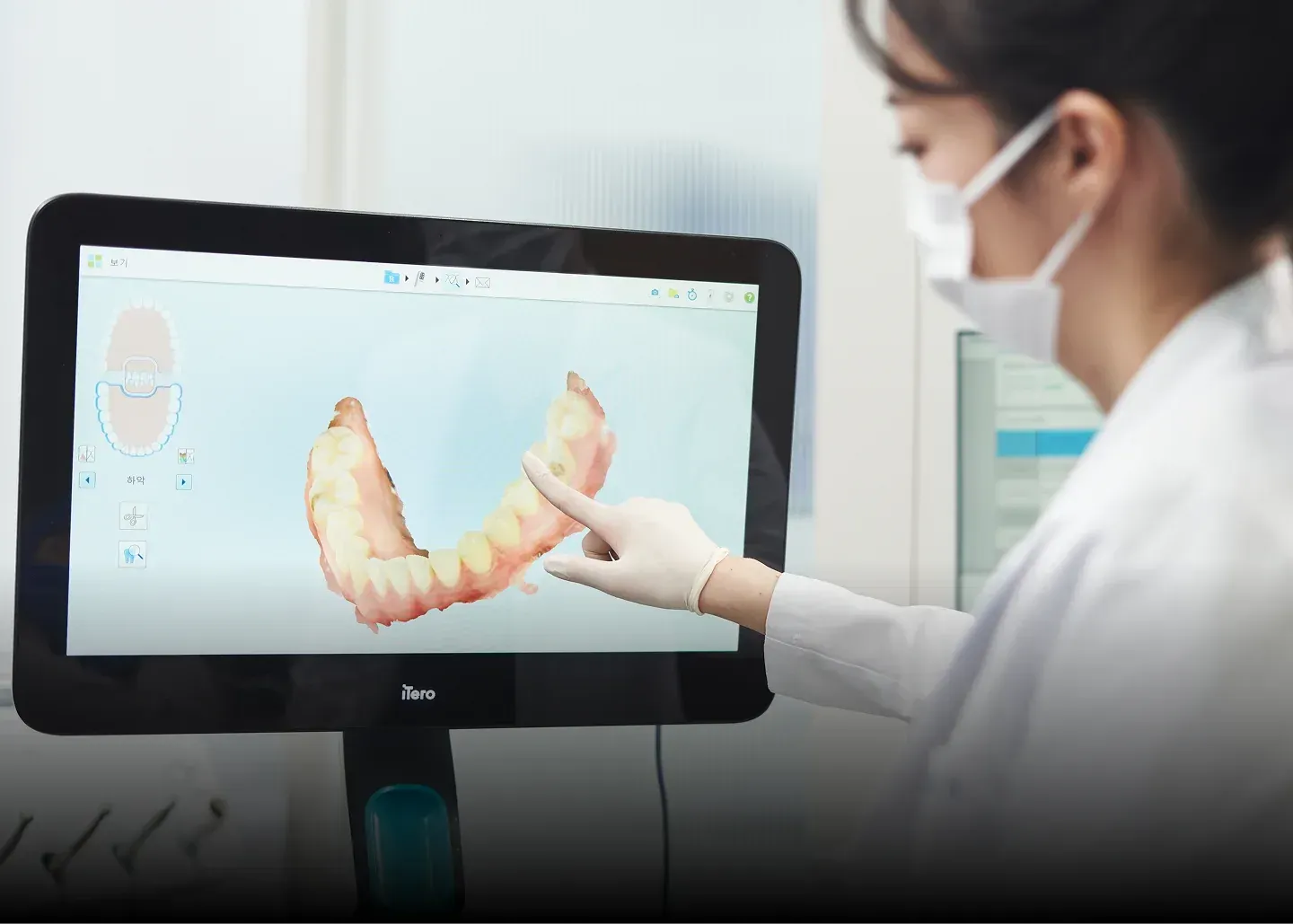
A digital scan records exactly how the teeth meet, and a RAY Quantum 5D CT scan shows roots, bone and the jaw joints. For children and teens, a growth analysis shows how much growth remains. Photos and a RAY Face scan show how much upper tooth is visible when you smile, which guides whether to move front teeth up or let back teeth come down.
Related cases: deep bites treated with braces
Two published cases show teenagers with deep bites, both treated with fixed braces without extractions:
- Crowding, canines outside the arch and a deep overbite , treated over 18 months
- High canines and a severe deep bite , where the upper teeth fully covered the lowers, treated over 19 months
Both are published with patient consent. Results vary from person to person.
Deep bite FAQs
Can a deep bite damage my teeth or gums?
It can. When the lower front teeth bite against the gum behind the upper teeth, the gum can become sore, inflamed or receded over time. Deep bites can also contribute to wear or chipping of the front teeth. Not every deep bite causes damage, so the examination looks at what is actually happening in your mouth.
How long does it take to correct a deep bite?
It depends on how deep the bite is and what else needs correcting. Opening a bite tends to be one of the slower parts of treatment. In the two published teen cases with deep bites, treatment took 18 and 19 months. You receive an estimated timeline after your examination.
Does a deep bite come back after braces?
Deep bites have a tendency to relapse, so retention is especially important. Dr. Lee may use a retainer design that helps keep the bite open, and will see you for retention check-ups. Wearing retainers as instructed is the most important thing you can do to keep the result.
Is a deep bite linked to jaw joint (TMJ) problems?
Research has not shown a clear, direct link between deep bites and jaw joint disorders, and orthodontic treatment is not a recognised cure for TMJ problems. Your first examination includes X-rays and, when useful, a 3D CT scan; a CT scan includes the jaw joints, so Dr. Lee can look at them as part of her diagnosis. If you have jaw pain, tell us when you book.
Is it too late to fix a deep bite as an adult?
No. Adults can have deep bites corrected with braces or aligners. Because there is no growth to help, treatment relies on moving teeth vertically, sometimes with small temporary anchorage screws. If teeth are worn, Dr. Lee coordinates with your dentist so the bite and any restorations are planned together.
Medically reviewed by Dr. Sally Chaekyung Lee, DDS, PhD
Board-certified orthodontist (Korea Ministry of Health and Welfare) · Adjunct Professor of Orthodontics, Yonsei University · Last updated October 2026
This page is general information, not a diagnosis. Treatment results and duration vary from person to person. Orthodontic treatment can cause temporary discomfort and, in some cases, root shortening, gum recession or tooth decay if oral hygiene is poor; teeth can relapse if retainers are not worn as instructed.
Concerned about a deep bite?
Book an examination and Dr. Lee will check the bite, gums and jaw joints, then explain the options in English. Isu Station Exit 2 · Open until 9 PM Mon & Thu · Saturdays 9 AM–2 PM.