
Home › Before & After › Braces: High Canines, No Extractions
Case study · Child / teen · Non-extraction braces
Non-Extraction Braces Case: High Canines and a Severe Deep Bite
This young patient had upper crowding, both upper canines erupting high and outside the arch, and a severe deep bite in which the upper front teeth fully covered the lower ones. At Yonsei Baro near Isu Station, Seoul, Dr. Sally Chaekyung Lee created space without extractions and treated the case with braces over 19 months.
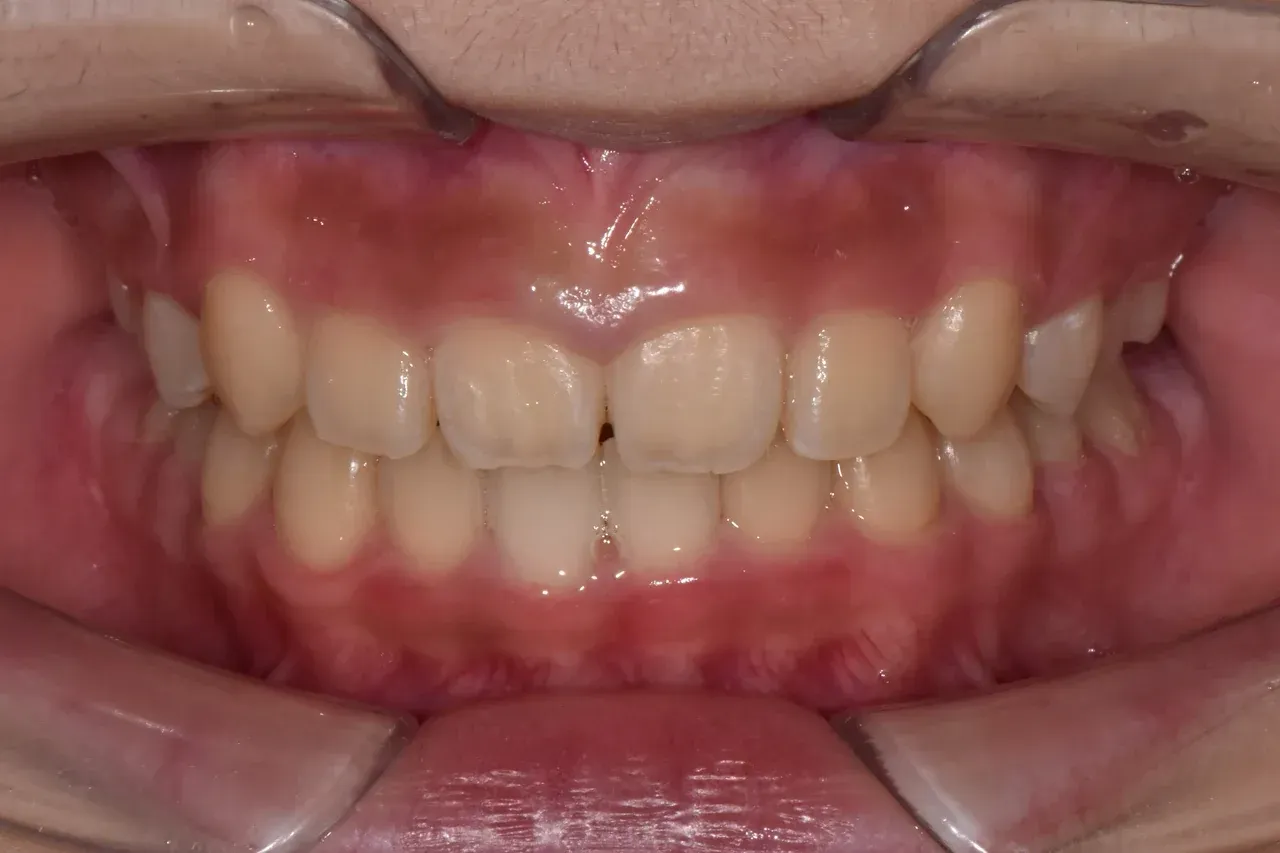
Case at a glance
| Detail | This case |
|---|---|
| Age group | Child / teen |
| Main concern | Upper crowding; both upper canines erupted high and outside the arch; severe deep bite (upper incisors fully covering the lowers) |
| Appliance | Fixed braces |
| Extraction | None (space created without extractions) |
| Active treatment | 19 months (February 2023 – September 2024) |
| Treated by | Dr. Sally Chaekyung Lee, board-certified orthodontist |
| After treatment | Retainers, with retention check-ups at the clinic |
What was the patient’s concern?
The upper teeth were crowded, and there was not enough room for the upper canines. Both had erupted high up and outside the arch, above and in front of the neighbouring teeth. High canines like these are one of the more visible signs that an arch is short of space.
The patient also had a severe deep bite. When biting together, the upper front teeth fully covered the lower front teeth, so the lower incisors could not be seen at all. A bite this deep can lead to wear on the front teeth and, in some people, irritation of the gum behind the upper teeth. Read more about deep bite (overbite) .
How was the case diagnosed?
At the first examination, which takes about 60 minutes at Yonsei Baro, Dr. Lee used a 3D cone-beam CT scan, an intraoral digital scan and photographs alongside a clinical examination. CT is particularly helpful when canines are out of position, because it shows exactly where the crowns and roots sit in relation to the neighbouring teeth.
The central decision was how to find room for two canines in a crowded upper arch. Cases like this are sometimes treated by removing teeth. After assessing the space shortage, the bone and the profile, Dr. Lee concluded that enough space could be created without extractions. See impacted and high canines for more on how these teeth are assessed.
What was the treatment plan?
Dr. Lee’s plan with fixed braces had three parts: create space in the upper arch without extractions, guide both upper canines down and into the arch, and correct the severe deep bite.
The order matters. Space has to be made first, so that each canine has room to move into; the deep bite is corrected by adjusting the vertical relationship of the front teeth. Exactly how these steps were carried out belongs to the patient’s private clinical record. We share the main facts so families can see what non-extraction treatment can involve.
Before and after photographs
The photographs compare the teeth before treatment and at the end of active treatment. They show the same patient, published with consent.
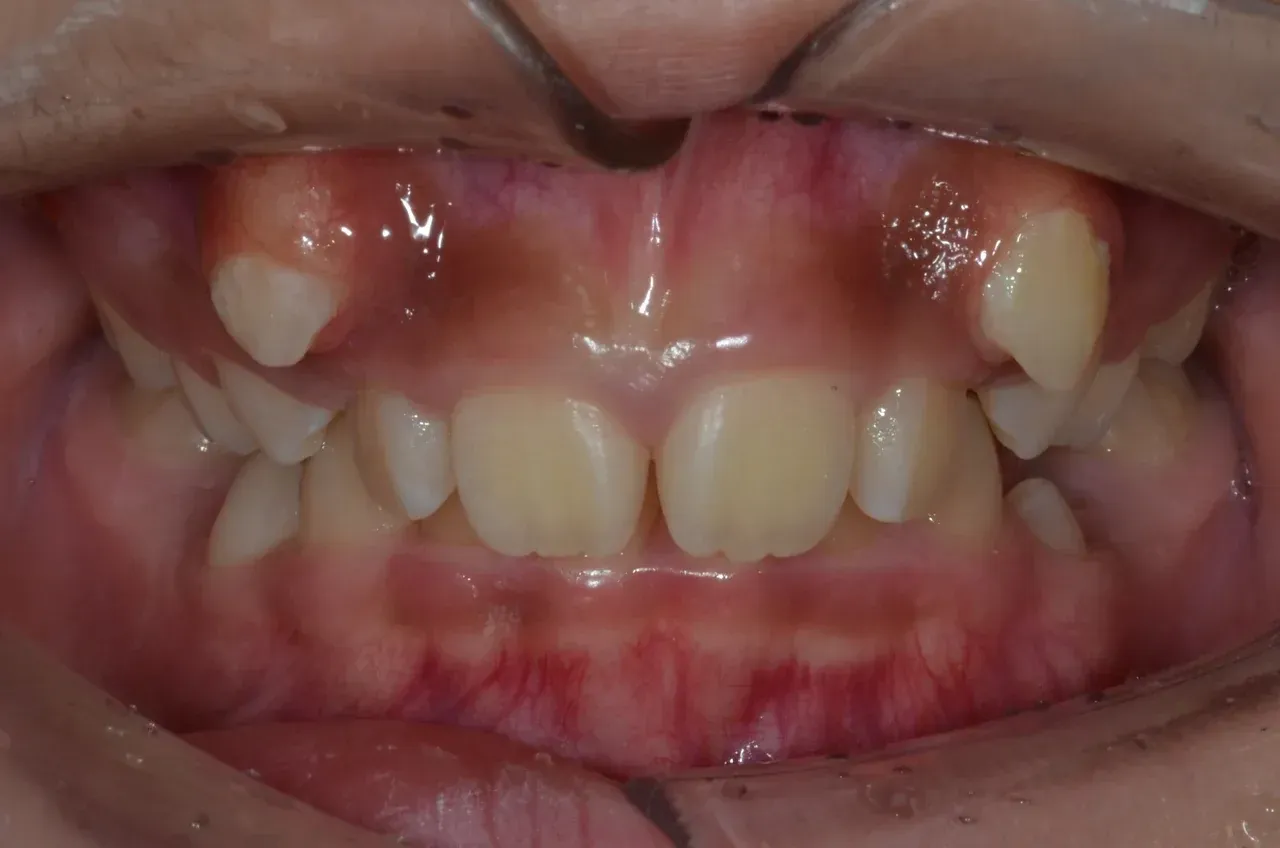
Before treatment. Upper crowding, both upper canines high and outside the arch, and a severe deep bite.
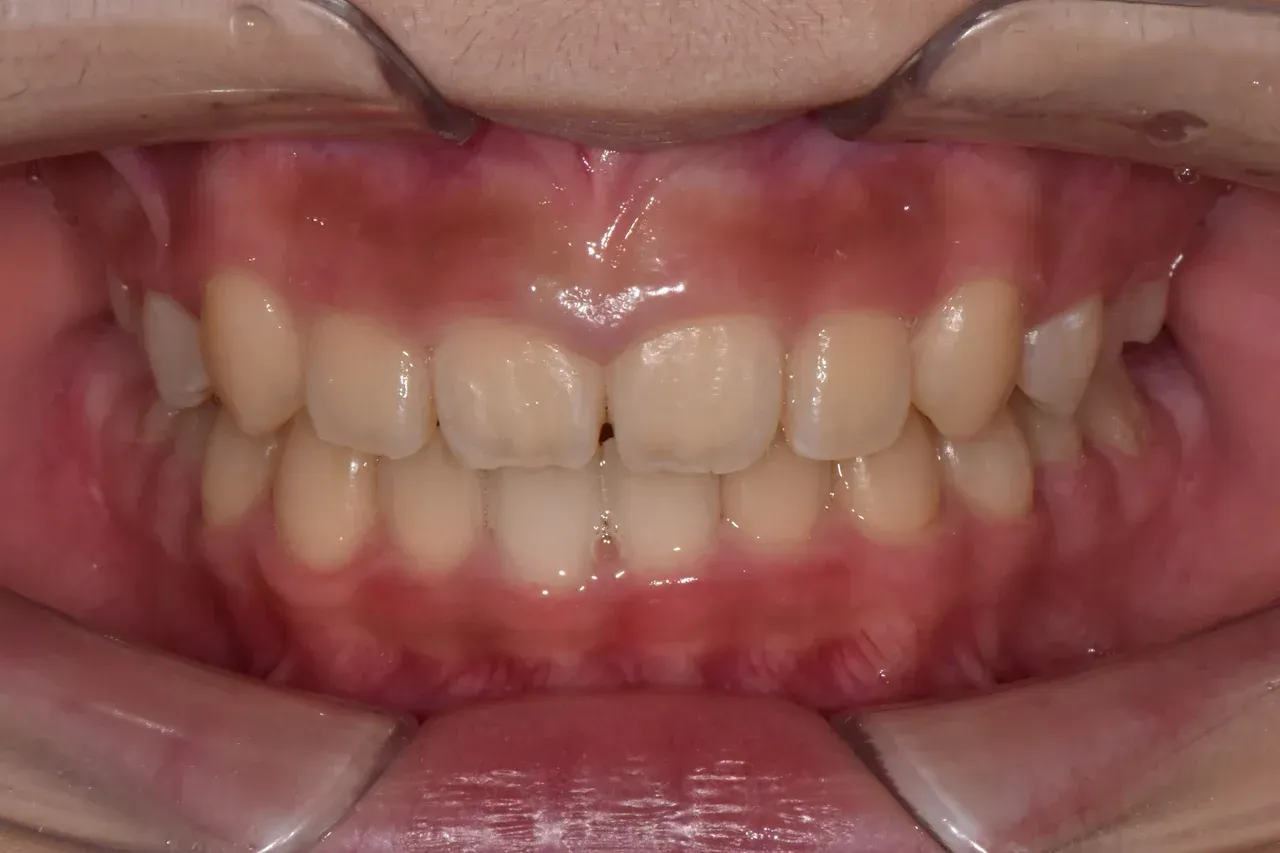
After active treatment. The teeth at the end of 19 months of braces, with space created without extractions.
Results vary — please read
This case is published with the patient’s consent. It shows one person’s result and is not a prediction or promise of yours: treatment time and outcome depend on your teeth, bone, growth, gums and habits, and, with aligners, on daily wear. Orthodontic treatment can cause temporary discomfort and, in some cases, root shortening (root resorption), tooth decay or gum problems if teeth are not kept clean, and relapse if retainers are not worn as instructed.
What changed during treatment?
The plan aimed to make room in the upper arch, bring both high canines down into line and open the severe deep bite, all without removing teeth. The after photograph shows the result at the end of 19 months of active treatment.
Nineteen months is this patient’s treatment time, not a typical or promised duration. How long it takes to bring high canines into the arch depends on how far they have to travel, the root position and the patient’s growth. With braces, visits are usually every 4–6 weeks, and good brushing around the brackets protects the teeth throughout. Our guide to cleaning teeth with braces explains how.
How is the result kept stable?
Canines moved from a high position and a corrected deep bite both have some tendency to relapse. Every case at Yonsei Baro ends with retainers chosen for the patient, and Dr. Lee continues to see patients for retention check-ups.
For a growing patient, these checks also allow Dr. Lee to keep an eye on how the bite settles as the face matures. If the family moves abroad, we provide retainer records and treatment information in English so a new orthodontist can continue care. See moving during treatment .
Questions about this case
How can space be created without removing teeth?
Depending on the case, space can come from gently widening or developing the arch, adjusting the angle of the front teeth, or slightly reshaping tooth contacts. Which approach is suitable depends on the bone, the roots and the facial profile, which is why the decision is made only after 3D CT and a full examination.
Why do upper canines sometimes erupt so high?
Upper canines develop high in the jaw and travel a long way before they erupt, usually after the neighbouring teeth. If the arch is already crowded, there may be no room left, so the canine comes in above and in front of the other teeth, as both upper canines did in this case.
What does it mean when the upper teeth fully cover the lower teeth?
It describes a severe deep bite. Normally the upper front teeth overlap the lower ones by a small amount. In this case, the overlap was so great that the lower front teeth were hidden completely when biting together. Correcting it was one of the three goals of treatment.
Should every crowded case avoid extractions?
No. Non-extraction treatment suited this patient, but when crowding is severe or the lips and teeth are very full, removing teeth can give a more stable or balanced result. Dr. Lee explains both options and the reasons for her recommendation before any decision is made.
Could a high canine be noticed before it erupts?
Often, yes. A canine heading off course can usually be seen on X-rays or 3D CT while it is still developing. That is one reason a first orthodontic check by about age 7, and closer monitoring of canine eruption from around 10 to 12, can give families more options.
Medically reviewed by Dr. Sally Chaekyung Lee, DDS, PhD
Board-certified orthodontist (Korea Ministry of Health and Welfare) · Adjunct Professor of Orthodontics, Yonsei University · Last updated October 2026
This page is general information, not a diagnosis. Treatment results and duration vary from person to person. Orthodontic treatment can cause temporary discomfort and, in some cases, root shortening, gum recession or tooth decay if oral hygiene is poor; teeth can relapse if retainers are not worn as instructed.
Concerned about high canines or a deep bite?
Book a consultation and Dr. Lee will examine your child’s teeth with 3D imaging and explain the options in English. Isu Station Exit 2 · Open until 9 PM Mon & Thu · Saturdays 9 AM–2 PM.