
Home › Before & After › Braces: Canine & Deep Bite
Case study · Child / teen · Braces
Braces Before and After: Canines Outside the Arch and a Deep Bite
This young patient had crowding in both jaws, three canines that came in outside the arch and a deep overbite, with no skeletal problem. At Yonsei Baro near Isu Station, Seoul, Dr. Sally Chaekyung Lee treated the case with fixed braces and no extractions over 18 months, from January 2023 to July 2024.
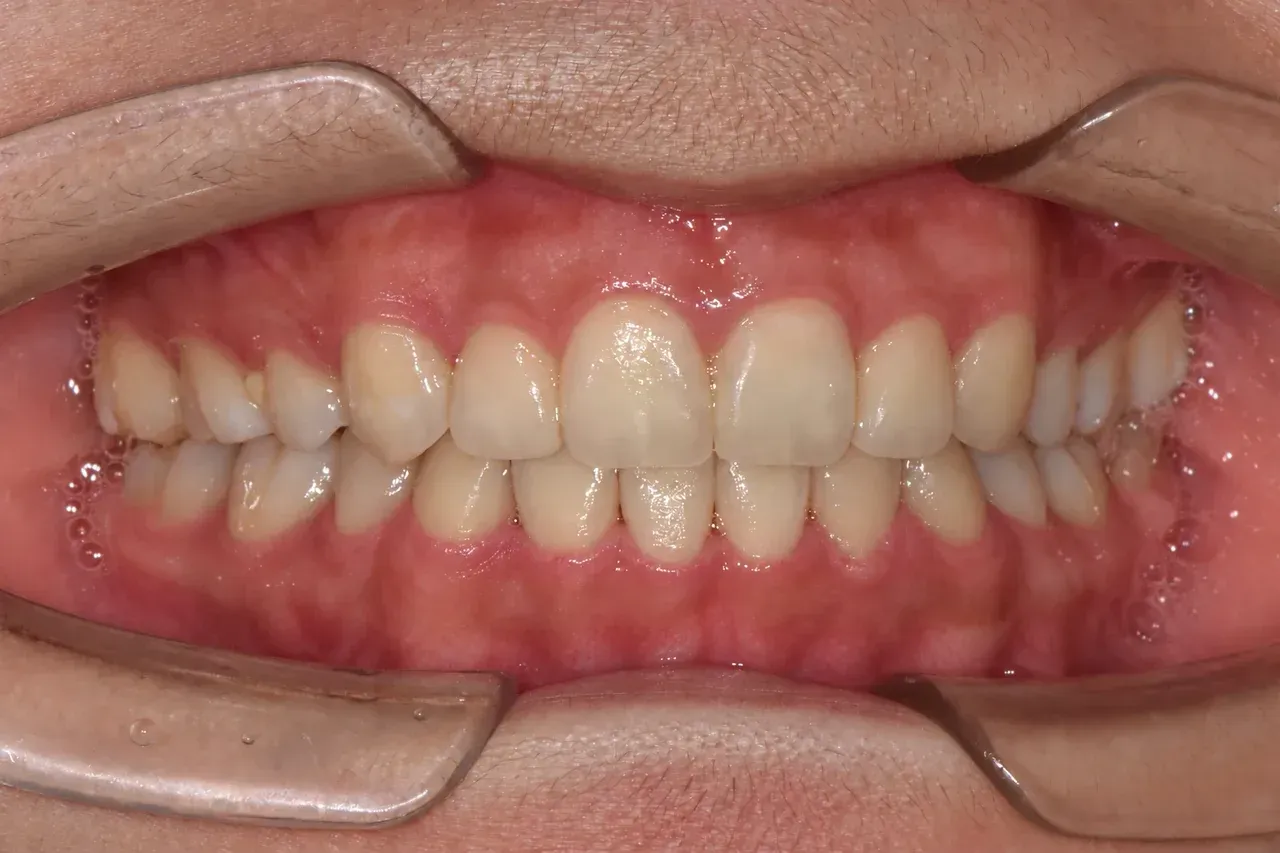
Case at a glance
| Detail | This case |
|---|---|
| Age group | Child / teen |
| Main concern | Crowding in both arches; upper right canine and both lower canines erupted outside the arch; deep overbite |
| Skeletal problem | None found |
| Appliance | Fixed braces |
| Extraction | None (non-extraction treatment) |
| Active treatment | 18 months (January 2023 – July 2024) |
| Treated by | Dr. Sally Chaekyung Lee, board-certified orthodontist |
| After treatment | Retainers, with retention check-ups at the clinic |
What was the patient’s concern?
Both the upper and lower teeth were crowded. Because there was not enough room in the arch, three canines had come in outside the line of the other teeth: the upper right canine and both lower canines. The patient also had a deep overbite, meaning the upper front teeth overlapped the lower front teeth further than usual when biting together.
Canines are usually among the last front teeth to erupt, so when space runs short they are often the ones pushed out of line. They also play an important role in guiding the jaw during side-to-side movements, which is one reason orthodontists aim to bring them into the arch rather than leave them where they erupted.
How was the case diagnosed?
The first examination at Yonsei Baro takes about 60 minutes and includes an intraoral digital scan, photographs, X-rays or a 3D cone-beam CT scan, and a clinical examination by Dr. Lee. For growing patients, a skeletal-maturity analysis helps judge where the child is in growth.
A key finding in this case was that there was no skeletal problem. The upper and lower jaws related normally, so the crowding, the canine positions and the deep bite came from the teeth themselves rather than the jaw bones. That meant fixed braces alone could address the problem, without growth-modification appliances or a surgical referral. Read more about canines that erupt high or outside the arch .
What was the treatment plan?
Dr. Lee planned fixed braces with two goals: to align the three canines into the arch and to correct the deep bite. The plan did not involve removing any teeth.
With braces, archwires of increasing stiffness gradually level and align the teeth, and the space needed to bring canines into line is gained within the arch. Correcting a deep bite involves adjusting the vertical position of the front teeth so they overlap less. The details of how each step was carried out are part of the patient’s private clinical record; what we publish here are the main facts of the case.
Before and after photographs
The photographs compare the teeth before treatment and at the end of active treatment. They show the same patient, published with consent.
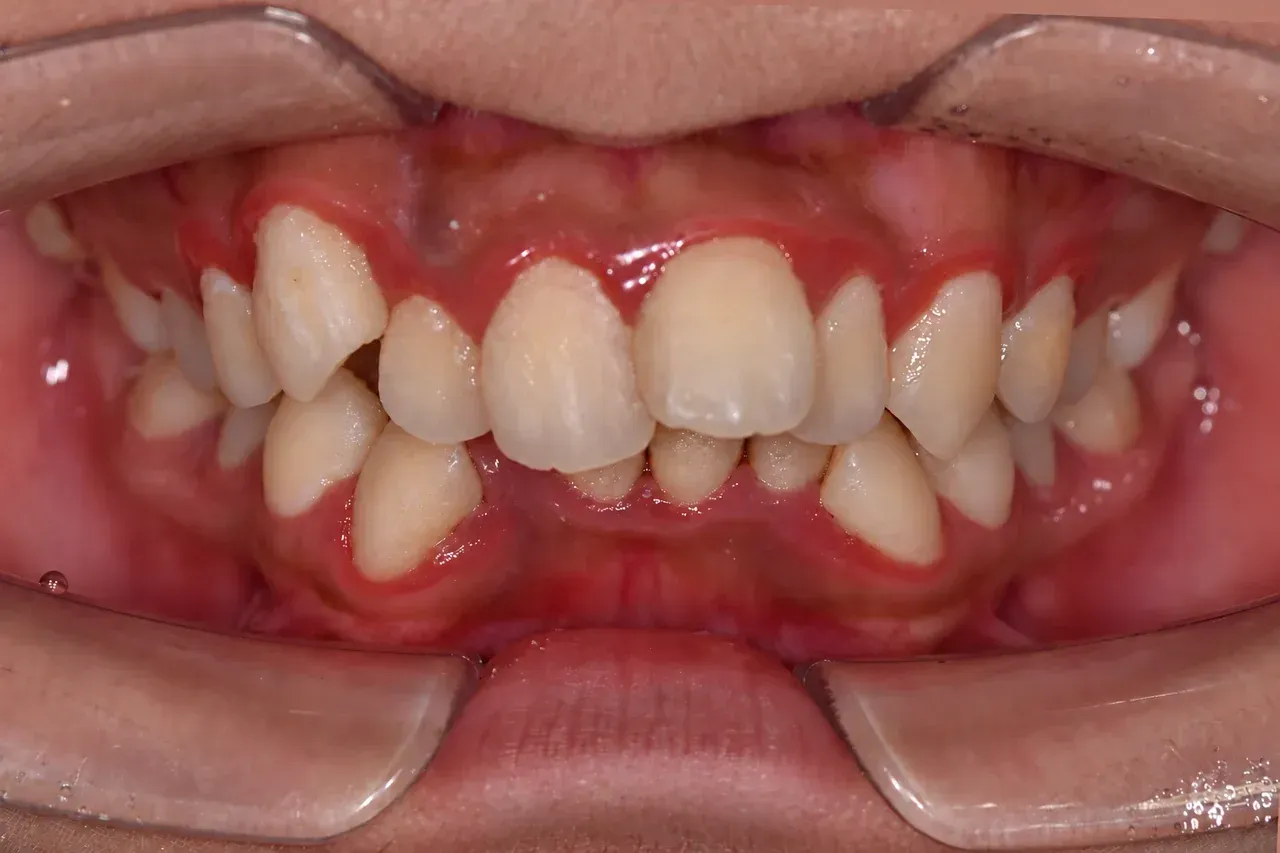
Before treatment. Crowding in both arches, the upper right and both lower canines outside the arch, and a deep overbite.
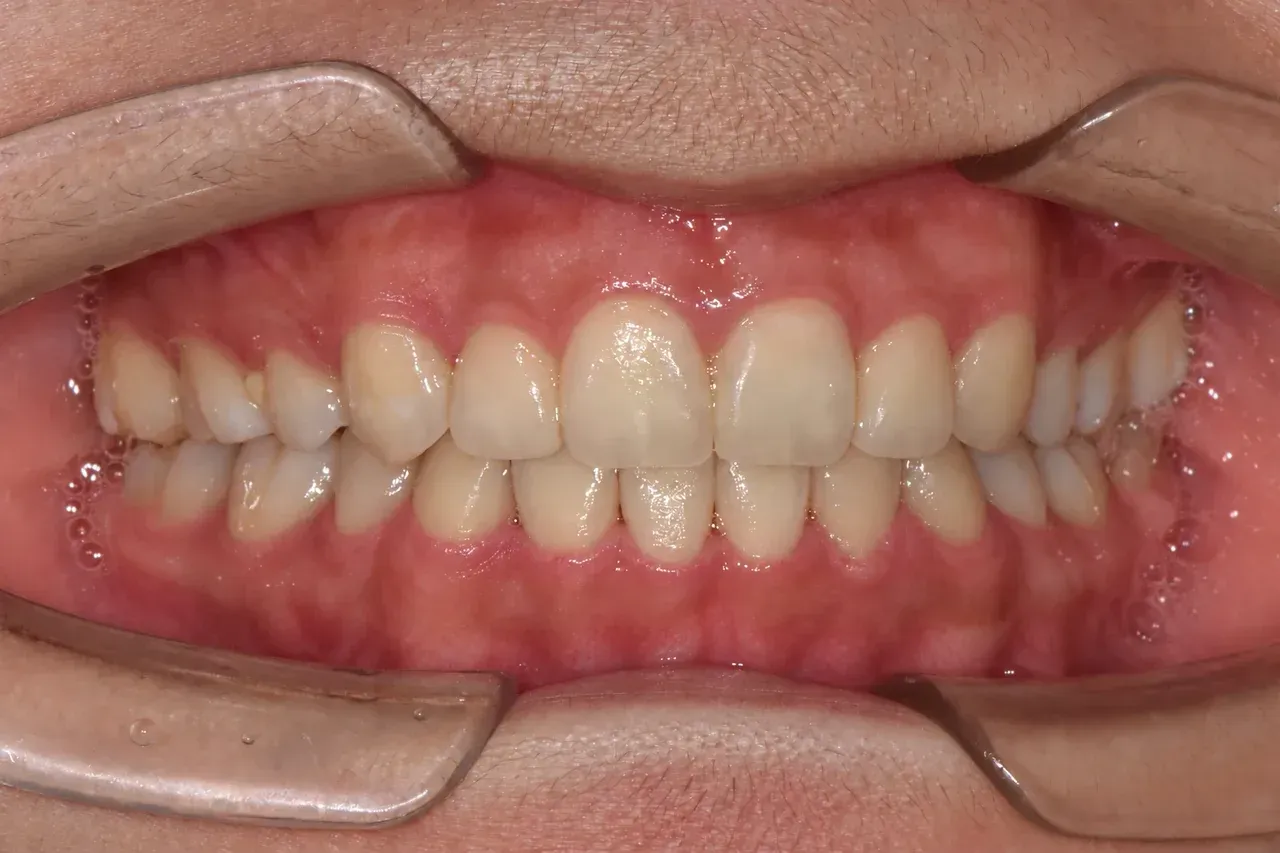
After active treatment. The teeth at the end of 18 months of fixed braces, with no extractions.
Results vary — please read
This case is published with the patient’s consent. It shows one person’s result and is not a prediction or promise of yours: treatment time and outcome depend on your teeth, bone, growth, gums and habits, and, with aligners, on daily wear. Orthodontic treatment can cause temporary discomfort and, in some cases, root shortening (root resorption), tooth decay or gum problems if teeth are not kept clean, and relapse if retainers are not worn as instructed.
What changed during treatment?
The plan set out to bring the upper right canine and both lower canines into the arch, relieve the crowding in both jaws and reduce the deep overbite, all without extractions. The after photograph shows the teeth at the end of 18 months of active treatment.
Eighteen months reflects this patient’s case, not a standard timeline. Cases involving canines outside the arch vary widely depending on how far the teeth need to move and how the patient responds. Braces visits are usually every 4–6 weeks. Our teen orthodontics page explains how treatment fits around school.
How does retention work after braces?
Teeth that have been moved, especially canines brought in from outside the arch, tend to drift back toward their original positions, and a corrected deep bite can partly return. Every patient at Yonsei Baro therefore finishes with retainers , fixed, removable or both, chosen for the case.
For children and teenagers, retention matters for longer than many parents expect, because teeth can keep settling as the face matures. Dr. Lee continues to see patients for retention check-ups, and families who move abroad receive retainer records to take with them.
Questions about this case
Why did the canines grow in outside the arch?
Canines are among the last front teeth to erupt. When the arch is crowded, there is often too little room left by the time they arrive, so they come in higher or further out than the neighbouring teeth. In this case crowding affected both jaws, and three canines were pushed outside the arch.
What is a deep overbite, and why correct it?
A deep overbite means the upper front teeth cover the lower front teeth more than usual when you bite. Depending on how deep it is, it can concentrate wear on the front teeth or let the lower teeth bite into the gum behind the upper teeth. Correcting it is part of building a stable, balanced bite.
Could this case have been treated with clear aligners instead?
Some cases with similar problems can be treated with aligners, but bringing canines in from outside the arch while correcting a deep bite requires precise control. Dr. Lee chose fixed braces for this patient after her examination. For your child, she will explain which appliance she would recommend and why.
At what age should a child be checked for canine problems?
Canine positions can often be assessed on X-rays years before the teeth erupt. The American Association of Orthodontists suggests a first orthodontic check by about age 7, and canine eruption is often monitored more closely from around 10 to 12. Early checks give more options if a canine is heading off course.
Does ‘no skeletal problem’ mean the case was simple?
Not necessarily. It means the jaws related normally, so the problem came from the teeth rather than the bones. Aligning three canines and correcting a deep bite in both arches still took 18 months of active treatment. The absence of a skeletal problem did mean that braces alone could address it.
Medically reviewed by Dr. Sally Chaekyung Lee, DDS, PhD
Board-certified orthodontist (Korea Ministry of Health and Welfare) · Adjunct Professor of Orthodontics, Yonsei University · Last updated October 2026
This page is general information, not a diagnosis. Treatment results and duration vary from person to person. Orthodontic treatment can cause temporary discomfort and, in some cases, root shortening, gum recession or tooth decay if oral hygiene is poor; teeth can relapse if retainers are not worn as instructed.
Worried about your child’s canines or bite?
Book a consultation and Dr. Lee will examine your child’s teeth and growth and explain the options in English. Isu Station Exit 2 · Open until 9 PM Mon & Thu · Saturdays 9 AM–2 PM.