
Home › Orthodontics › Conditions We Treat › Protruding Front Teeth
Conditions · Children, teens & adults
Protruding Front Teeth (Overjet): Causes and Treatment
Protruding front teeth, sometimes called buck teeth, means the upper front teeth sit too far ahead of the lower teeth, a gap orthodontists call overjet. It can come from tooth position, a set-back lower jaw or habits. At Yonsei Baro near Isu Station, Dr. Sally Chaekyung Lee times treatment around growth.
Protruding front teeth at a glance
| Question | In brief |
|---|---|
| What it is | Increased overjet: a large horizontal gap between the upper and lower front teeth, with the upper teeth tipped or positioned forward |
| Common causes | A lower jaw that is small or set back, upper front teeth that are flared forward, thumb or finger sucking, a tongue that pushes forward, inherited jaw shape |
| Usually noticed | Ages 7–10, once the upper adult front teeth are in; lips may not close comfortably over the teeth |
| How it’s assessed | Measurement of overjet, X-rays or 3D CT and face photos to separate tooth from jaw causes, growth analysis to time treatment |
| Treatment options | Growth-guidance or functional appliances in growing children; braces or clear aligners; space creation by extractions or moving back teeth when needed |
| Typical approach: children | Early treatment when the overjet is large or the teeth are at risk of injury; otherwise often one course of treatment during the pubertal growth spurt |
| Typical approach: adults | Braces or aligners to bring the front teeth back, sometimes with extractions or temporary anchorage screws; surgery only for marked jaw imbalances |
What causes front teeth to stick out?
Protruding front teeth are rarely about the teeth alone. The most common pattern is a lower jaw that is relatively small or set back, so the upper teeth look too far forward even if they are in a reasonable position. Other causes include:
- Upper front teeth tipped forward, sometimes with spacing between them
- Thumb, finger or dummy sucking continuing after the adult front teeth arrive. See thumb sucking and pacifiers
- A tongue that rests low or pushes forward during swallowing, often alongside an open bite
- Crowding that pushes one or two teeth out of line
Protruding front teeth are different from a protruding mouth , where both the upper and lower teeth sit forward and the lips look full. The two need different plans.
Does my child need treatment now?
Children with protruding upper front teeth are more likely to chip or break them in falls and sports, and studies suggest that reducing a large overjet early can lower the risk of injury. For many children, though, the final result is similar whether treatment starts early or during the teenage growth spurt.
Dr. Lee usually recommends early treatment when the overjet is large, when the lips can’t cover the teeth, when a habit is driving the problem, or when teasing is affecting a child. Otherwise she may suggest monitoring and starting one course of treatment at the right stage of growth. Read about early (Phase 1) treatment . In the meantime, a mouthguard for contact sports is sensible.
How are protruding front teeth treated?
Growing children and teens
When a set-back lower jaw is part of the problem, growth guidance with a functional appliance can encourage the jaws into a better relationship while the child is growing. How much the jaw itself responds varies from child to child, which is why timing and realistic expectations matter. Fixed braces or aligners then finish aligning the teeth.
Adults
After growth, treatment moves the teeth rather than the jaws. Braces or clear aligners can bring the front teeth back, using space from extractions, from moving the back teeth backwards with temporary anchorage screws, or from slight enamel reshaping. When the jaw imbalance is marked, combined orthodontic and surgical treatment may be discussed.
How Dr. Lee assesses protruding teeth
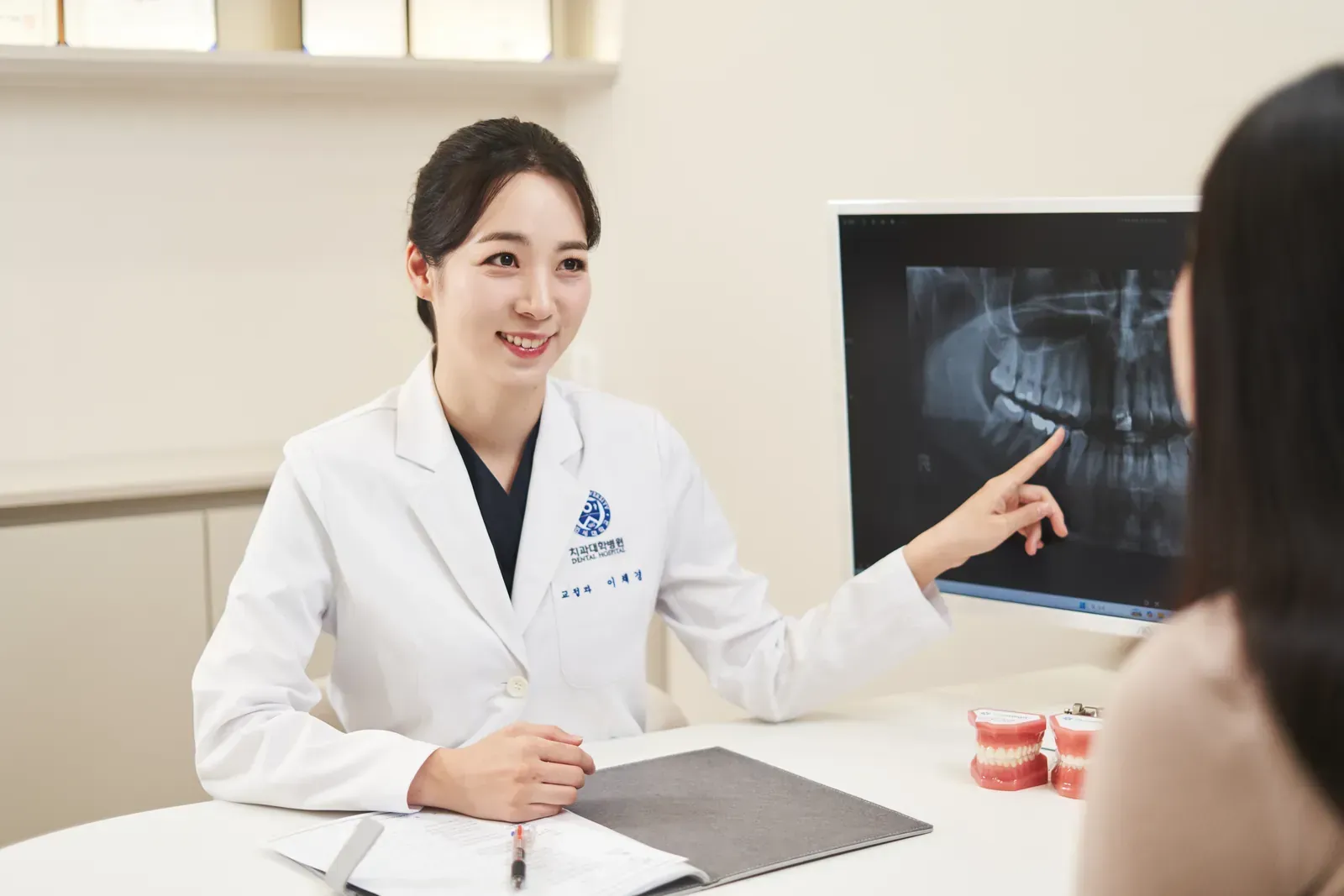
The key question is whether the teeth, the jaws or both are responsible. A RAY Quantum 5D CT scan shows the jaw relationship and how much bone surrounds the front-tooth roots, which limits how far teeth can safely be moved back. A RAY Face scan and photos show the lips, nose and chin in profile. For children, a skeletal-maturity analysis helps place functional treatment during active growth.
Dr. Lee previously directed pediatric and adolescent orthodontics at CDC Children’s Dental Clinic in Cheongdam, so growth-phase decisions like these are a familiar part of her work. You can see published cases, shared with patient consent, on our before-and-after page ; results vary.
Protruding front teeth FAQs
Are protruding front teeth more likely to get injured?
Yes. Upper front teeth that stick out are less protected by the lips, so they are more likely to be chipped or knocked in falls, playground accidents and sports. This is one reason orthodontists sometimes treat a large overjet early. A well-fitted mouthguard is worth using for contact sports in the meantime.
What is a functional appliance?
A functional appliance is a removable or fixed device that holds the lower jaw in a more forward position while a child is growing. The aim is to improve how the jaws relate to each other and reduce the overjet. It works only during growth, and the amount of jaw change differs between children. Dr. Lee explains what is realistic before starting.
Can thumb sucking push the front teeth forward?
It can. A thumb or finger habit that continues once the adult front teeth are coming in can tip the upper teeth forward and the lower teeth back, and sometimes creates an open bite. If the habit stops early, some of the change may improve by itself. Our habit appliances page covers ways to help a child stop.
Can protruding front teeth be corrected with clear aligners?
Often, especially in adults and teens whose overjet comes mainly from tipped teeth. Aligners can retract the front teeth and close spaces, and can be combined with elastics. When large movements, extractions or growth guidance are needed, fixed braces or a functional appliance may be more predictable.
Is it too late to correct buck teeth as an adult?
No. Adults can have protruding front teeth corrected with braces or aligners, although the jaw itself no longer responds to growth guidance. The plan depends on how much of the problem comes from the teeth and how much from the jaws. Dr. Lee explains which approach she would recommend, and why.
Medically reviewed by Dr. Sally Chaekyung Lee, DDS, PhD
Board-certified orthodontist (Korea Ministry of Health and Welfare) · Adjunct Professor of Orthodontics, Yonsei University · Last updated October 2026
This page is general information, not a diagnosis. Treatment results and duration vary from person to person. Orthodontic treatment can cause temporary discomfort and, in some cases, root shortening, gum recession or tooth decay if oral hygiene is poor; teeth can relapse if retainers are not worn as instructed.
Is now the right time to treat?
Book an examination for your child or yourself. Dr. Lee will check the bite and growth stage and explain the timing in English. Isu Station Exit 2 · Open until 9 PM Mon & Thu · Saturdays 9 AM–2 PM.