
Home › Orthodontics › Conditions We Treat › Jaw Asymmetry
Conditions · Children, teens & adults
Jaw Asymmetry: Is It the Bite or the Bone?
Jaw asymmetry means the lower jaw or chin sits off-centre, so the two sides of the face look different. Some cases come from a bite that makes the jaw shift sideways; others reflect uneven jaw growth. At Yonsei Baro near Isu Station, Dr. Sally Chaekyung Lee uses 3D CT and a RAY Face scan to tell them apart.
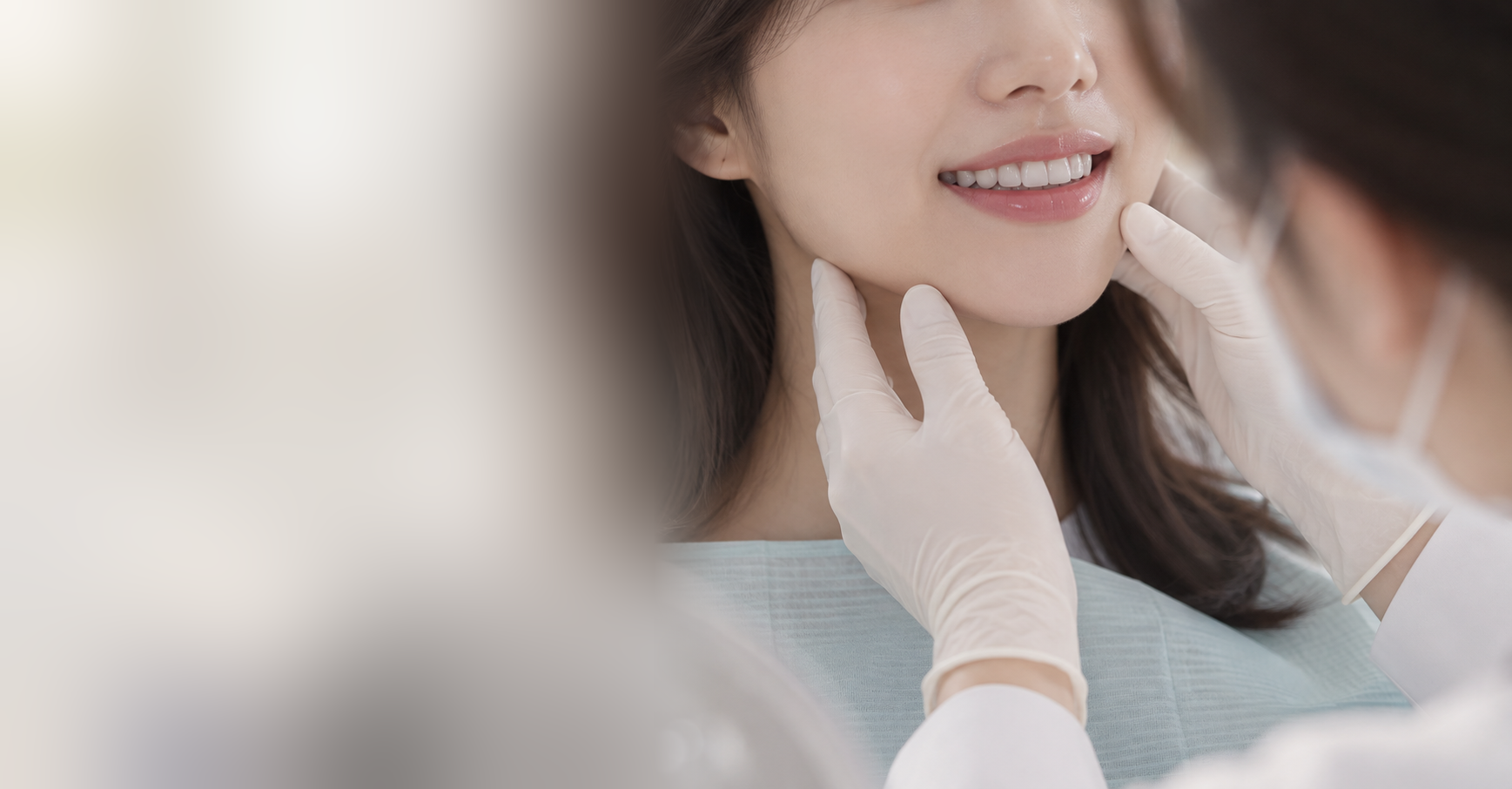
Jaw asymmetry at a glance
| Question | In brief |
|---|---|
| What it is | A visible difference between the left and right sides of the jaw or chin, often with the upper and lower teeth midlines not lining up |
| Common causes | A one-sided crossbite making the jaw shift (functional), uneven jaw growth (skeletal), jaw joint changes, and occasionally past injury |
| Usually noticed | Functional shifts can appear in childhood; skeletal asymmetry often becomes more obvious during the teenage growth spurt |
| How it’s assessed | Check for a jaw shift on closing, X-rays or 3D CT of both jaws and joints, RAY Face 3D face scan, growth analysis |
| Treatment options | Early correction of crossbites and shifts; braces or aligners for dental asymmetry; combined orthodontic–surgical treatment for significant skeletal asymmetry after growth |
| Typical approach: children | Remove any functional shift early; monitor skeletal growth and the jaw joints |
| Typical approach: adults | Orthodontics for mild or dental asymmetry; referral to an oral & maxillofacial surgeon when the jaw difference is significant |
Functional shift or skeletal asymmetry?
This is the first question Dr. Lee answers, because the two need very different plans:
- Functional asymmetry: the jaw bones are reasonably symmetrical, but a crossbite or a high tooth makes the lower jaw slide to one side each time the teeth close. When the jaw is guided into its natural position, the chin returns to the middle
- Skeletal asymmetry: one side of the jaw has grown more than the other, so the chin stays off-centre even when the teeth are apart
- Dental asymmetry: the jaws are balanced, but teeth have drifted so the midlines don’t match
Small differences between the two sides of the face are normal and very common. Treatment is considered when the difference affects the bite, the jaw joints or how you feel about your appearance.
Does my child need treatment now?
If a child’s jaw is shifting because of a crossbite, correcting it early is generally advised, so that the jaw can grow in its natural position. See early orthodontic treatment . If the asymmetry is skeletal, Dr. Lee usually monitors growth through the teenage years with regular records, because the final pattern often isn’t clear until growth slows. Growth guidance can play a role in selected cases.
Can jaw asymmetry be corrected without surgery?
Functional and dental asymmetries can usually be treated with orthodontics alone: expansion or braces and aligners to remove the shift and line up the midlines. Mild skeletal asymmetry can sometimes be disguised by moving teeth, within the limits of the bone and the face.
When the skeletal difference is significant, orthodontics alone cannot move the jaw bones. The usual approach is combined orthodontic and surgical treatment once growth has finished, with an oral and maxillofacial surgeon repositioning the jaws and Dr. Lee managing the orthodontic phases before and after. Whether you need this, and what it would involve, can only be decided after a full examination.
Dr. Lee’s research on asymmetry and jaw surgery
Dr. Lee received an Excellent Poster Award at the 53rd Korean Association of Orthodontists (KAO) congress for research on post-surgical changes in skeletal Class III patients with facial asymmetry, and a KAO Commendation in 2025 for research on surgical-orthodontic stability. She also links her eye for facial proportion to her background in fine art. See research and awards .
How Dr. Lee assesses jaw asymmetry
She first checks whether the jaw shifts when the teeth close. A RAY Quantum 5D CT scan then shows both sides of the jaws and the jaw joints in three dimensions, which flat X-rays can distort. A RAY Face scan records the soft tissue of the face, so bone and appearance can be compared. Growth analysis helps decide when skeletal asymmetry is stable enough to plan definitive treatment. Consented cases are on our before-and-after page ; results vary.
Jaw asymmetry FAQs
Is it normal for my face to be slightly asymmetrical?
Yes. Almost everyone has small differences between the left and right sides of the face, and most are not noticeable to others. Asymmetry becomes a clinical concern when it is marked, affects the bite or jaw joints, or is getting worse. A 3D examination helps separate normal variation from something that needs treatment.
Can a crossbite make my child’s chin look off-centre?
It can. When a one-sided crossbite makes the jaw slide sideways to bite, the chin sits off-centre whenever the teeth are together. Correcting the crossbite usually lets the jaw return to the middle. If it is left during growth, there is concern that it may influence how the jaw develops.
At what age can jaw surgery for asymmetry be done?
Jaw surgery is generally planned after facial growth has finished, which is usually later in boys than in girls. Dr. Lee uses growth analysis and serial records to judge when growth has slowed enough. The timing and details of surgery are decided together with the oral and maxillofacial surgeon.
Can jaw asymmetry affect the jaw joints?
Sometimes. Some asymmetries are linked to changes in one of the jaw joints, and an uneven bite can place different loads on each side. The 3D CT scan includes both joints, so Dr. Lee can look for changes. If you have jaw pain, clicking or limited opening, mention it when you book.
Will braces or aligners fix my crooked smile?
If the asymmetry comes from the teeth or from a jaw shift, orthodontics can often straighten the smile line and match the midlines. If it comes from the shape of the jaw bones, braces or aligners can improve the bite but may not fully balance the face. Dr. Lee explains which applies to you before you decide.
Medically reviewed by Dr. Sally Chaekyung Lee, DDS, PhD
Board-certified orthodontist (Korea Ministry of Health and Welfare) · Adjunct Professor of Orthodontics, Yonsei University · Last updated October 2026
This page is general information, not a diagnosis. Treatment results and duration vary from person to person. Orthodontic treatment can cause temporary discomfort and, in some cases, root shortening, gum recession or tooth decay if oral hygiene is poor; teeth can relapse if retainers are not worn as instructed.
Noticed your jaw or chin is off-centre?
Book an examination and Dr. Lee will use 3D imaging to find the cause, then explain in English what can realistically be corrected. Isu Station Exit 2 · Open until 9 PM Mon & Thu · Saturdays 9 AM–2 PM.