
Home › All Treatments › Minimal-Prep Veneers
Cosmetic · Porcelain veneers for adults
Minimal-Prep Veneers in Seoul
Minimal-prep veneers are thin porcelain shells bonded to the front of teeth after removing only a very thin layer of enamel, and sometimes none. At Yonsei Baro near Isu Station, Seoul, our board-certified orthodontist, Dr. Sally Chaekyung Lee, advises whether a short course of orthodontics first could save more of your natural tooth structure.
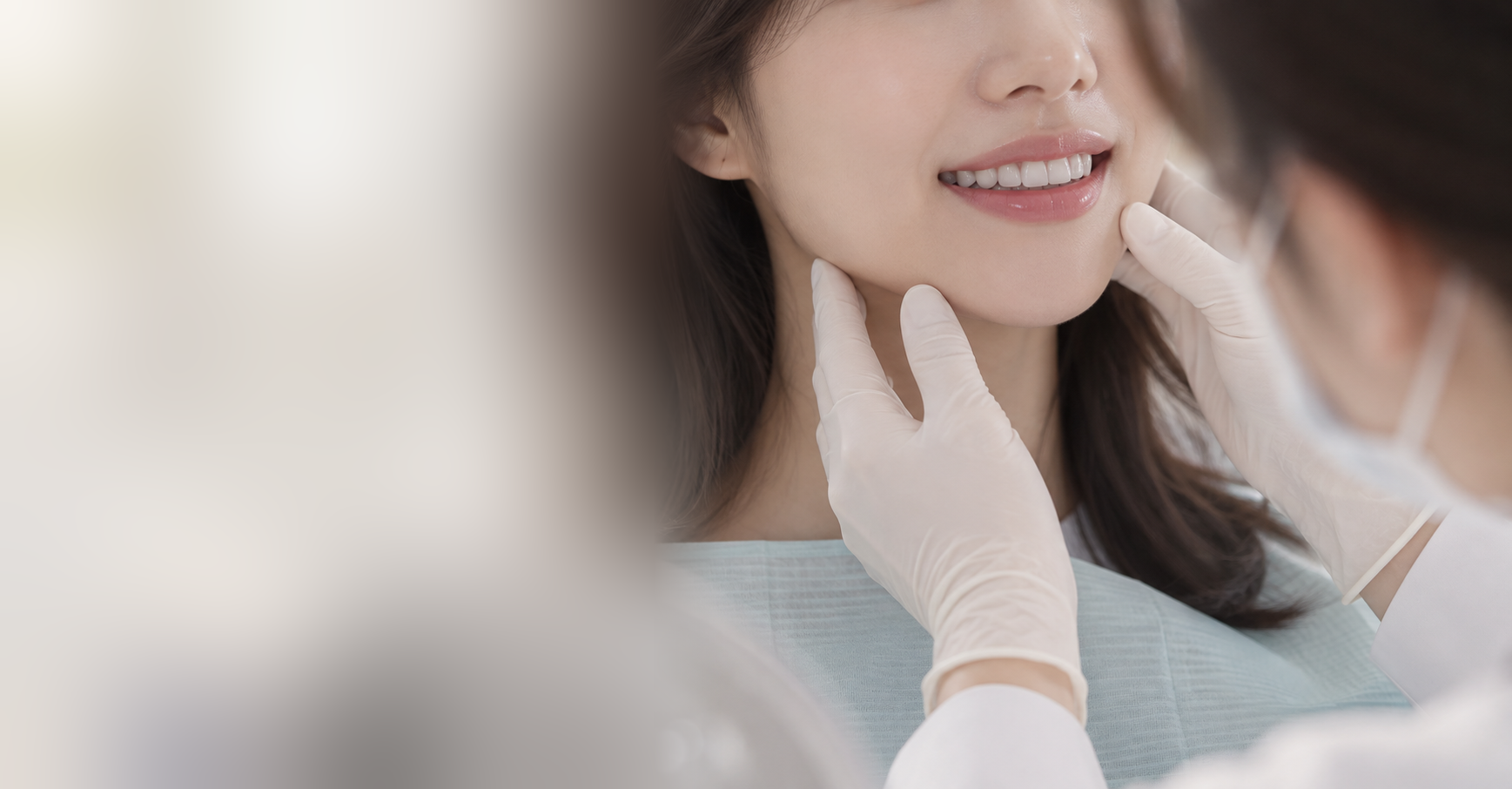
Minimal-prep veneers at a glance
| Question | At Yonsei Baro |
|---|---|
| What they are | Thin porcelain shells bonded to the front surface of teeth to change shape, length or colour |
| Enamel removed | Very little, and in some cases none — but any enamel removed does not grow back |
| Often suitable for | Worn or chipped edges, small teeth, minor gaps or discolouration on well-aligned teeth |
| Orthodontics first? | If teeth are crowded, rotated or tipped, aligning them first can mean thinner veneers and less drilling |
| Who advises | Dr. Sally Chaekyung Lee, board-certified orthodontist, in English |
| Cost | Written estimate after examination |
What are minimal-prep veneers?
A porcelain veneer is a thin, tooth-coloured shell bonded to the front of a tooth to change its shape, length or colour.
For conventional veneers a thin layer of enamel is shaped away so the porcelain sits flush. Minimal-prep veneers use thinner porcelain, so far less enamel is removed, and sometimes the tooth is barely touched. Keeping enamel matters: it is the hardest part of the tooth and a reliable surface for bonding.
Yonsei Baro offers both types; which suits you is decided at an examination.
Conventional vs minimal-prep veneers
| Feature | Conventional veneers | Minimal-prep veneers |
|---|---|---|
| Enamel removed | A thin, even layer from the front surface | Less, and sometimes none |
| Porcelain thickness | Slightly thicker, which helps mask darker teeth | Very thin |
| Typically suited to | Larger changes in shape or colour, or teeth with existing large fillings | Smaller changes on teeth that are already reasonably well aligned |
| Reversible? | No | No, if any enamel is removed |
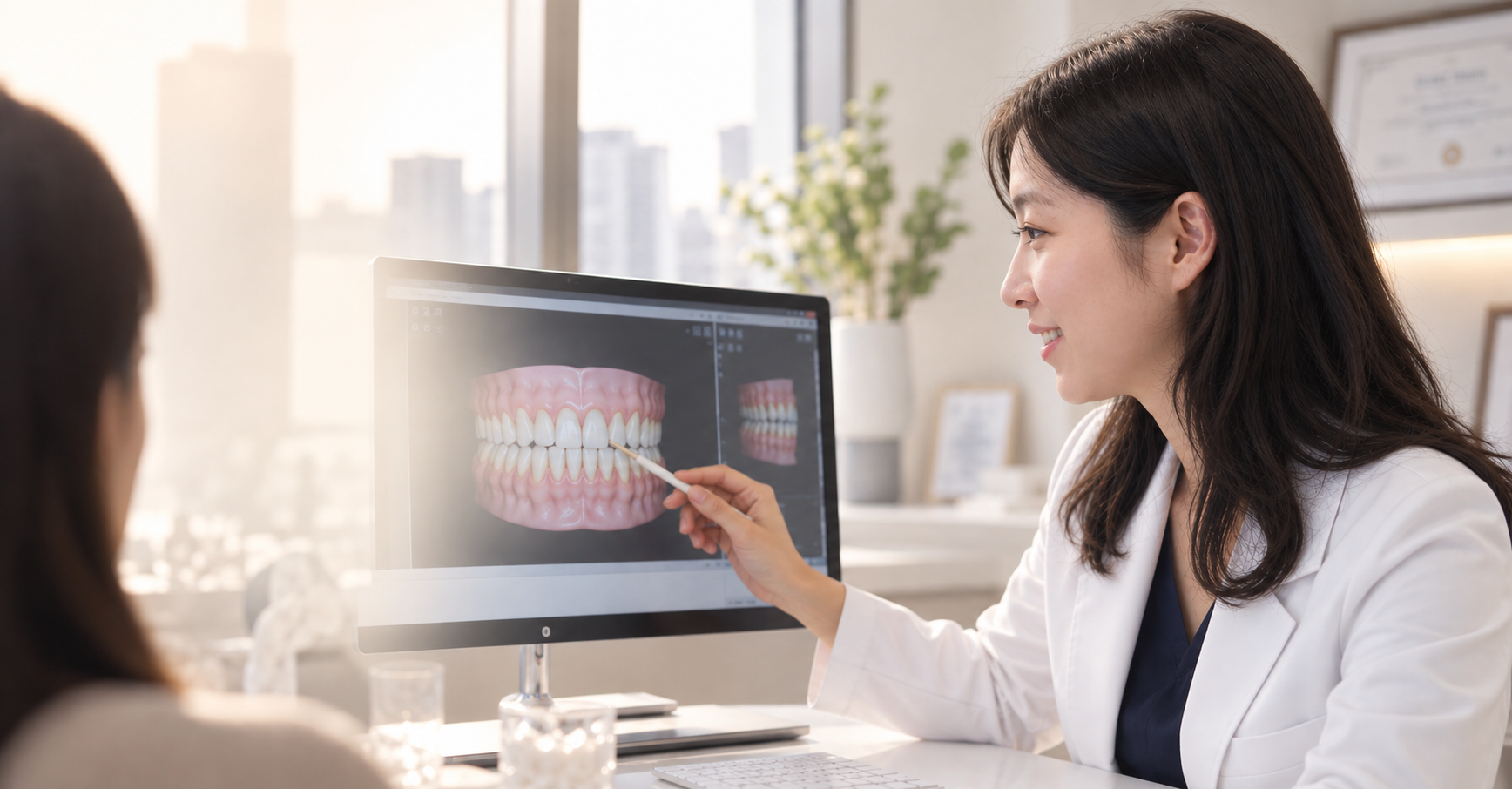
When can orthodontics first save enamel?
Veneers can make teeth look straight, but they cannot move them. If a tooth is crowded, rotated or tipped forward, the parts that stick out must be ground back for a veneer to sit in line, sometimes removing far more than a minimal-prep approach allows.
Bringing teeth into a better position first, often with a short course of clear aligners or limited treatment , lets the veneers be thinner. It can also even out gaps , and occasionally shows that fewer veneers, or none, are needed.
That is why veneer planning at Yonsei Baro involves an orthodontist: Dr. Lee checks tooth position, bite and facial balance and tells you whether moving teeth first would protect your enamel. See orthodontics before crowns and other restorations .
Who are minimal-prep veneers suitable for?
They tend to suit adults with healthy, reasonably aligned teeth who want a moderate change, such as:
- front teeth with worn, chipped or uneven edges;
- small or narrow teeth;
- minor gaps;
- discolouration that has not improved with whitening.
They may be less suitable, or need extra steps first, with:
What does veneer treatment usually involve?
- Examination and planning. Smile, bite, gums and fillings are assessed with photographs and a digital scan, and Dr. Lee advises whether orthodontics first would save enamel.
- Orthodontics, if recommended. Teeth are aligned first and then held in place with retainers .
- Design. Shape, length and shade are planned around your face and lips, and discussed with you before any tooth is prepared.
- Preparation and bonding. Any minimal shaping is done and the veneers are bonded.
- Review. Bite and gum margins are checked.
You receive a written estimate before you decide.
What are the risks and limits?
Veneers are a long-term commitment, so weigh the downsides honestly:
- Enamel removal is irreversible. Even a thin layer does not grow back.
- Chipping. Porcelain can chip or crack, especially with grinding or biting hard objects.
- Sensitivity. Teeth can feel sensitive to hot and cold for a while after preparation.
- Replacement over time. Wear, edge staining or gum recession mean veneers eventually need repair or replacement.
- Colour is fixed. Porcelain does not whiten, so any whitening is done before the shade is chosen.
Minimal-prep veneer FAQs
How are minimal-prep veneers different from conventional veneers?
Both are porcelain shells bonded to the front of teeth. Conventional veneers need a thin, even layer of enamel removed so the porcelain sits flush; minimal-prep veneers are thinner, so less enamel, and sometimes none, is removed. Minimal-prep suits smaller changes on aligned teeth, while bigger colour or shape changes may need the conventional approach.
Can veneers straighten crooked teeth instead of braces?
Veneers can disguise mild irregularities, but they do not move teeth, and making a crowded or rotated tooth look straight with porcelain often means removing a lot of enamel. Aligning teeth first usually allows thinner veneers, or shows that veneers are not needed. Dr. Sally Chaekyung Lee will explain which applies to you.
Can the enamel removed for minimal-prep veneers ever be restored?
No. Enamel does not grow back, so any amount removed is permanent, and the tooth will need a veneer or other covering from then on. This is the main reason to keep preparation to a minimum and to consider orthodontics first when teeth are out of line. Ask Dr. Lee how much, if any, preparation your plan involves.
How long do porcelain veneers last?
With good care, porcelain veneers can last many years, but they are not permanent. Chipping, wear, gum changes and staining at the edges mean that every veneer will eventually need repair or replacement, which may involve a little more tooth preparation. Grinding, biting hard objects and skipped check-ups all shorten their life.
How should I look after veneers?
Brush twice a day with fluoride toothpaste, clean between the teeth daily and keep regular dental check-ups. Avoid biting ice, bones, pens or packaging with your front teeth. If you grind or clench at night, ask whether a night guard would help, and report any chip, roughness or sensitivity early.
Medically reviewed by Dr. Sally Chaekyung Lee, DDS, PhD
Board-certified orthodontist (Korea Ministry of Health and Welfare) · Adjunct Professor of Orthodontics, Yonsei University · Last updated October 2026
This page is general information, not a diagnosis. Results and the number of visits vary from person to person. Removing enamel for veneers is irreversible, even when only a small amount is removed. Porcelain veneers can chip or crack, teeth can be temporarily sensitive after preparation, and veneers do not last forever: they will need repair or replacement over time, which may involve further tooth preparation. If orthodontics is used first, it carries its own risks, and teeth can move again if retainers are not worn as instructed.
Find out whether minimal-prep veneers suit you
Book an examination and Dr. Lee will explain, in English, whether aligning your teeth first could save enamel. Isu Station Exit 2 · Open until 9 PM Mon & Thu · Saturdays 9 AM–2 PM.